Table of Contents
What is a cargo e-bike?
An electric cargo bike, or cargo e-bike, is a heavy-duty bicycle equipped with a battery and electric motor to help you carry large loads or passengers with ease. Imagine transporting work equipment, picking up groceries for the entire family, or dropping your kids off at school—all done efficiently, sustainably, and with a big smile. That’s what the best cargo e-bike can do for you!
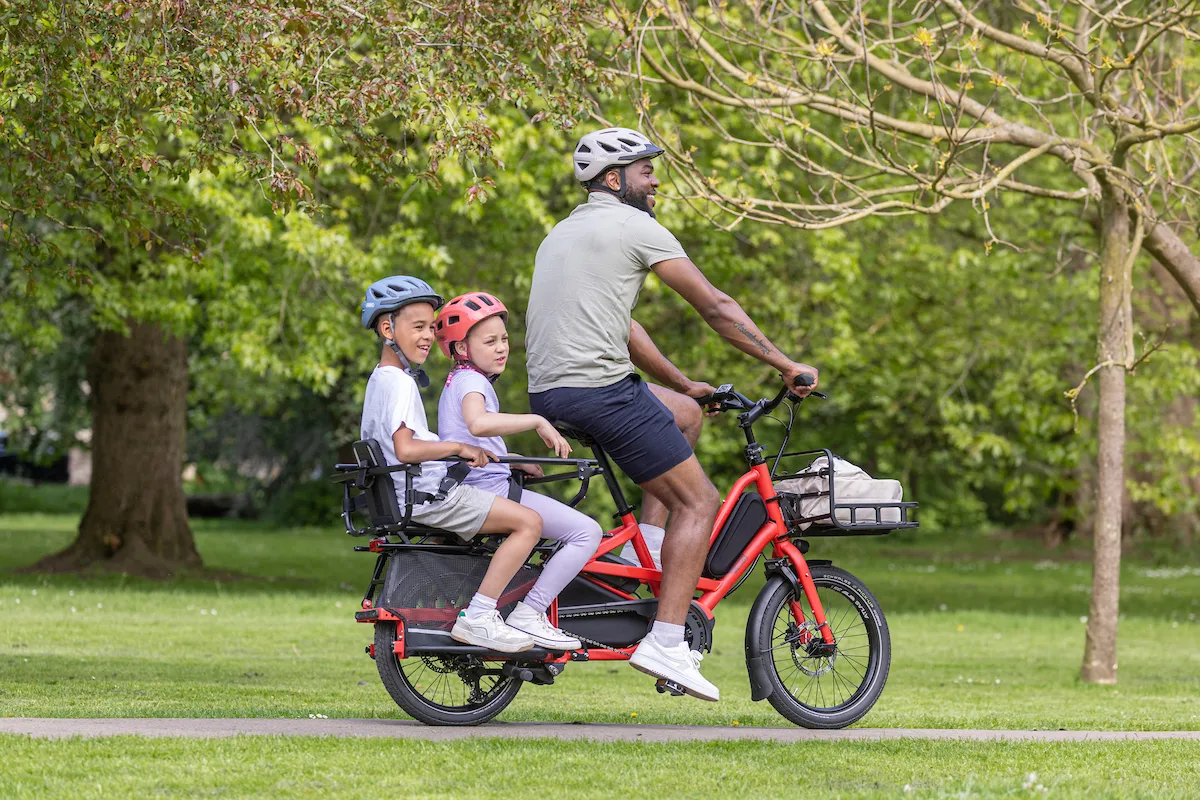
Designed with reinforced frames and forks, sturdy wheels, and specialized carriers like front and rear racks to transport everything from groceries to children, pets, or even adult passengers, cargo e-bikes are built to handle substantially more weight than your average city bicycle.
Can cargo e-bikes really handle hills with heavy loads onboard?
Cargo e-bikes are built strong by design, ready to handle serious weight, but when it comes to hills, the real magic happens with the motor. It's what does the heavy lifting—helping move you, your cargo, and your passengers, whether it's working alongside your pedaling or powering the bike on its own.
Of course, not every motor delivers that work the same way. Where it's positioned on the bike shapes how the ride feels, particularly when you're climbing a hill with kids or a full cargo load on board. Power output plays a role too: cargo e-bikes typically come in 250W, 500W, or 750W options, each suited to different riding needs and terrain.
Put those factors together, and you've got a good idea of how a cargo e-bike handles a climb. Let's take a closer look at assist types, motor types, and power outputs, and how each one helps you get up and over that next hill.
Understanding how they work
1. Assist types
Pedal-assist (also known as pedal-electric, pedelecs, or e-assist bikes)
These bikes still require you to actually pedal. That is, the motor only provides power when you’re pedaling, and you can control how much power (assist) is delivered by the motor depending on how hard or easy you want to pedal. As a bonus, because you're sharing the workload with the motor rather than relying on it entirely, pedal-assist tends to sip the battery more efficiently, so you can go farther between charges.
Throttle-assist
These models don’t require pedaling at all. Power comes on demand through a handlebar-mounted twist throttle, similar to that of a motorcycle, letting you dial up instant power right when you need it most, like pulling away on a slope, or starting off at a red light with two kids and two bags of groceries on board. It's a great option when you want to arrive without breaking a sweat—just keep in mind you'll get less of a workout along the way.
2. Motor types
Most cargo e-bikes feature either:
Mid-drive motors
Positioned in the middle of the bike at the crankset, mid-drive motors offer a balanced ride by keeping the weight low and centered. They’re known for efficiency and power, making them ideal for tackling steep hills or carrying heavy loads. Because they send power through the bike's chain and gears, shifting into a lower gear lets the motor climb more efficiently—much like it does for your own legs. They also tend to provide a natural riding experience by amplifying your pedalling effort. The trade-off is that since the motor torque goes through the bike’s chain (or belt) and gears, these related drivetrain components may wear faster and need replacing more often.
Hub motors
Built into the front or rear wheel, hub motors have a simpler design and are often more affordable. They deliver steady power and suit flatter urban routes. But because they drive the wheel directly rather than through your gears, they cannot adjust torque and speed as effectively as a mid-drive motor does. On long, steep climbs, heat can build up and potentially damage internal components, shortening the motor’s lifespan. You'll also feel pushed from behind or pulled from the front, depending on where the motor sits, rather than a boost to your own pedalling.
3. Power outputs
Cargo e-bikes come with a range of power outputs, measured in watts (W), which determine how much power the motor can consistently provide to assist the rider. The most common power outputs found on cargo e-bikes in the market are:
- 250 W: Standard for city commuting and cargo hauling.
- 500 W: Suitable for lighter commercial use, such as small deliveries or urban logistics, where moderate loads and flat terrain are the norm.
- 750 W: Ideal for heavy-duty commercial hauling.
In many regions, electric bike motors are subject to power output regulations. Standard e-bikes are generally capped at 250 W in the UK and EU and up to 750 W in the US, depending on state rules. Motors that exceed local limits are considered high-power motorized vehicles, like mopeds or e-motos, which require separate registration and licensing.
Learn more: Electric bike motors and classifications in Europe and North America
Who are cargo e-bikes for?
Cargo e-bikes are for anyone looking for a more efficient, cost and eco-friendly way to transport cargo and/or passengers. Whether you're a commuter, outdoor enthusiast, parent, or small business owner, cargo e-bikes offer a practical solution for carrying work and play gear, grocery hauls, or even transporting adults and children—all without the challenges and frustrations associated with driving. That’s right. If you like the sound of skipping rush hour traffic jams, breezing your way to the front of school pick-up lines, and never paying a dime for gas again, then cargo e-bikes are for YOU!
What are the different kinds of cargo e-bikes?
There are several kinds of cargo e-bikes, each designed to suit different needs. Here’s a quick overview of the 3 most common types you’ll see:
Rear-loading cargo e-bikes
Offered in short-tail, midtail, and longtail versions that reflect the overall frame length, rear-loading cargo e-bikes position the cargo over the rear rack or just behind the rear wheel. Rear-loaders offer more flexible cargo options, especially when carrying irregularly shaped items that may not fit in a front-loader’s fixed cargo compartment. Furthermore, riders can use the rear rack, attach panniers, or install cargo boxes or passenger seats according to their specific needs. Rear-loaders also tend to be narrower than boxy front-loaders and use steering that is similar to conventional bikes, making them easier to handle and maneuver.
Compact cargo e-bikes
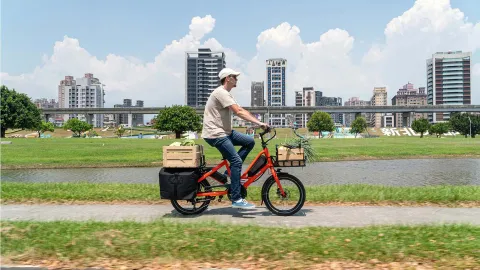
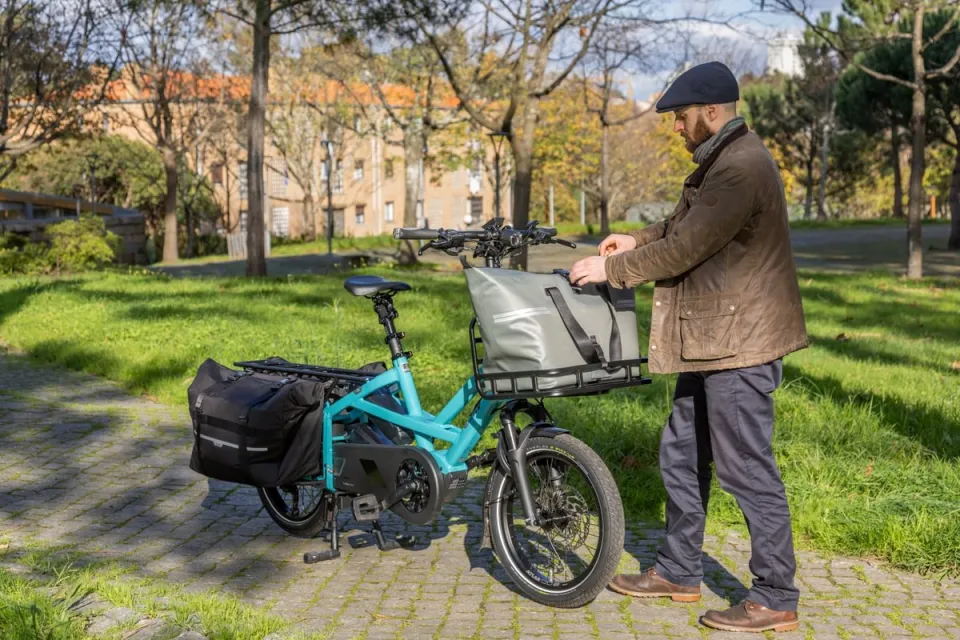
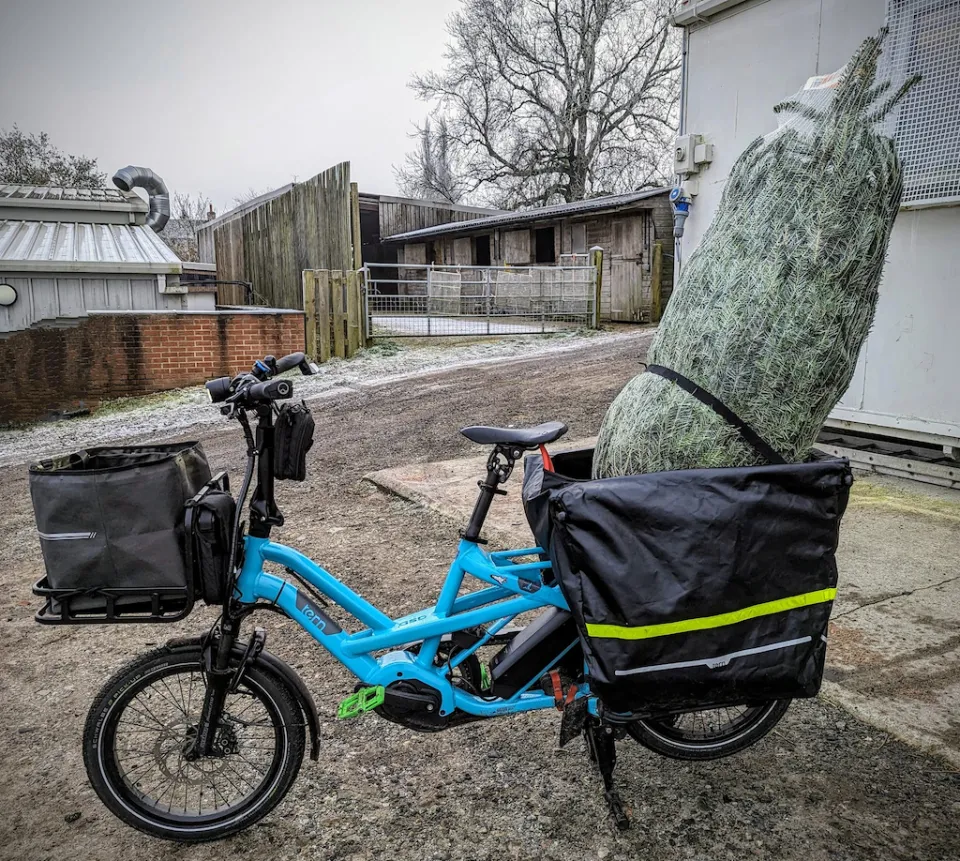
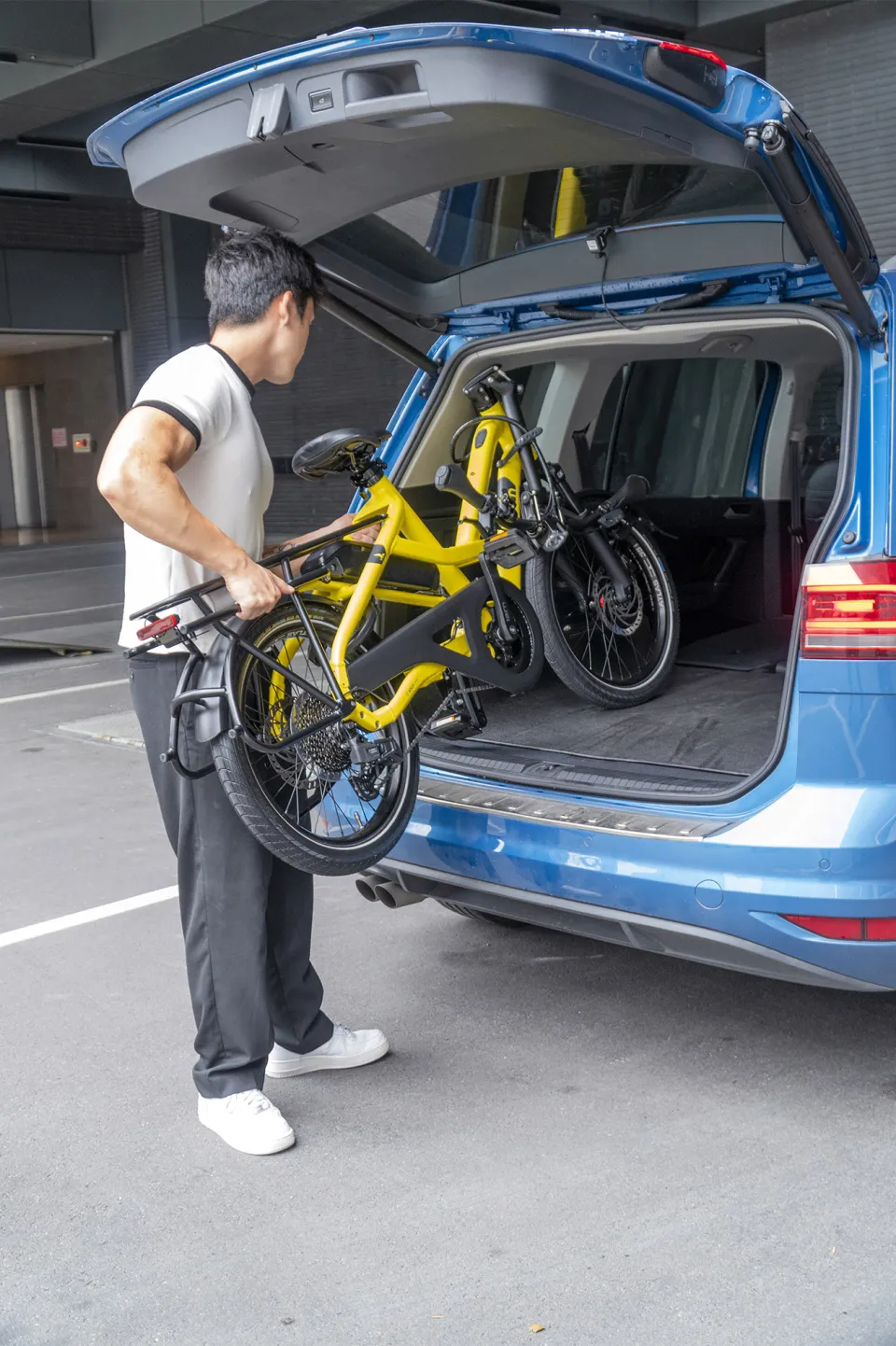
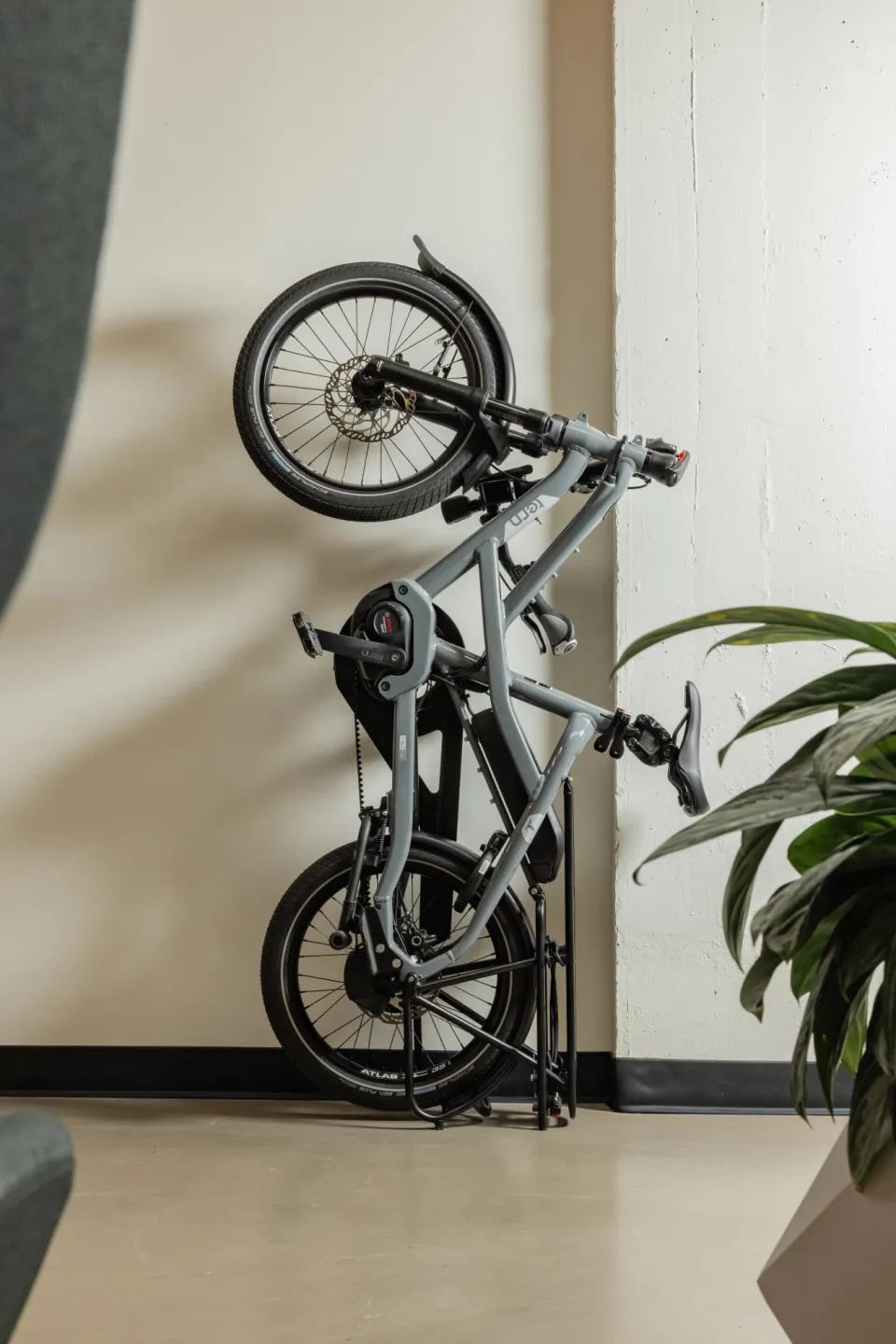
Compact cargo e-bikes are shorter or similar in length to a regular bicycle, and often come in the form of short-tail or midtail rear-loaders. Because of their compact size, these bikes are a lot more nimble than front-loaders and longtails, allowing riders to weave through city traffic and narrow streets with ease. They also fit in tighter spaces, including garden sheds, offices, apartment units, elevators, and even in car trunks—perfect for transporting and storing in limited space. Plus, despite being smaller in size, some cleverly-engineered compact cargo e-bikes such as the Tern GSD and Tern HSD can carry just as much as longtail models, providing a great balance of convenience, power, and mobility in crowded urban environments.
Front-loading cargo e-bikes
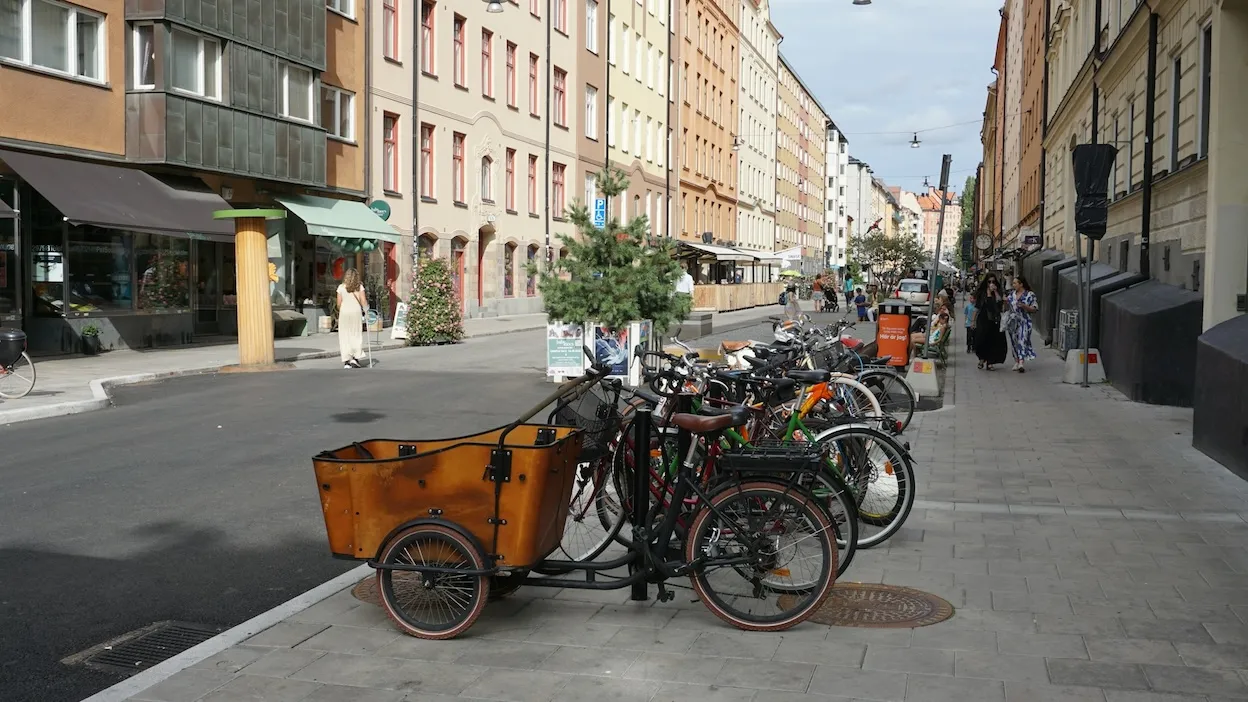
Also known as box bikes or bakfiets, these bikes feature a large cargo area at the front, often a box or platform between the handlebars and the front wheel. Front-loaders are especially great for carrying younger children and pets, as the precious cargo is visible and easily accessible to the rider. But because of their bulkier design, these bikes have a larger turning radius and aren’t as nimble when you need to dodge a sudden pothole. They are also the most space-consuming to park and store. In addition, the fixed cargo box can also limit the available space inside, making it a tighter squeeze for older kids or adult passengers.
Front-loaders vs rear-loading: Which one is better?
It really depends on your needs. Front-loaders keep cargo and kids up front, within easy reach and eyesight—a setup many parents find reassuring. Longtail cargo e-bikes, meanwhile, tend to be easier to maneuver through busy traffic, since they're narrower and steer more like a regular bike.
A good place to start is asking how you’ll use the bike, and where you'll park and store it. For example, If space is tight, a compact mid-tail or short-tail like the Tern Quick Haul Long and Tern HSD can help—with vertical parking, they take up floor space not more than a potted plant.
Of course, nothing beats trying it yourself. The best way to find out is to take both styles for a test ride and see which one actually feels right for you!
What’s it like to ride a cargo e-bike?
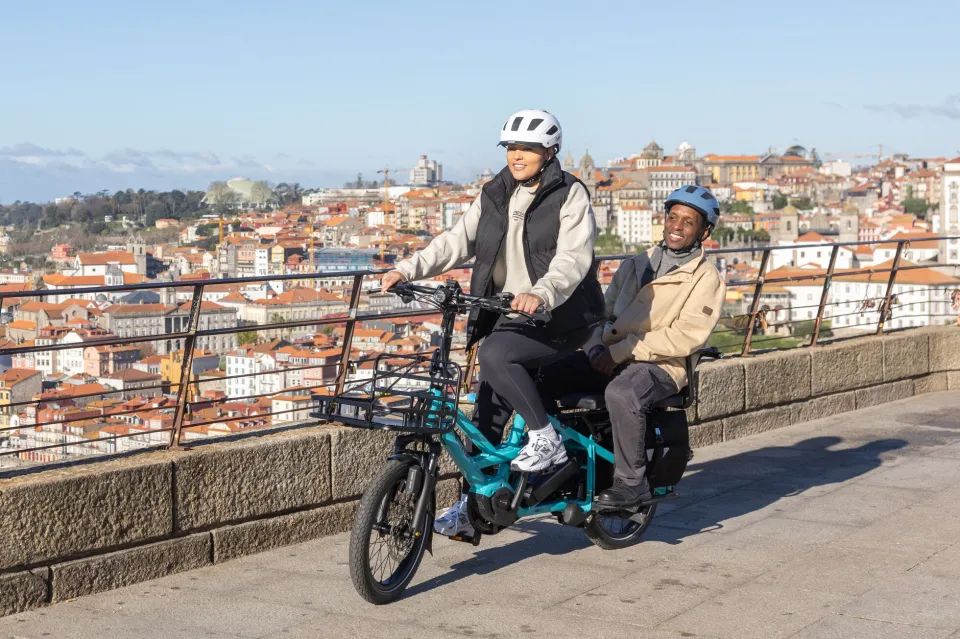
Those who are new to electric cargo bikes often wonder about how difficult it is to ride one. The good news? With the added stability and comfortable upright riding position of their design, cargo e-bikes are more intuitive than you might imagine, and are not that different from riding a conventional bike. Plus, the electric assist makes carrying heavy loads feel significantly lighter, even when climbing hills.
With that said, there are a few things to remember when riding a cargo e-bike:
- How you load the bike will affect handling and stability. You’ll want to place heavier items low and close to the center, and make sure weight is distributed evenly on both sides of the bike.
- Ensure there’s enough space for turns, particularly if you’re riding a front-loader.
- Give yourself extra time and space to brake, as cargo bikes generally take longer to slow down, especially when carrying heavy loads.
- Increase the motor assist on inclines or when starting from a stop, then switch to lower levels for cruising.
Get more exclusive tips:
- How Easy Is It To Ride & Own a Cargo Bike?
- Tips for Carrying Kids on a Bike (From a Parent Who’s Been There)
How do I maintain a cargo e-bike?
Like any vehicle, cargo e-bikes require regular maintenance to keep it running safely and smoothly. Basic upkeep, like checking tire pressure and brake pads, cleaning the chain, and lubricating moving parts, is simple to learn and can be easily done at home.
Meanwhile, it’s important to set up a maintenance schedule with your cargo e-bike dealer. The experts there can help evaluate your cargo e-bike’s condition, carry out tune-ups, replace worn or damaged parts, and check for software updates or assess battery health.
Ready to make your life easier with a cargo e-bike?
With the right cargo e-bike, you can simplify daily tasks, create memorable outings, and embrace a greener, more active lifestyle—all without compromising safety or comfort.
If you’re ready to start your car-free journey, come explore our range of Tern cargo e-bikes, designed to fit every need and lifestyle. Life’s easier when you’ve got the perfect e-bike to help carry the load!
Questions you might still have
1. What kind of cargo e-bikes are best for steep hills and heavy loads?
Two factors matter most: torque (how hard the motor can push) and gearing (which lets you shift to a lower gear for an easier climb). A cargo e-bike needs enough of both to handle hills confidently, especially with a full load on board.
If hill-climbing is a priority, a mid-drive motor paired with pedal-assist is your best bet. It sends power through the bike's chain and gears, so you can shift into a lower gear on a climb and let the motor work efficiently instead of straining against the hill. This means less wear and tear on the drivetrain over time. Plus, since you're sharing the workload with the motor instead of relying on it entirely, you'll get more range per charge—handy if hills are part of your regular route.
By contrast, many throttle-assist bikes rely on hub motors. These power the wheel directly, without working with the bike's gears. Without gearing to lean on, they push the full weight of the bike and cargo uphill in one fixed way. That means they generally have to work harder on climbs, which can add extra strain to the motor and components over time.
Learn more: Top 5 Tips for Buying an Electric Cargo Bike
2. Are cargo e-bikes hard to ride with kids?
Front-loading bakfiets often use linkage steering and may feel less intuitive at first. They also require a larger turning radius, which makes them harder to maneuver through tighter turns, and require some practice. Rear-loading cargo e-bikes tend to feel more familiar, with steering that’s much closer to a conventional bike. Most parents find the learning curve much shorter than expected, with many feeling comfortable after just a few rides. Plus, the electric assist makes carrying heavy loads feel significantly lighter, even on hills.
Hear from experienced parents who ride cargo bikes with their kids:
3. Is it realistic to replace my second car with a cargo e-bike?
For many households, yes, especially if that second car mostly handles school runs, errands, or short trips around town. A cargo e-bike can make those everyday journeys simpler and actually a lot more fun! The key is figuring out whether it can fit into your routine as naturally as your car does now.
Start by picturing your typical week: where would you park and charge the bike, which car trips you plan to replace, and are your regular routes bike-friendly? It also helps to think about how many kids or how much cargo you usually carry, since that’ll point you toward the right bike for your needs.
From there, set a budget around what fits your riding style and everyday life—but keep safety front and center. After all, you’re not just carrying cargo, you’re also carrying your family.
Need a bit more convincing?
See just how much you can save a year by replacing your car with a cargo e-bike.
4. How far can I ride on a single charge?
Range depends heavily on the battery, along with your load, terrain, and riding conditions, but you can generally expect somewhere between 24 to 97 km (15 and 60 miles) per charge.
Assist level plays a big role too: throttle-assist and higher pedal-assist settings draw more power, which shortens your range. The same goes for carrying a heavier load or climbing hills often, so it's worth testing a fully loaded ride on your usual route before committing to a daily distance.
5. Are e-bike batteries dangerous? I keep hearing about e-bike fires.
E-bike batteries aren't inherently dangerous. The real risk comes from low-quality, uncertified batteries or improper use. When batteries are well-made, certified, and used properly, they're generally safe both in use and in storage—they don't randomly catch fire on their own.
In short, choosing UL-certified batteries and following the manufacturer's instructions is the best way to stay safe.
Learn more: Are E-Bike Batteries Dangerous? The Top Misconceptions Explained
Related Articles