Are Negative E-Bike Headlines Really About E-Bikes?
You’ve probably seen news headlines linking e-bikes to high-speed incidents, pedestrian safety concerns, calls for stricter regulations, and even outright bans. As more people turn to e-bikes and other forms of two-wheeled e-mobility, e-bikes are increasingly coming under scrutiny, with questions about whether the negatives outweigh the positives. That’s unfortunate, because e-bikes are proven to be a sustainable alternative to driving and bring a wide range of benefits, from saving on fuel and maintenance costs to supporting healthier, more active lifestyles.
But…what if the “e-bike problem” isn’t really about e-bikes at all?
Contents
- The greater issue: “E-bike” is being used too broadly
- What’s the difference between eBike and eMoto?
- Why can road-legal e-bikes be hard to identify based on looks alone?
- Good news: Efforts to clear up e-bike confusion
- How to protect your rights as an e-bike rider
The greater issue: “E-bike” is being used too broadly
These days, the term “e-bike” is being used far too broadly by the media, the general public, and even law enforcement and politicians. It can refer to everything from road-legal electric bicycles to mopeds, electric motorcycles, e-scooters, and other two-wheeled motor vehicles, as seen in this news broadcast. These vehicles may look similar, but they belong to different categories and can have very different designs, performance characteristics, and legal requirements.
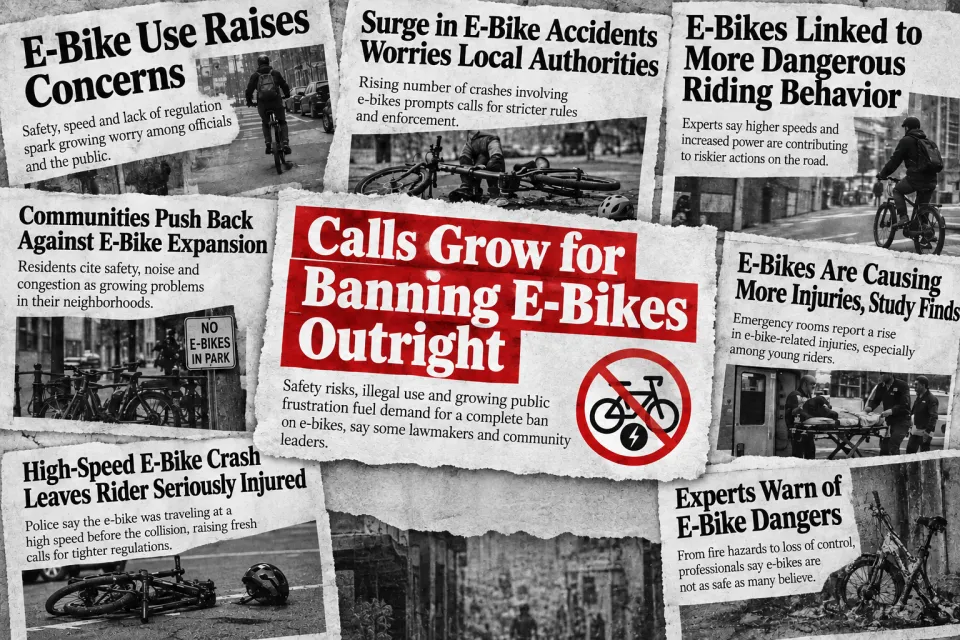
However, when incidents involving these different types of vehicles are reported, they are often lumped together under the catch-all term “e-bike.” This can shape the perception that e-bikes themselves are becoming a greater safety issue, even when the vehicle involved may not actually meet the legal definition of an electric bicycle.
So, when you see an incident described as involving an “e-bike,” it’s always worth taking a closer look: Was the vehicle actually an e-bike?
What’s the difference between eBike and eMoto?
At its simplest, an electric bicycle (e-bike) is defined as a bicycle with fully operable pedals and an electric motor rated at 500 watts or less. The motor can assist the rider up to a maximum speed of 32 km/h. While the motor is primarily intended to assist pedaling, some e-bikes may also have a throttle that allows the motor to propel the bicycle without pedaling, depending on provincial or territorial regulations. In contrast, e-motos are pure throttle-driven electric motorcycles with higher-output motors capable of greater speed and power.
Here’s a look at how e-bikes differ from other types of motorized two-wheelers in Canada and the United States. Since many e-bikes sold in Canada are imported from the US, it’s helpful to understand how the two countries classify these vehicles and where their regulations differ.
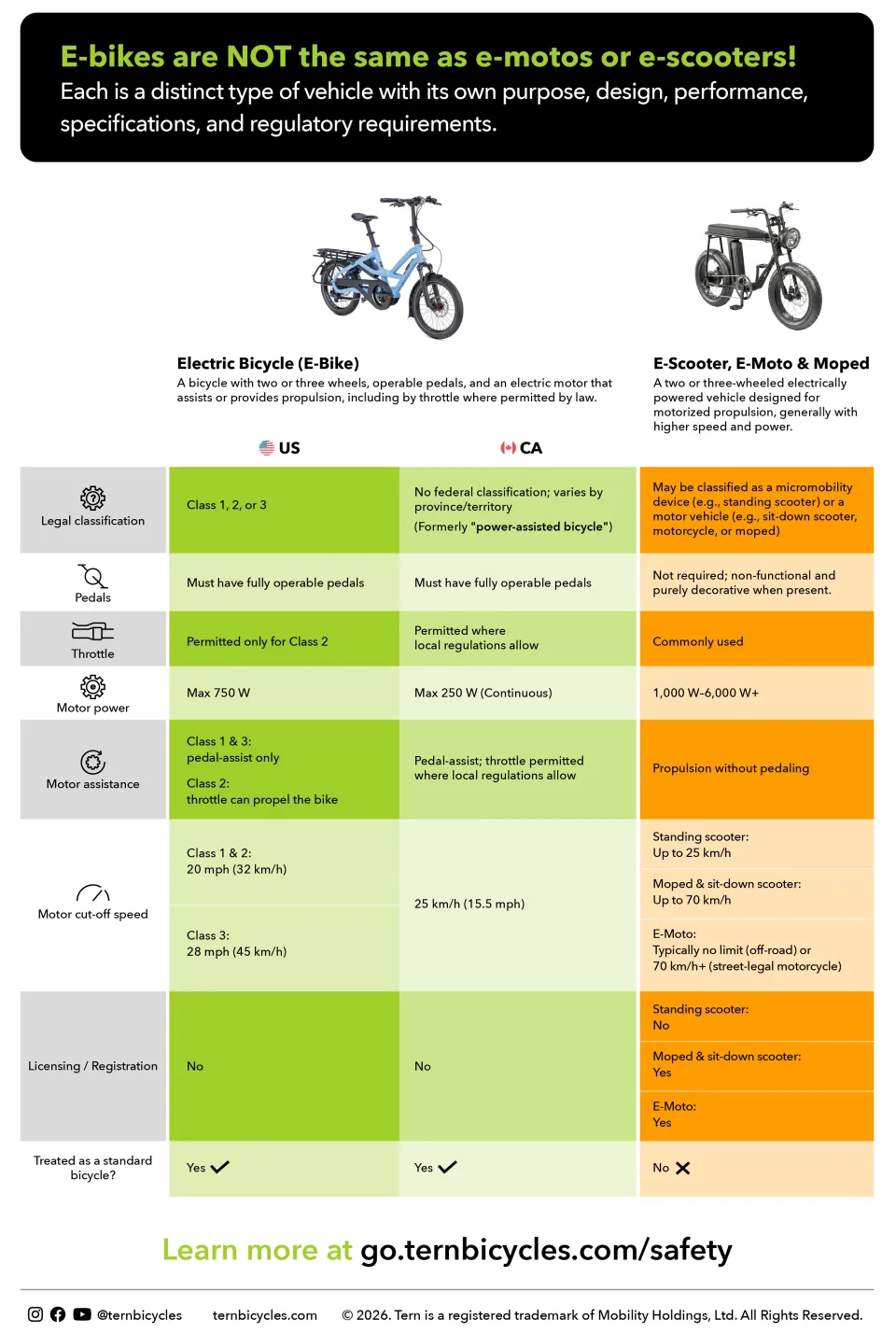
The important takeaway is that an e-bike is more than just two wheels and an electric motor. Differences in design, performance, and characteristics, along with the regulations that apply to them, set e-bikes apart from other types of e-mobility vehicles.
Legal e-bikes are generally considered consumer products rather than motor vehicles and are governed by the same rules as traditional bicycles, including where they can be ridden, such as on bicycle lanes. Mopeds, e-scooters, and electric motorcycles, on the other hand, fall into different vehicle categories. They’re designed for motorized propulsion and are subject to additional motor vehicle requirements, which may include specialized safety equipment, registration, licensing, insurance, and vehicle approval. They also generally cannot be ridden on bicycle lanes and are limited to regular public roads and off-road areas.
In Canada, rules about where e-bikes can be ridden, who can ride them, and how they can be used vary by province and territory. Before buying or riding an e-bike, check your local regulations to make sure your bike meets the requirements and is allowed where you plan to ride.
Why can road-legal e-bikes be hard to identify based on looks alone?
It’s not always easy to tell an e-bike from a two-wheeled motorized vehicle just by looking at it. Some manufacturers intentionally design high-powered motor vehicles to resemble e-bikes, allowing them to tap into the growing e-bike market while potentially avoiding stricter legal and safety requirements. They may add pedals to make these vehicles appear more bicycle-like, even though the pedals serve no practical purpose because the vehicle can be propelled entirely by its motor without the rider pedaling.
To further broaden appeal, some manufacturers also target young children through social media and marketing campaigns, presenting these motor vehicles as lifestyle products. This can give consumers and parents the false impression that they or their children can ride and use these vehicles like ordinary bicycles, when in fact they carry greater risks and may be subject to very different laws, restrictions, and safety requirements.
It also makes enforcement more challenging, particularly as new forms of e-mobility continue to evolve and conversion kits become increasingly available, making it easier for consumers to alter their vehicles’ appearance or “soup up” their performance. Training and tools for identifying these different vehicle types may not always keep pace with the technology. In some cases, electric bicycles have reportedly been seized or even destroyed after being mistaken for illegal e-motos.
Good news: Efforts to clear up e-bike confusion
Fortunately, provincial governments and municipalities are taking steps to make e-bike and motorized vehicle classifications clearer, strengthen safety requirements, and improve enforcement. These efforts aim to help consumers and authorities better distinguish between different types of electric two-wheelers.
For example, since April 2024, British Columbia has officially recognized two e-bike classes: standard e-bikes and light e-bikes. Each class has its own requirements, including minimum rider age, maximum motor-assisted speed, motor power limits, and whether a throttle is permitted.
Classes of E-Bikes in B.C. | ||
|---|---|---|
| Standard e-bike | Light e-bike | |
| Minimum rider age | 16 | 14 |
| Max motor-assisted speed | 32 km/h | 25 km/h |
| Max continuous power output | 500 W | 250 W |
| Throttle assist | Yes | No |
On the other side of the country, Ontario’s Ministry of Transportation proposed updating its definition of power-assisted bicycles (e-bikes) in April 2026. The proposal also introduces two e-bike classes, with requirements based on factors such as:
- Motor power and maximum assisted speed
- Propulsion method (pedal-assist only or throttle)
- Maximum unladen weight of the bike
- Whether the bike has functional pedals
- Vehicle design and features
It also aims to better distinguish legal e-bikes from heavier, faster moped-style and motorcycle-style vehicles, which would be subject to additional requirements such as licensing and insurance.
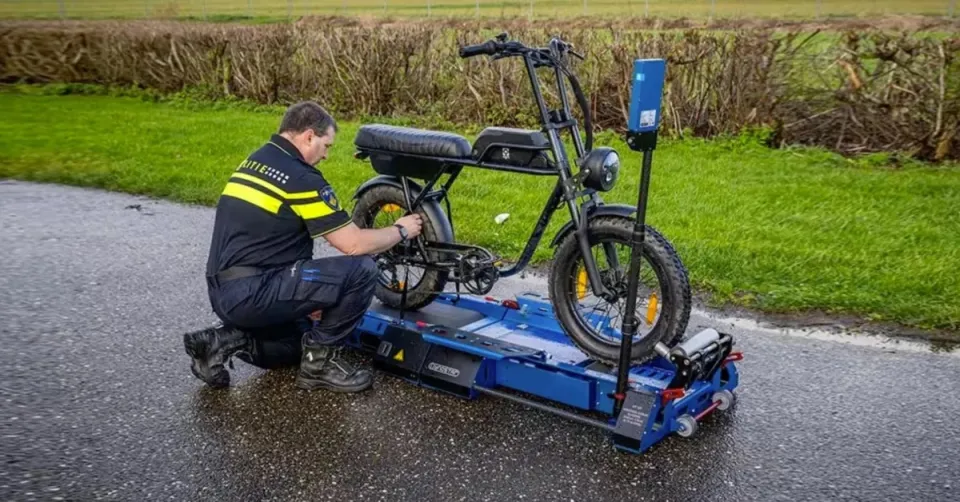
In other parts of the world, such as the EU and Australia, police are starting to use mobile dynamometers during roadside checks to measure the top speeds of suspected e-motos and e-scooters being ridden in bike lanes. This could be a useful tool for Canadian law enforcement to consider as well.
California’s Senate Bill 1167 is one example of legislation aimed at bringing more clarity to the e-bike marketplace by addressing how high-speed electric vehicles, such as e-motos, are classified, labeled, advertised, and sold. Another one is New York’s Senate Bill S10700, which would prohibit the sale of e-motos and electric off-highway motorcycles that are not legal to ride on New York streets. It would also require online and physical sellers to display clear warning notices on non-street-legal vehicles and prohibit them from being marketed as e-bikes or e-scooters, helping to address potentially deceptive marketing practices.
These changes are helpful not only for protecting the rights of people riding legal e-bikes, but also for giving consumers a clearer picture of what they’re buying and what rules apply to their vehicle.
How to protect your rights as an e-bike rider
Knowing what you’re riding and what rules apply is one of the best ways to protect yourself as an e-bike consumer. Take the time to understand your e-bike’s classification, specifications, and local requirements. For example, road-legal e-bikes or electrically power assisted cycles (EPACs) in Europe are required to carry visible, durable markings that identify them as EPACs and provide key information such as their maximum continuous rated power and cut-off speed.
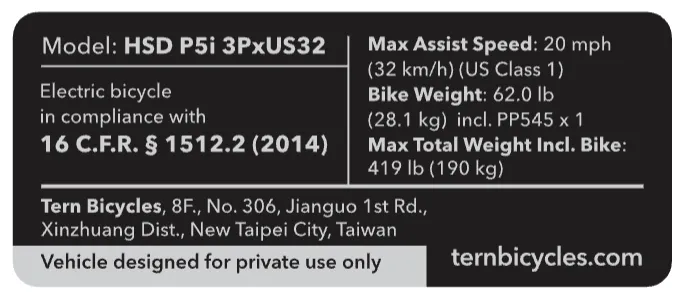
Even though a CE mark isn’t mandatory in Canada, it’s worth choosing an e-bike from a reputable manufacturer that provides clear product information and relevant safety certifications. These help show that the bike has been tested to meet recognized e-bike safety standards.
Learn more: A guide to major e-bike safety standards
The more informed we are, the easier it becomes to distinguish legal e-bikes from motorized vehicles and make sure e-bikes are judged on their own merits. By learning the facts, sharing what we know, and speaking up when different types of vehicles are incorrectly lumped together, we can help reduce misidentification and build a better understanding of what e-bikes really are: a fun, practical, and more sustainable way to get around.
Explore the full range of road-legal Tern e-bikes and cargo e-bikes here.
FAQ
- How to check if an e-bike complies with local laws and regulations?
Check the bike’s specifications, including motor power, maximum assisted speed, and whether it uses pedal assist or a throttle. Also check for any required certification or approval marks, then compare these details with your local laws and regulations.
If you’re in the US, the PeopleForBikes state-by-state electric bike laws page is a useful resource for checking local requirements.
- Are eBikes becoming illegal?
While some places have considered stricter rules or bans in response to safety concerns involving high-speed electric vehicles, these measures generally do not apply to road-legal electric bicycles (e-bikes). The term “e-bike” is sometimes used broadly to describe a range of electric vehicles, including mopeds, electric motorcycles, and other high-speed devices. As a result, headlines about restrictions on these vehicles can create the impression that e-bikes themselves are being banned.
In many places, new laws are instead focused on defining and regulating different types of electric vehicles and distinguishing them from legal e-bikes. Rules vary by location, so be sure to check the e-bike laws and requirements where you live.
- Are there specific e-bike regulations I should know before buying?
Yes. E-bike rules vary by location and may cover maximum speed, motor power, equipment, age limits, where you can ride, and more. Before buying, always check your local laws and make sure the e-bike meets the requirements for its legal classification. Buying from a reputable manufacturer or dealer can also help ensure you’re getting a properly classified and compliant e-bike.
Related: Find your nearest authorized Tern dealer here.
- Are throttle eBikes legal in Canada?
Yes, throttle e-bikes are legal in many parts of Canada, but rules vary by province/territory and local jurisdiction. Like non-throttle e-bikes, they are required to have fully operable pedals. Regulations may also set limits on the assisted speed and motor output. Always check your local laws to make sure the e-bike meets the requirements for its legal classification.
- Where to purchase compliant electric bicycles for commuting?
We recommend purchasing from a reputable e-bike manufacturer or authorized dealer, ideally one where you can test ride the bike and ask questions about its legality and safety. Look for clear information about the bike’s specifications, legal classification, and applicable safety certifications. Before buying, check that it meets the requirements in your area for speed, motor output, equipment, and other regulations.
Related Articles

Lorsque l'on roule avec un vélo électrique, le cadre, la fourche, les freins et les roues sont davantage sollicités. Pour garantir une conduite fluide et stable à grande vitesse et pour pouvoir s'arrêter immédiatement en cas de pluie ou de soleil, ils ont besoin de composants de haute qualité.