Wherever you live, you’ve probably noticed more and more people riding electric bikes. From city centers to suburbs, e-bike popularity is growing fast, and riders of all ages and backgrounds are joining the ride. But if you're new to e-bikes, you might be wondering: Are they worth it? How do they work? Are they here to stay, or just another trend? Read on as we answer some common questions.
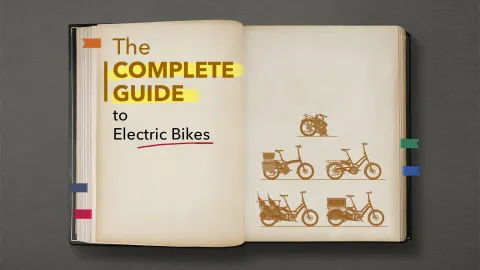
Want the full picture? Check out our Complete Guide to E-Bikes for a comprehensive FAQ.
Contents
- Q1: Are e-bikes good for exercise?
- Q2: Can electric bikes go up steep hills?
- Q3: Can an electric cargo bike replace a car?
- Q4: Can anyone ride an e-bike?
- Q5: Are ebikes environmentally friendly?
- Bonus Question
Q1: Are e-bikes good for exercise?
One of the main benefits of cycling is the exercise it adds to your day. Who hasn't noticed an e-bike rider speeding past, and thought, "I should get into cycling”, or, “I should ride my bike more often"? However, the health benefits of riding an ebike may be underestimated.
Exercise is often seen as “hard, unpleasant work”, and as electric bike motors are designed to make pedaling easier, it’s easy to assume that ebike riders aren’t getting the same fitness benefits as conventional cyclists. Some even go as far as saying that riding an ebike is “cheating.”
But in reality, the opposite is often true—studies have shown that e-bike riders get more exercise overall. Because electric bikes make riding more accessible and enjoyable, people tend to ride more often and for longer distances.
The reason is pretty simple. Riding an electric bike is super fun, so ebike owners ride further and more often, which adds up to more aerobic exercise.
And that comes with all the health bonuses you'd expect. Researchers have found that e-biking can help you lose weight, improve your cardiovascular fitness, and control your blood sugar levels. Health is wealth, and it’s a worthwhile investment.

Q2: Can electric bikes go up steep hills?
We've already covered that riding an e-bike isn’t cheating, but what about those moments when you wish you had a little help? Like facing that giant hill between you and your daily commute?
Good news: Electric bikes are built to handle hills! 💪
Pedelecs like the Tern HSD electric cargo bike were designed to help you climb steep inclines much more easily. While you still need to pedal, the motor gives you a powerful boost, reducing the effort needed to tackle even challenging terrain.
In hilly cities like San Francisco, e-bikes let you maintain a faster speed and climb with far less strain than on a regular bike. And if you're looking for more of a workout, you can always lower the assist level and rely more on your own strength.
This hill-climbing ability is part of what makes ebikes so practical and fun. When steep hills aren’t a barrier anymore, you’re more likely to ride more often. Think of it as having an “easy mode” for the toughest parts of your ride.
Q3: Can an electric cargo bike replace a car?
That depends on your lifestyle, but it’s probably more realistic than you think.
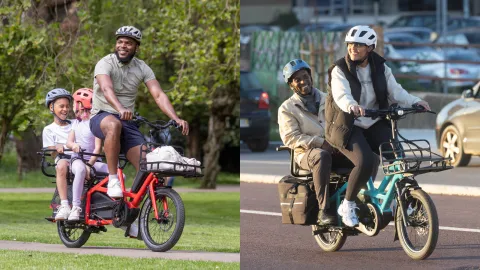
A high-quality electric cargo bike like the Tern GSD or Quick Haul Long is built to carry both cargo and passengers with ease, which means you can handle most everyday errands without needing a car. From grocery runs to school drop-offs, a cargo electric bike offers surprising versatility.
When it comes to commuting, riding a cargo electric bike removes many of the common deterrents, like arriving overheated or fatigued. After all, an ebike makes it easier to cover longer distances without breaking a sweat or needing special cycling clothes. In most climates, you can ride to work and still show up looking fresh—no shower required!
One of the top reasons non-cyclists choose to switch to e-bikes is the ability to arrive looking presentable. And the fact that ebike commuting is often faster than driving is a big bonus.
Q4: Can anyone ride an e-bike?
In many cases, yes. We often hear from people who used to cycle regularly but stopped due to injury, illness, or aging. Time and again, they tell us that getting an ebike changed everything, helping them rediscover the joy of cycling.
Because electric bikes require less physical effort than conventional bikes, they make cycling more accessible for commuting with kids, recreation, and everything in between. They also make it easier for people of different fitness levels to ride together, making group rides and family outings more enjoyable.
For those who struggle to walk long distances but can still ride with assistance, electric bikes can be a real game changer. In busy urban areas, being able to cycle right up to your destination also adds a huge boost to everyday mobility.
In short, ebikes help level the playing field, opening up cycling to a much wider range of people.
Q5: Are ebikes environmentally friendly?
Yes!
Electric bikes generate less than one-tenth the carbon emissions of cars, even when factoring in battery charging. So every time you choose to ride a cargo electric bike instead of driving, you’re significantly reducing your greenhouse gas emissions and helping to improve air quality.
In more precise terms, a 2019 study found that switching to an electric bike can lower an individual’s transport emissions by at least 0.21 metric tons of CO₂ annually. That’s a meaningful step toward fighting climate change, one ride at a time!
And in a 2018 survey, e-bike owners reported that 76% of their e-bike trips replaced car trips. In some countries, electric bikes account for the majority of all bicycle sales, showing just how widespread the shift from car to e-bikes has become.
Bonus Question
Is the “e-bike smile” real?
Yes, absolutely. The best way to experience it yourself is to take a test ride. Visit your local electric bike dealer, hop on a Tern, and you’ll see exactly what we mean!
References
- Peterman, James E., Paul G. Morris, Carl A. Kram, and William C. Byrnes. “Pedelecs as a Physically Active Transportation Mode.” European Journal of Applied Physiology 116, no. 8 (2016): 1565–73. https://bit.ly/4nks1B7
- Jessica E. Bourne et al., “Health Benefits of Electrically‑Assisted Cycling: A Systematic Review,” International Journal of Behavioral Nutrition and Physical Activity 15, no. 1 (November 21, 2018): 116, https://bit.ly/3FXWeFz
- Selene Yeager, “E‑Bikes Are Getting More People Out of Their Cars,” Bicycling, March 21, 2018, https://bit.ly/3Gi8Vef