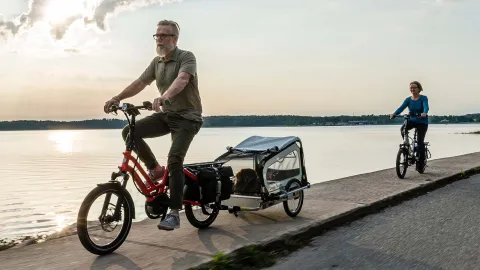
Is it practical to cycle to work?
The short answer is yes, but let’s be real about the why.
You still get your own personal space, free from the shoulder-to-shoulder shuffle of a packed train. You’re outside, feeling the breeze, catching some morning sun, and arriving at work already energized. It's a commute that doubles as a reset button, one that gets your body going and your head in a good place before the day even begins. Plus, is biking good exercise? Absolutely! It’s the kind of cardio that doesn’t feel like a chore because you’re actually going somewhere.
However, bike commuting does ask something of you. The weather won't always be on your side: some mornings you'll roll out under grey skies and arrive a little damp. On warmer days, a light sweat by arrival is just part of the deal. If your route has a hill or two, your legs may have opinions about it, especially in the early weeks.
The good news is that none of this has to be a roadblock. Read on for practical tips we’ve put together to help you feel prepared from your very first ride.
Before the ride
Pick the right bike
You don't need a high-end setup to get started, and that's part of what makes bike commuting so easy to try. In fact, a sturdy hybrid or a folding bike is often better for the ‘stop-and-go’ kind of urban commutes. Just make sure your bike is actually ready to roll before you hit the road. A quick safety check before you go can help keep your daily journey enjoyable.
Still shopping for a bike? Here are some commuter-friendly picks worth a look: Tern Folding Bikes, City Bikes & E-Bikes
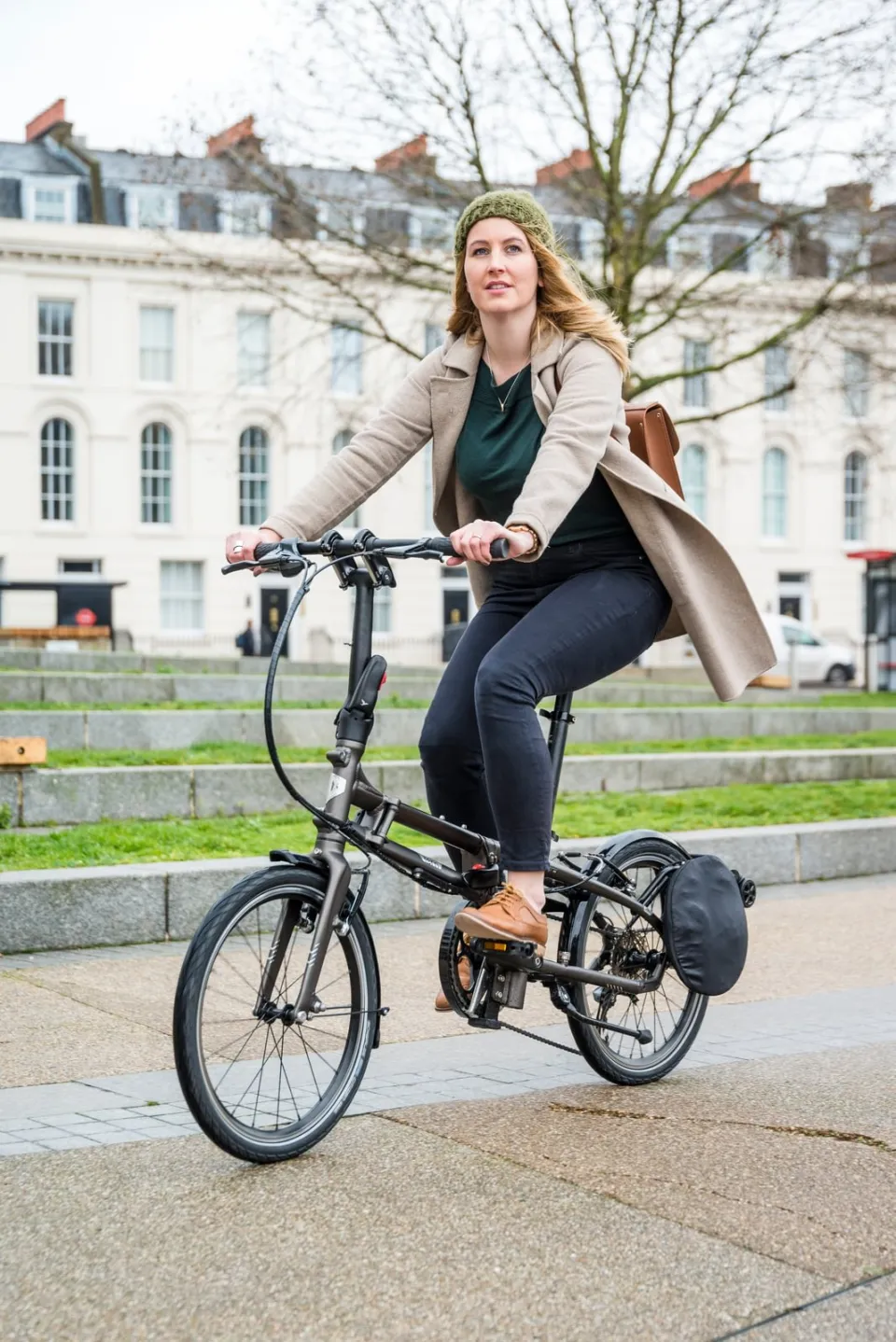
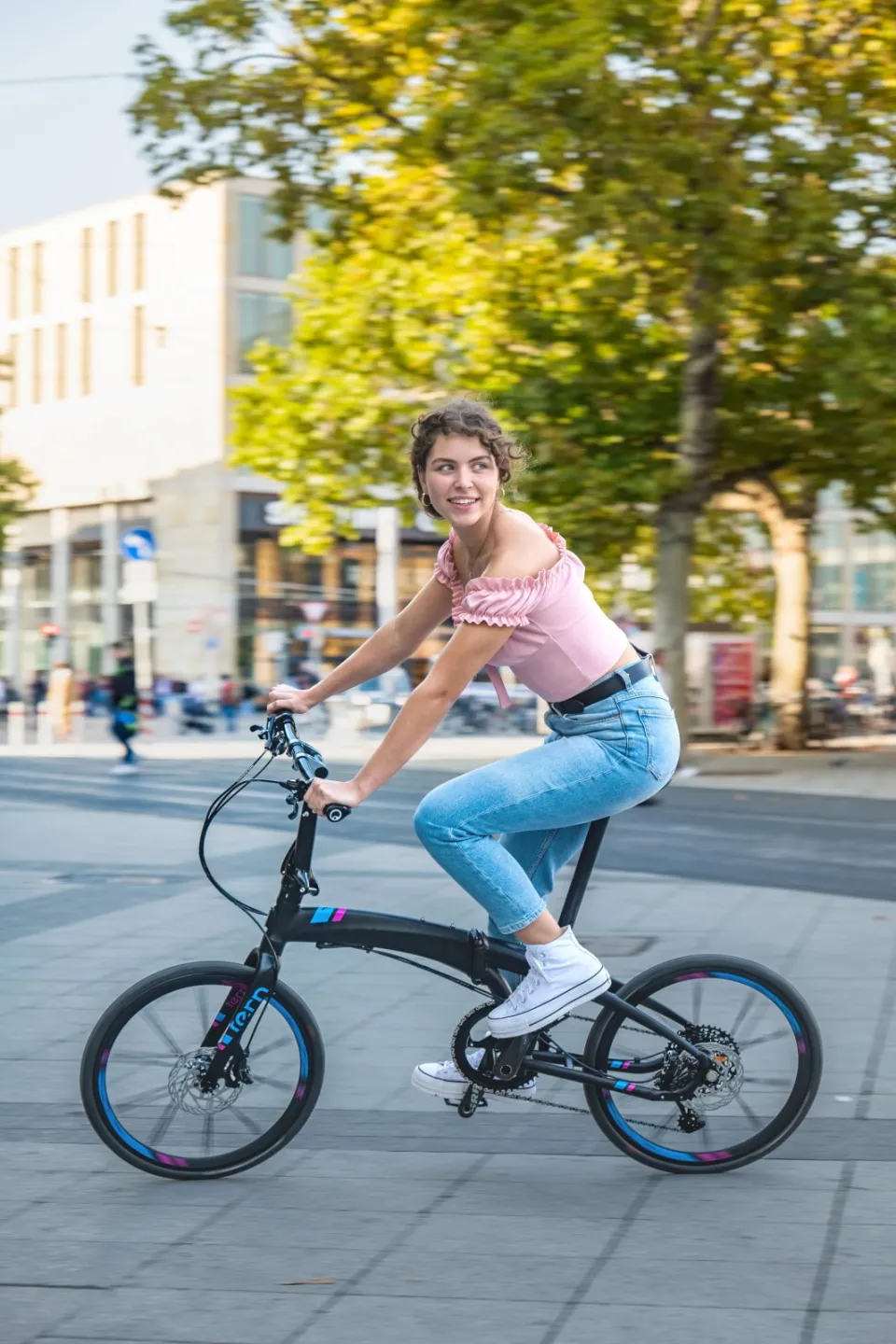
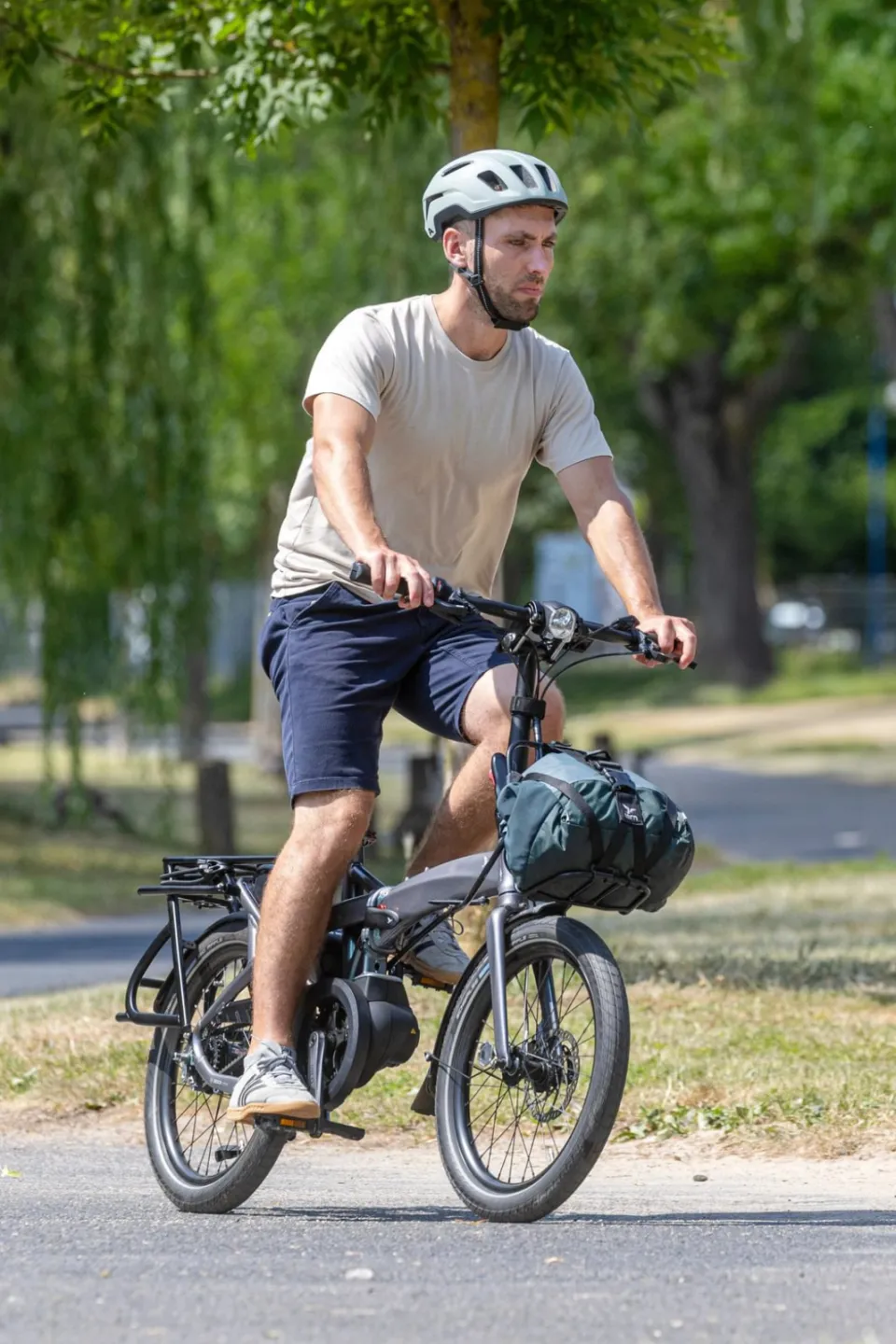
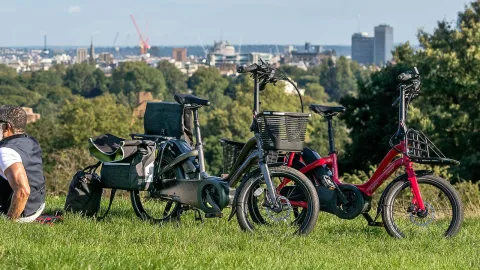
Meet the (1) BYB, (2) Verge, and (3) Vektron, three of our top commuter bikes built for speed and versatility.
What you'll need (besides a bike)
You don't need to gear up like you're racing the Tour de France, but a few bike commuting essentials make a difference. Here's what's worth having before you head out.
The non-negotiables:
- Helmet: the one item not up for debate, and legally required in some areas
- Front and rear lights: mandatory for night riding in most places, so worth having if your commute touches any low-light hours
- A solid lock (or two): for added peace of mind while you’re away from your parked bike
Optional but genuinely useful:
- Bell: an easy way to let people know you’re coming
- Reflective gear: a high-visibility vest is a good starting point for staying visible. Adding reflectors to your pedals and wheels is worth considering too, as the movements tend to catch drivers’ attention better than static reflective clothing.
- Panniers or baskets: so you don’t have to haul a backpack on your shoulders throughout the ride
- Fenders: because arriving with a muddy stripe up your back is a look, but not a great one
- A portable repair kit (spare tube and a mini pump will do): flats can happen, and rarely at a convenient moment
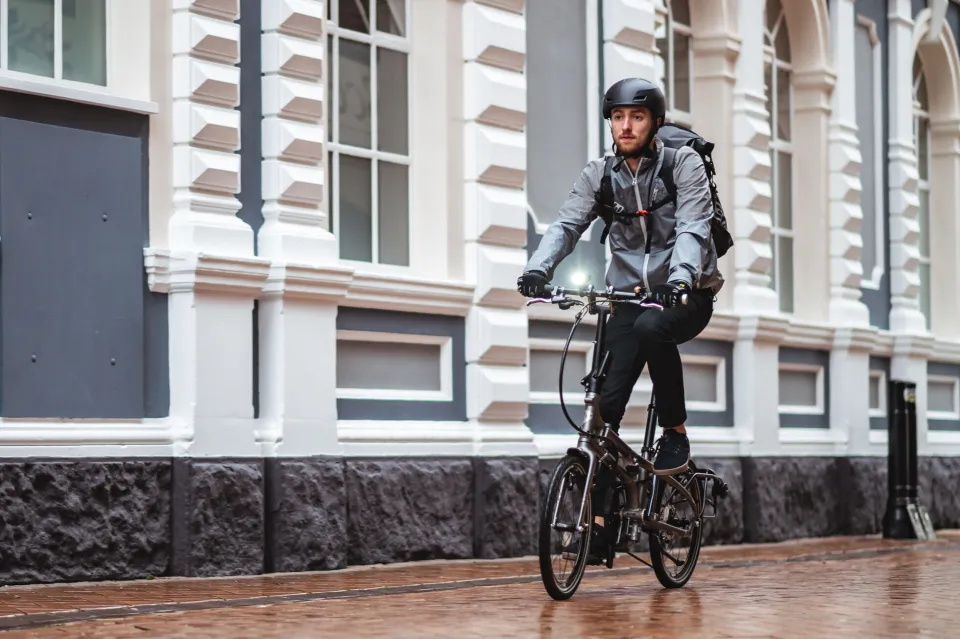
Investing in bike commuting essential gear like helmets and lights is investing in rides where you feel secure.
What to wear for cycling to work
Everyday clothes work perfectly well for most commutes. In summer, choose breathable or moisture-wicking fabrics like linen, lightweight merino wool, or technical performance blends. In winter, don’t overdress as your body warms up quickly while cycling, which can lead to overheating. Instead, the key to staying warm is a base layer that keeps you dry, like merino wool. Then add windproof jackets and pants as your outer layer. Don’t forget gloves and a windproof face mask to keep your hands and face warm. Check the forecast before you head out—if rain is in the cards, bring a light waterproof jacket.
For shoes, your favorite sneakers or any other flat closed-toe options will do the job. Once you settle into regular bike commuting, you can invest in winter boots or overshoes if you’re dealing with snow and freezing rain.
Depending on the weather and how far you're riding, you might want a shower when you arrive. If your workplace has a shower facility, it's worth packing your work clothes and any toiletries you need. If not, a pack of wet wipes and a little extra time to cool down usually does the trick. Either way, keeping a spare set of clothes at your desk or locker is never a bad idea.
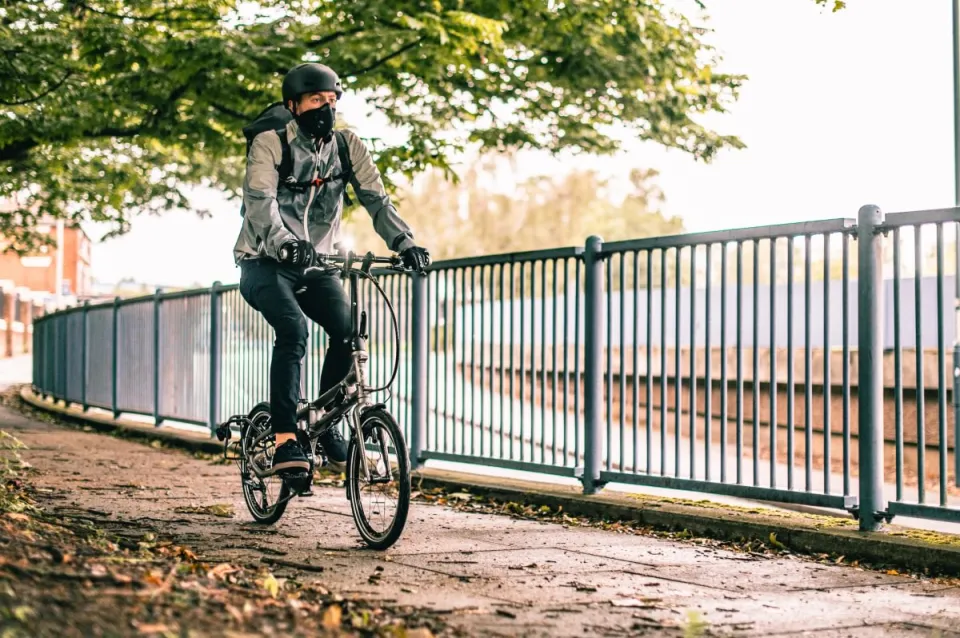
Dress comfortably for the weather and enjoy the ride ahead.
Learn the rules of the road
When you start biking to work, the ground rules are pretty straightforward: be visible, follow the rules, and be predictable. Here are some basic safety tips:
- Ride in the same direction as traffic and stay in a straight line. Stop at lights, and use hand signals before you turn so the people around you aren’t left guessing.
- Maintain a safe buffer zone around all kinds of vehicles that gives you enough distance to react if someone opens a car door, or if a vehicle in front of you stops short. Give trucks and buses plenty of space, and try not to sneak up alongside them, especially at intersections, as they have the largest blind spots.
- Look ahead for potential obstacles, and keep your hands near the brakes so you’re ready to stop at any moment.
- Rules can vary by city or country, so it’s worth checking your local traffic guidelines too.
One more thing: keep your phone tucked away, and leave your headphones out. Your favorite morning podcast might have to wait, but you would be surprised how much you notice when you're not tuned out.
Final tip: build the habit
You don’t have to go from zero to full-time bike commuter in a week. Start with one or two days, see how the ride fits into your routine, and build from there. Give yourself some credit too: switching up your commute takes more initiative than most of us realize.
As you go, you’ll figure out what works best for you—maybe that means leaving earlier, taking a quieter route, or deciding that a mixed-mode commute makes more sense on certain days.
Riding part of the way and pairing your bike with the train or bus still counts, and for plenty of people who are trying out bike commuting, it’s what makes a habit stick, because a commute that fits your life is one you’ll actually keep doing. Just check the regulations with your public transport operator before bringing your bike on board, since the policies can vary by region, route and type of transport.
If you’re going for the mixed-mode route, here’s why we think folding bikes are worth a try.
Start bike commuting: you’re more ready than you think
Bike commuting has a short learning curve and a surprisingly long reward. Give it a few rides and you'll start to feel the rhythm of it: the route becomes familiar, the gear stops feeling like an extra thing to remember, and the commute that used to drain you starts to feel like the best part of the morning.
If you're ready to take it further, check out our guides on riding in all kinds of weather to keep rolling in every season:
Tips for Cycling in Rainy Winters
Tips for Cycling in Snow
Tips for Cycling in Summer
Related Articles