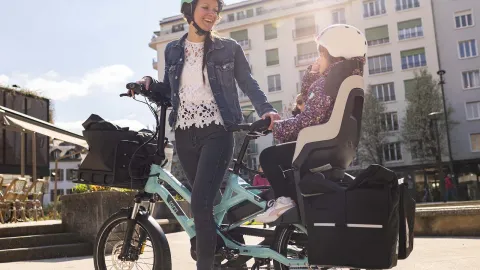
Electric bikes—particularly electric cargo bikes—are becoming increasingly popular among families with children, pet owners, and businesses as more and more folks are seeing them as viable, efficient, and sustainable alternatives to cars due to their ability to carry passengers and a significant load.
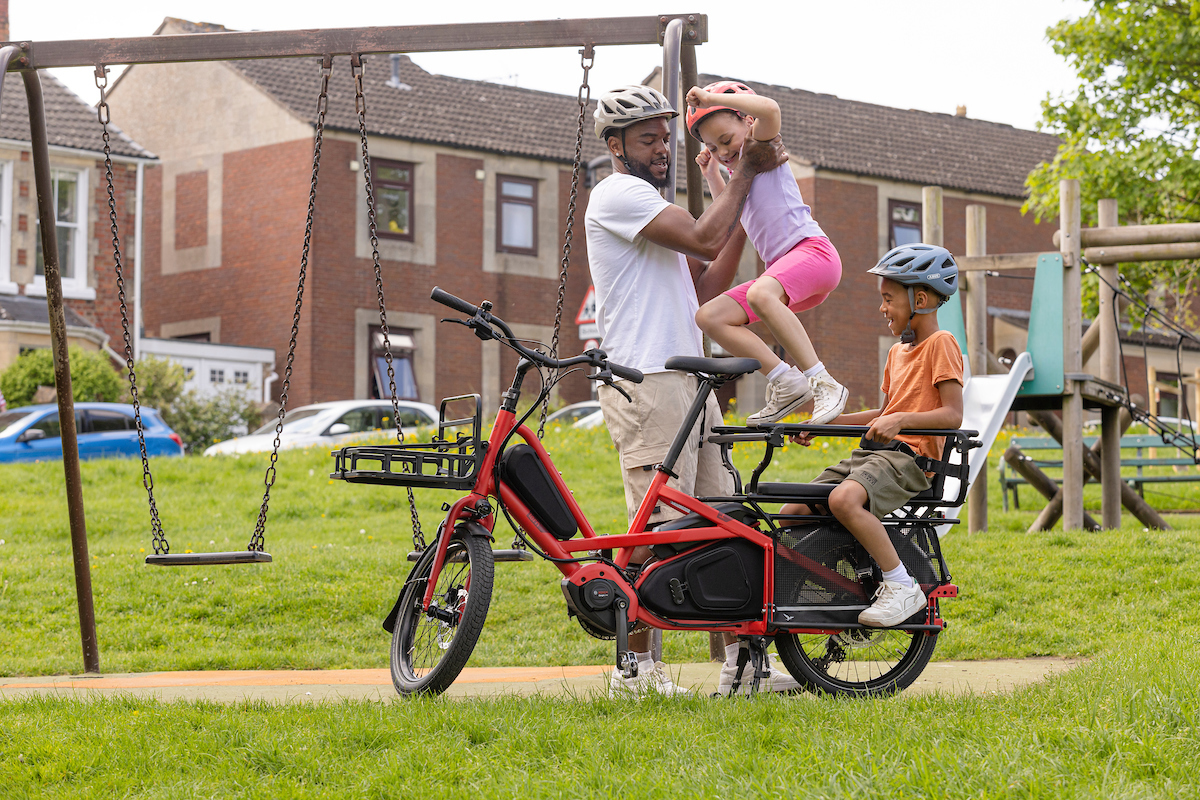
But with the growing presence of cargo and e-cargo bikes on the roads comes the question of safety. Not only do cargo bike frames and forks have to be strong enough to support the weight of the bike, rider, passengers, and cargo, the stress from all this weight is intensified when the bikes go over uneven road surfaces and potholes, and further amplified if the speed is boosted by an electric motor. Critical components such as the brakes are also placed under significant stress—just imagine the braking force needed to slow down a heavily-loaded bike traveling downhill!
You get the picture. Cargo bikes are expected to be much heavier-duty machines than regular bikes, so it only makes sense for tougher standards on the design and build quality of these bikes to be in place to ensure the safety of riders, passengers, and other road users.
Which brings us to DIN 79010.
What is DIN 79010?
In effect since 2020, DIN 79010 Cycles - Transportation bikes and cargo bikes developed by the German Institute for Standardisation is the first standard to specify the testing methods and safety requirements of electric and non-electric cargo bikes. Both single-track (2-wheeled) and multi-track (3-wheeled or more) bikes meant for transporting general cargo and/or passengers are covered in this standard.
Prior to DIN 79010, bikemakers referred to international standards such as ISO 4210 and EN 15194 to ensure the safety of their bikes. However, these standards were created way before the cargo bike boom. Although revisions have been made to improve their safety requirements on electrically power assisted cycles (EPACs, or e-bikes equipped with pedals and a motor that only supplies power while the rider pedals), ISO 4210 and EN 15194 still assume maximum vehicle loads of about 120 kg (264 lb)—which is great for lighter, single-rider traditional bikes and city e-bikes, but simply inadequate for cargo bikes.
The testing methods and safety requirements detailed in DIN 79010 contain some overlap with ISO 4210 and EN 15194. However, DIN 79010 sets a substantially higher maximum permissible weight of 250 kg (551 lb) for single-track bikes and 300 kg (661 lb) for multi-track bikes, covering both non-electric bikes and EPACs (with a maximum rated power of 250 W and speeds capped at 25 km/h [15.5 mi/h]).
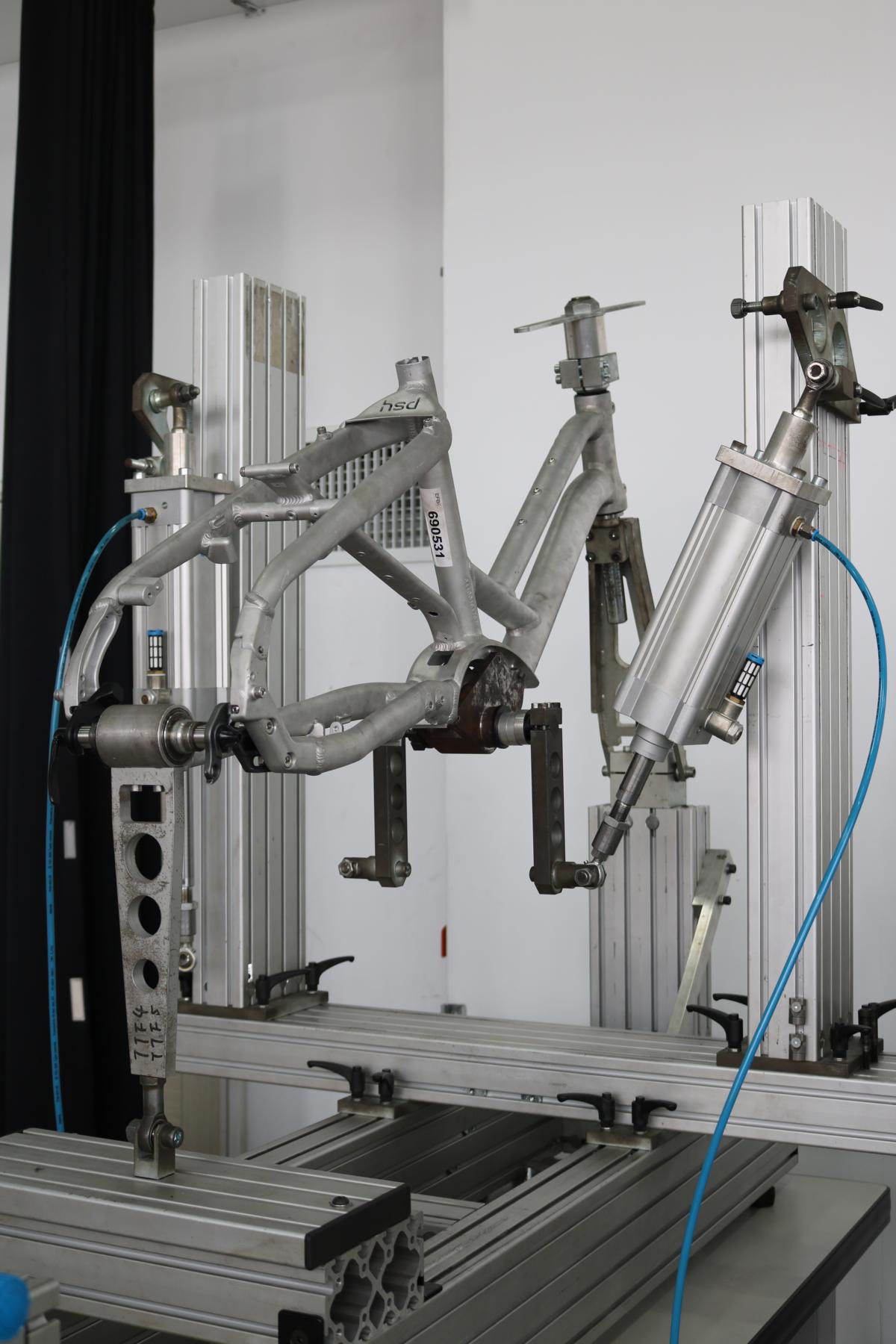
Crucial differences are also found in DIN 79010 to account for the heavily-loaded nature of cargo bikes, including specific test requirements for the braking system, rigorous load-bearing tests for the frame and fork, additional safety tests for child passengers, tests to simulate extreme overload scenarios (like when a bike hits a sudden, deep pothole), and more.
Why is DIN 79010 important for e-bike safety?
If you’re looking to get an e-bike to help you carry your little ones or haul groceries around town, you’ll want to make sure it’s as safe as possible. UL 2849 testing and certification ensure the highest level of electrical and fire safety for e-bike systems—which is why Tern insists on using best-in-class Bosch e-bike systems that are certified to UL 2849 for our e-bikes and e-cargo bikes.
However, up to now there has been no mandatory safety standard to ensure the structural integrity and reliability of cargo bikes.
While we at Tern believe that all bikes—electric or non-electric, cargo or city—should meet basic international standards like ISO 4210 and EN 15194, we do not regard these basic standards to be adequate for evaluating and testing the structural elements of bicycles claiming a maximum vehicle load of more than 120 kg (264 lb). To ensure the structural rigidity and overall safety of our bikes meant for heavier riders and loads, we consider DIN 79010 (or derivations thereof, such as the even more stringent EFBE Tri-Test) to be the minimum acceptable standard. Our cargo bikes like the Quick Haul Long, Orox, GSD, HSD, and Quick Haul are all certified by accredited independent testing labs such as Germany-based EFBE Prüftechnik to meet or even exceed the testing methods and safety requirements set forth in DIN 79010.
Getting bikes third-party certified involves considerable time and resources, and not all bike manufacturers are willing to go the extra mile. But we think it’s worth it to ensure our bikes are as safe as possible for our riders and the public.
Curious to learn more about what makes a safe e-bike? Visit our page devoted to this topic: Are E-Bikes Safe?
Dive deeper: E-Bike Certifications and Standards
Related Articles
Lorsque l'on roule avec un vélo électrique, le cadre, la fourche, les freins et les roues sont davantage sollicités. Pour garantir une conduite fluide et stable à grande vitesse et pour pouvoir s'arrêter immédiatement en cas de pluie ou de soleil, ils ont besoin de composants de haute qualité.