We’ve already shared some tips for biking during rainy winters. But what about those of you who live in snowy and icy climates?
Snow and ice might seem like formidable winter enemies for commuters. But with the right gear and preparation, they don't have to keep you off your bike.
We asked Tern’s Design Director Joakim “Jojo” Uimonen, who lives in Finland, for his best 13 tips on riding and maintenance for snowy and icy winters. We hope his advice gives you the confidence to ride right through your local winter wonderland.

Contents
Bike Equipment Considerations
- Switch to studded tires
- Be aware that your e-bike’s battery range will decrease
- Make sure your lighting is bright and visible
- Keep your chain well lubricated
- Keep yourself dry with fenders
What to Wear
- Don't overdress
- Bring extra layers
- Keep your head and neck warm
- Protect your hands
- Make your feet slip-proof
Keeping Your Gear Functional
Bike Equipment Considerations
1. Switch to studded tires
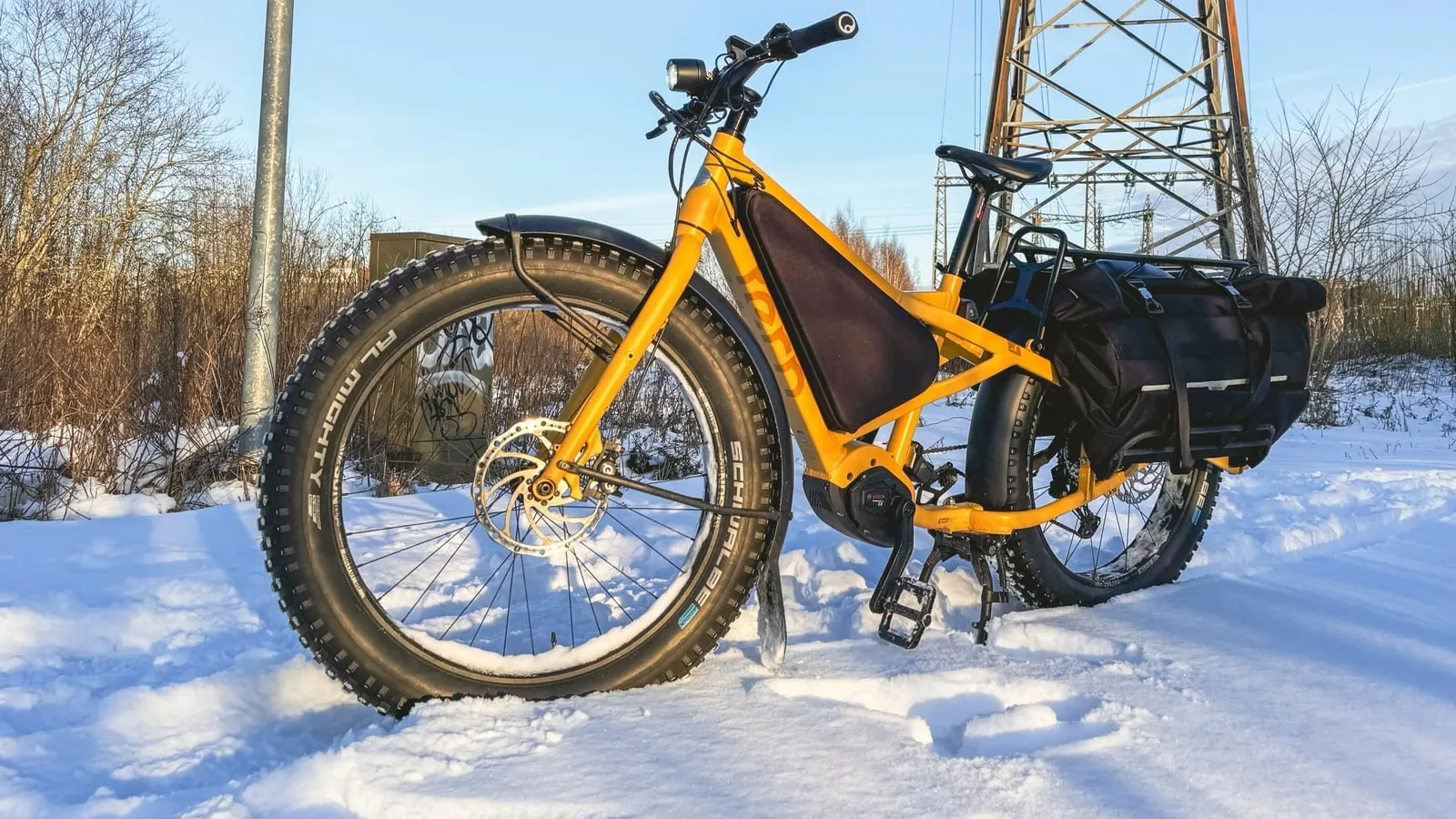
Switching to studded tires will give you better control when riding on snow and ice. Put them on your bike whenever your cycling route is snow-covered or icy for a safer, more confident ride.
The Schwalbe Marathon Winter Plus 55-406 (20 X 2.15) tires fit the GSD cargo bike and the Vektron folding electric bike. For other recommendations, check with your local bike shop.

2. Be aware that your e-bike’s battery range will decrease
If you have an e-bike, it will seem like your battery gets “empty” sooner in cold weather. In reality, it’s not empty, but it no longer works because the voltage has dropped.
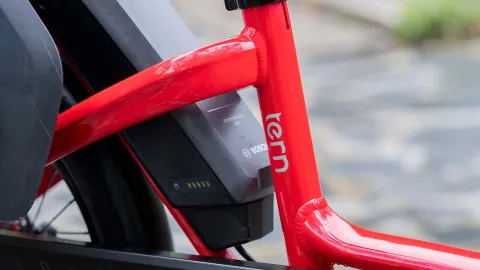
Battery covers can help keep the battery warm longer, but if you’re outside in the snow, it’s not a perfect solution. If you’re carrying a second battery, Jojo suggests placing it in a thermos bag with a thermos heater to keep it operational.
You’ll also find that your battery range decreases as a result of snow cover because the snow makes it harder for your bike’s wheels to turn.
For more information, check out our tips on how to care for your Bosch ebike battery.
3. Make sure your lighting is bright and visible
In the winter, it gets darker earlier, and drivers’ visibility goes way down—so front and rear lights are a must. Ensure your bike’s lights are working properly. You may want to consider installing additional safety lights for winter riding. If you use rechargeable lights (like the Nitelite Rear or Nitelite Side), make sure they have enough battery for the trip.
4. Keep your chain well lubricated
Regular bike chain oil may get stiff in freezing weather, which can make it harder to ride. Jojo recommends using gun oil to lubricate your chain, as it won’t freeze even in extreme cold.
5. Keep yourself dry with fenders
Most Tern bikes come with fenders, which should protect your feet and lower back from the cold, wet spray that splashes up from snowy roads. If you have a bike without fenders, be sure to install some for the winter. The main objective is always to stay dry.
Which brings us to …
What to Wear
6. Don’t overdress
As tempting as it may be to bundle up, don’t overdo it. Wearing lots of heavy layers prevents heat from escaping your body, which can lead to overheating―an uncomfortable and potentially dangerous condition.
Overdressing can also lead to excess sweating, which will leave you wet and shivering at every stop. If you can feel yourself sweating, your cycling clothes are too warm.
Consider your bike type and riding style. Jojo says he dresses differently when riding his Tern Eclipse (a conventional folding bike) vs. his GSD. On the Eclipse, he goes for fewer layers and chooses breathable fabrics with plenty of ventilation (think cross-country skiing or ice skating). On the GSD, he dresses warmer (think snowboarding or downhill skiing). It may take some trial and error to figure out what works for you.

7. Bring extra layers
But remember, you’ll have to get off the bike at some point. Stopping your aerobic activity will significantly lower your core body temperature. Wear a breathable jacket while riding, but stash a warmer jacket in your pannier to put on during longer stops.
8. Keep your head and neck warm
Since you lose lots of body heat from your head, it’s essential to keep your head and neck warm (it also makes riding in frigid temperatures way more pleasant).
A silk or merino wool under-helmet balaclava will protect the sides of your head, ears, and throat without interfering with your helmet. If it’s extra cold outside, it might be a good idea to add a thin beanie.
Jojo also shared that he has a “winter helmet,” which has less ventilation than the one he wears in the summer months. However, use caution when selecting a winter helmet. Avoid ski helmets with built-in ear covers, which will block out too much of the noise from passing traffic.
9. Protect your hands
Nobody likes having that “cold to the bone” feeling in their hands. That’s why good gloves that don’t interfere with braking are so important.
Jojo recommends gloves that leave one or two fingers free for braking. He points out that wool mittens can be dangerous, as they make it harder to reach the brakes and can be slippery on the handlebar.
For really frigid weather, he recommends bar-end mitts (sometimes called “pogies”), like these.
10. Make your feet slip-proof
If you’ve got studded tires on your bike, you may find that your greatest risk of slipping happens once you get off the bike. Wearing studded shoes should help keep you upright. You can also add studs to the bottom of your normal athletic footwear using straps. Make sure to choose studs that don't interfere with pedaling. You can even find models that only have studs covering the heel, so you can still use shoes with SPD cleats to clip into the pedals.
Keeping Your Gear Functional
11. Stay hydrated with warm drinks
Cold or room temperature water will freeze quickly once outside, so bring a warm drink in an insulated container. Remember, you still need to hydrate in wintertime, even if you don’t feel as thirsty.

12. Keep your phone warm using body heat
Carry your smartphone in a pocket that’s close to your skin (such as in the pocket of an undershirt). Keeping the battery warm will keep the phone operational for much longer. Jojo warns that you definitely want to avoid putting the phone on a handlebar-mounted phone holder, where it will freeze and shut down almost instantly.
13. Watch out for foggy eyeglasses
If you wear eyeglasses plus a balaclava, steam from breathing may freeze onto your eyeglass lenses, hampering visibility. There’s not a great solution for this, although wearing ski goggles or adjusting your nose and mouth covering may help. Jojo recommends sticking to contact lenses if possible (and says this is one of the reasons he got laser eye surgery!).
Overall, Jojo says that while it makes sense to exercise caution, you shouldn’t fear winter riding. “When other outdoor winter activities are possible, so is cycling,” he explains. “Just ride and adjust the things that don’t work as well for next time.”
A true Finn, Jojo did offer a few additional words of wisdom involving ice picks and dry bags―but we’re going to go ahead and assume most of you are just going to ride straight to work. 😂 Have fun and be safe out there!
Related Articles