With cycling growing in popularity, you may have seen various people and bikes zipping along streets and bike lanes. But do you ever see someone and wonder: “How did they get up that hill so effortlessly”, or “How are they carrying all that stuff and not getting tired”? Besides the fact that that person may just be extremely athletic, you may have been looking at someogne riding an e-bike! If you are curious about what an electric bike is or how ebikes work, you’ve come to the right place. This article will walk you through the basics of eBikes and how they might just change your routine.
Contents
- So, what are e-bikes and how do they work?
- Types of electric bikes
- E-bikes come in all shapes and sizes
- E-bike motor types
- Who are e-bikes for?
- Batteries: Powering your e-bike adventures
- E-bike laws and regulations
- Conclusion
So, what are e-bikes and how do they work?
An e-bike, or electric bicycle, is a modern cousin of the traditional bicycle, but with the added benefit of an electric motor and battery. This technology assists riders, making cycling a more accessible and enjoyable activity for all. Imagine being able to cycle longer distances, carrying more, or facing strong headwinds and hills all without breaking a sweat! Much like a non-ebike, electric bicycles come with handlebars, pedals, and a seat but with some additional components like an electric motor, a battery, and a control unit. These work together to provide assistance, giving you a little boost during your ride.
Types of electric bikes
There are two main types of electric bicycles that you’ll find on the market: pedelecs and throttle eBikes.
Pedal-assist electric bikes, or ‘pedelecs’ require you to pedal for the motor to engage. To an extent, the harder you pedal, the more assistance the motor provides. This system offers a riding experience similar to that of a traditional bike, with the added benefit of adjustable power. Plus you can still get in a bit of a workout.
Throttle e-bikes, on the other hand, allow you to activate the motor with a throttle. With a throttle, you can ride without pedaling, similar to a scooter. You may find that one type of ebike is more suited for your use case than the other.
Learn more: How Tern’s Pedal-assist E-Bikes Work
E-bikes come in all shapes and sizes
Electric bikes come in different styles, each designed for specific types of riders and environments. Understanding these e-bike types can help you find the one that best suits your needs.
Cargo e-bikes
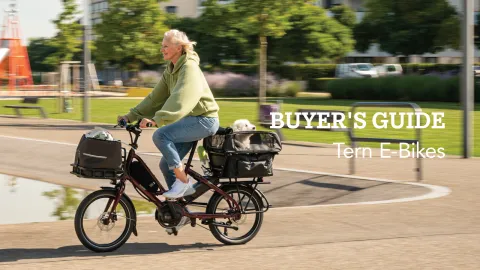
Cargo electric bikes can be considered the workhorses among electric bicycles. Built with strong frames and powerful motors, they’re designed to carry heavy loads. Whether you’re transporting groceries, children, bulky items, or even your partner, there’s not much electric cargo bikes cannot handle! Given their versatility and eco-friendliness, they are great options for families who often need to make short trips.
City e-bikes
City e-bikes, or commuter e-bikes, are designed for everyday urban travel. They prioritize comfort and practicality, with features like upright seating, integrated lights, and racks for carrying bags or groceries. If you’re looking for a reliable bike for commuting or you simply want an easy and comfortable way to get around town, a city electric bike might be the right choice for you.
Folding e-bikes
If you have limited storage space, folding e-bikes are a practical solution. These bikes can be folded down into a compact size, making them easy to carry on public transport, fit into a car trunk, or store in a small apartment. They’re ideal for urban commuters who need a bike that’s portable and convenient.
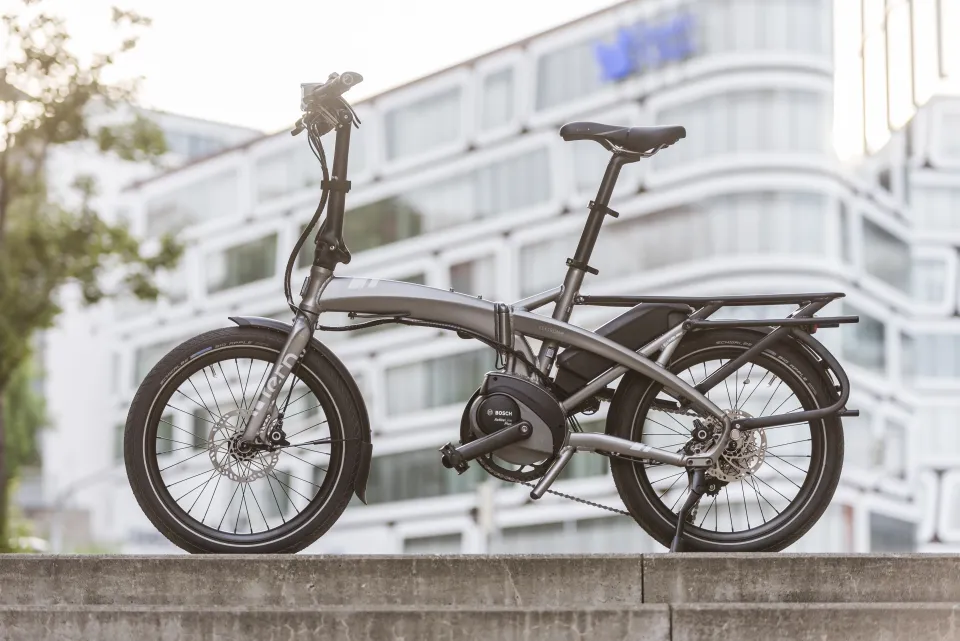
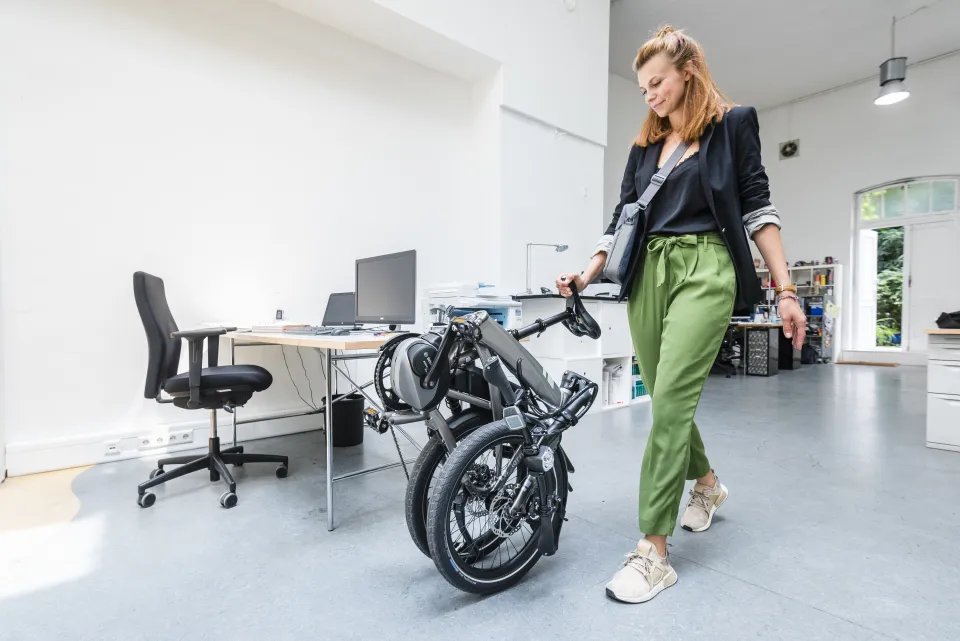
The Tern Vektron electric folding bike takes you from your front door to the train station, and all the way to your desk.
Performance e-bikes
Performance electric bikes are designed for specific types of sport.
You’ll find types like road e-bikes. Their lightweight, aerodynamic build makes them ideal for fitness enthusiasts and anyone who enjoys long-distance rides or covering large areas quickly. In contrast, mountain e-bikes (also known as e-mountain bikes or e-MTBs) are specifically engineered for off-road adventures. With durable frames and powerful motors, they excel at tackling rugged trails, climbing steep inclines, and navigating challenging terrain.
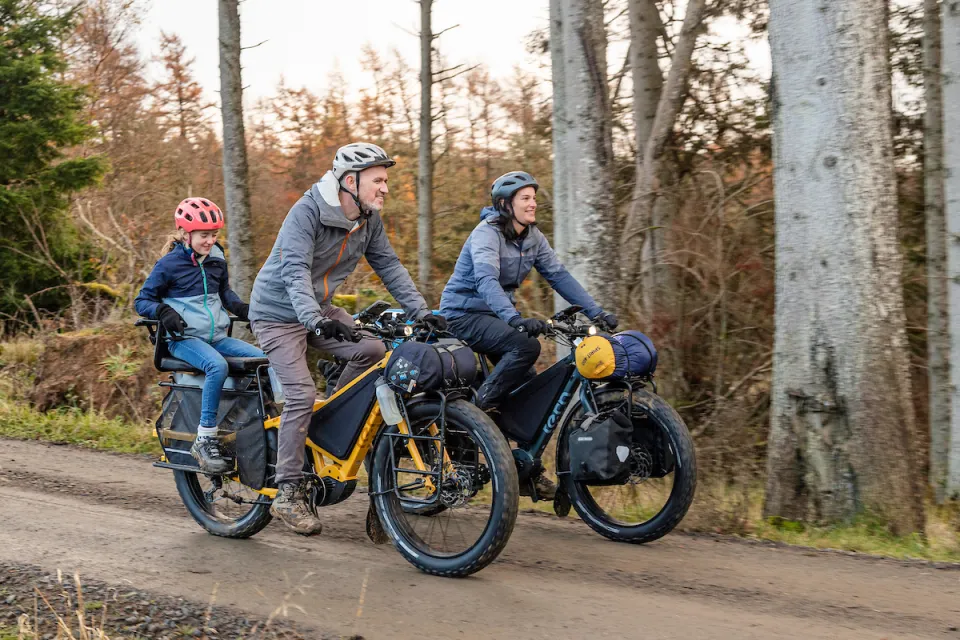
The Tern Orox adventure e-cargo bike combines performance and practicality for families and solo explorers alike.
E-bike motor types
Just like a car has front-wheel drive, rear-wheel drive, and different engine positions, so do electric bikes. These differences can affect where the power output comes from, changing the efficiency and ride feel of your ebike.
Mid-Drive Motors
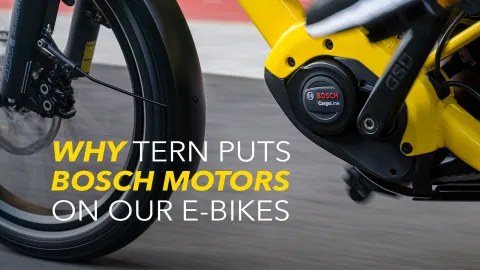
Mid-drive motors are installed at the bike's bottom bracket where the pedals are located, and are usually more expensive. This central placement provides balanced weight distribution and the feeling most similar to a non-electric bike because that is where power would be generated without a motor! Mid-drive motors are known for their efficiency and are especially good for climbing hills and carrying heavy loads, which is why you find them on many premium cargo and performance e-bikes.
Hub Motors
Rear Hub Motors
Rear hub motors are located in the rear wheel and provide a sensation of being pushed from behind. They are quieter, require less maintenance, and are typically more affordable than mid-drive motors. Rear hub motors are well-suited for where simplicity and cost-effectiveness are key.
Front Hub Motors
Front hub motors, placed in the front wheel, pull the bike forward. While they are less common than the other types, front hub motors are easy to install and maintain. They’re often found on entry-level electric bikes and light-duty city bikes for a straightforward and accessible riding experience. Depending on your budget, you may be limited to a certain type of ebike motor. If you want to learn more about how much you should budget for an ebike, check out this article.
Who are e-bikes for?
- For commuters, eBikes are the ideal solution for navigating busy city streets quickly and efficiently, helping you beat traffic and arrive at work stress-free.
- Families can replace their car with a cargo e-bike for school drop-offs, grocery runs, and family outings, all while saving on fuel and reducing their carbon footprint.
- For adventure seekers, electric bikes allow you to go further than you thought you could with a non-electric bike, making a once unreachable journey easier than ever. They also provide a great alternative to driving, offering the chance to discover new routes for your daily commute, all while enjoying the outdoors.
- Anyone can enjoy the freedom and health benefits of cycling without the physical strain. E-bikes provide just the right amount of assistance to keep rides enjoyable.
In many cases, an ebike makes cycling more accessible, practical, and fun, transforming the way you get around and explore your world.
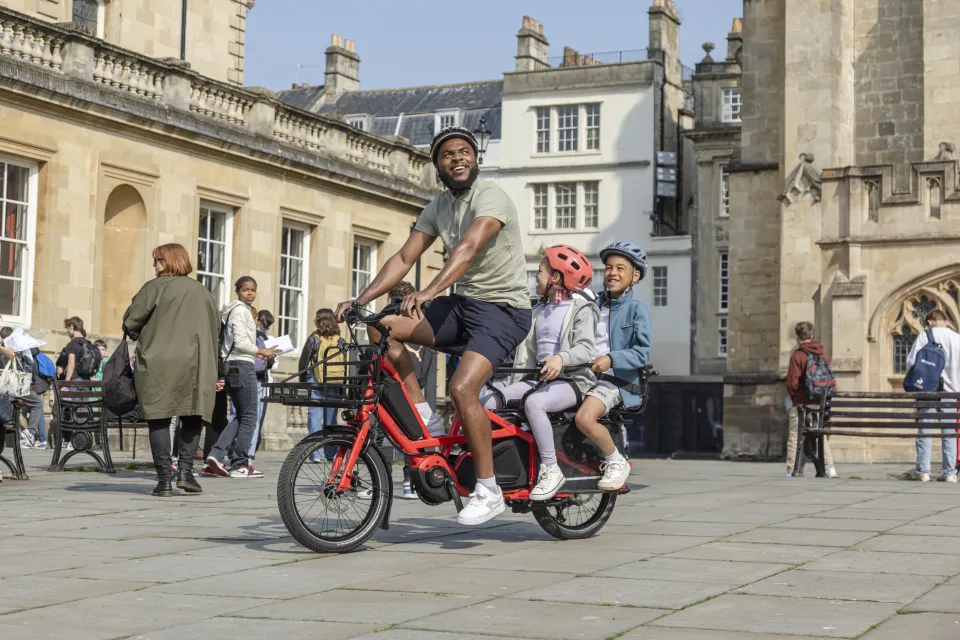
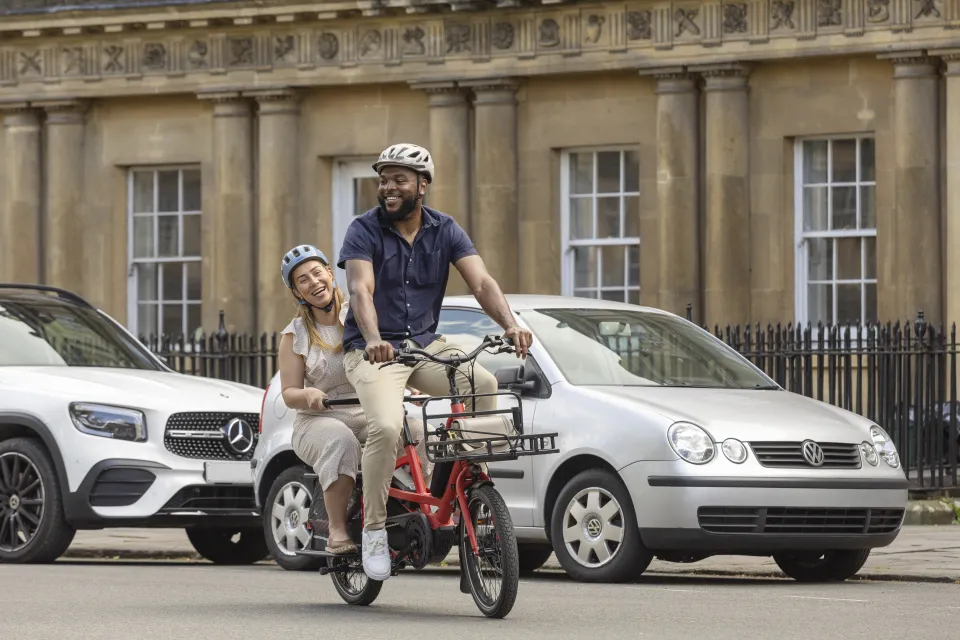
E-cargo bikes like the Tern Quick Haul Long are suitable for families for everyday errands and special outings alike—with or without the kids!
Batteries: Powering your e-bike adventures
Electric bikes are powered by lithium-ion batteries, known for their durability and high energy capacity. Charging is hassle-free, as you can plug the battery into a standard outlet, and it’s ready to go in 3 to 6 hours. Tern electric bicycles are equipped with Bosch batteries of varying capacities and are safe to store outdoors and indoors.
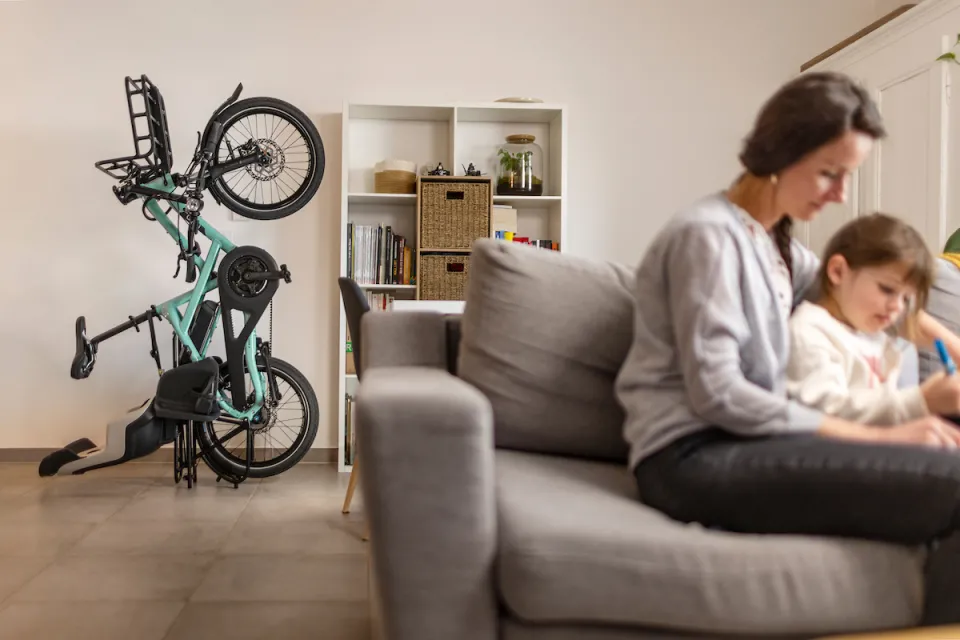
Tern e-bikes feature the Bosch eBike System with UL2849 certification for top safety.
How far can you ride?
The range of an e-bike varies based on factors like the battery’s capacity, motor assistance level, rider weight, and terrain. On average, electric bikes can cover 48 to 161 km (30 to 100 miles) per charge. If you need to cover relatively long distances, you might want to go for bikes with high-capacity batteries. For longer rides, bikes with dual battery systems—like the GSD and Orox—are ideal, as they offer double the power to extend your journey. Dual batteries are especially useful for cargo and performance bikes, providing the extra range needed to handle heavy loads or lengthy commutes with ease.
How much do e-bike batteries cost?
High-quality e-bike batteries typically cost between US$500 and $1,000—this depends on how much electric power they deliver, and they last for several years with proper care. When you consider how much you could save on fuel and car maintenance, ebikes quickly prove to be a cost-effective and eco-friendly transportation solution. Investing in a reliable eBike battery ensures smoother rides, longer adventures, and a more sustainable way to commute. Whether you're tackling city streets or rugged trails, your battery powers every mile.
E-bike laws and regulations
E-bike regulations vary by region, so understanding them is important to ensure you’re riding legally and safely.
United States
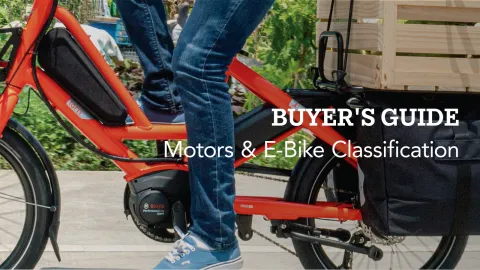
In the US, e-bikes are typically classified into three categories based on their top speed and motor assistance. Class 1 and Class 2 e-bikes are limited to 32 km/h (20 mph), while Class 3 e-bikes can reach speeds of up to 45 km/h (28 mph). The motor output is usually capped at 750 watts.
For a detailed breakdown: E-Bike Buyer's Guide on Motor and Classifications
European Union
In the European Union, e-bikes are limited to 25 km/h (about 16 mph) with a maximum motor output of 250 watts. These regulations help ensure that e-bikes are treated similarly to traditional bicycles, meaning they don’t require a license, registration, or insurance.
Tern e-bikes are designed to comply with these regulations, making them easy to use and accessible to riders across different regions.
Conclusion
An e-bike is a versatile and efficient way to enhance your cycling experience. By combining the traditional features of a bicycle with an electric motor, battery, and controller, electric bicycles make riding easier and more accessible.
Whether you’re commuting through busy city streets, running errands with your kiddos on a cargo bike, exploring rugged trails on an e-MTB, or simply looking for a more sustainable way to travel, there’s an e-bike designed to meet your needs.
Curious for more? Our Complete Guide to eBikes has you covered.
Related Articles