So you’ve finally decided that getting a cargo bike is the right move. Great choice! Now comes the next important question: front-loader or longtail? Both designs can carry passengers, hold groceries, or transport gear. And in some cases, they can even replace a lot of car trips. But they both do it in different ways, and the right one depends on how you ride and what you carry.
In this guide, we compare front-loaders (also sometimes called “box bike” or “bakfiets”) vs. longtail cargo bikes (or “rear-loaders”) according to how easy they are to handle, passenger comfort, weather protection, cargo, and storage, so you can choose your next family workhorse with confidence.
If you’re new to cargo bikes, here are the things to know before getting your first cargo e-bike.
Contents
- Front-loader vs. longtail at a glance
- Two ways to carry a load
- Handling and riding experience: Which one is easier to ride?
- Carrying passengers: Which one offers the most stable ride?
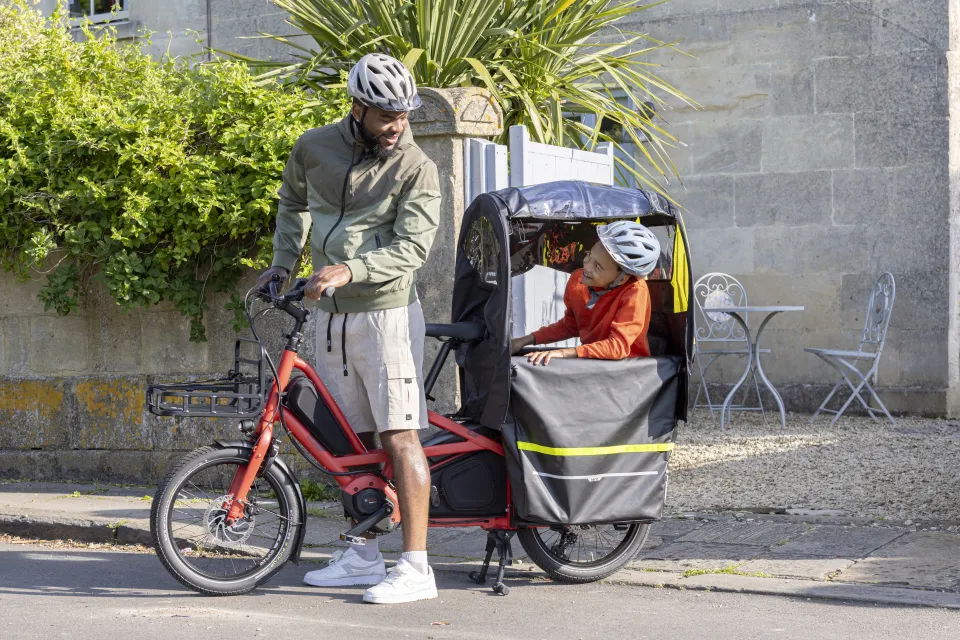
- Passenger weather protection: Which works best in rain or shine?
- Carrying cargo: Which one can best transport your things?
- Storage and parking: Which one is easier to store in your home?
- Summary
Front-loader vs. longtail at a glance
| Front-loader | Longtail | |
| Where the load is carried | In front of the rider | Behind the rider |
| Ease of handling | May be difficult to steer in the beginning | Steers just like a regular bike |
| Passenger suitability | Great for carrying younger children | Can fit toddlers to full-grown adults |
| Weather protection for passengers | Available sun and rain covers | Available sun and rain covers |
| How cargo is carried | Typically in a front cargo compartment | On the rear rack or in panniers, baskets, trays, and boxes |
| Storing the bike | Needs lots of room for storage | Typically requires less space to store |
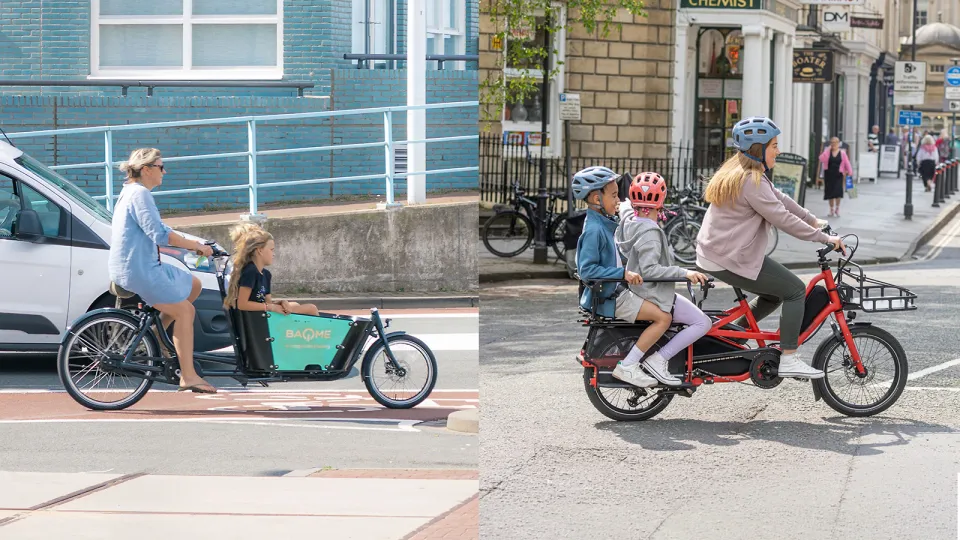
Two ways to carry a load
The biggest difference between a front-loader and a rear-loader is where your passengers and cargo ride.
Front-loader
Imagine a wheelbarrow you can ride. As its name suggests, front-loaders have a compartment in front of the rider, located between the handlebars and the front wheel. Your groceries, equipment, kids, or pets ride in this compartment in front of you, closer to the ground. Because of this, box bikes are also usually longer and wider than longtails.
Longtail
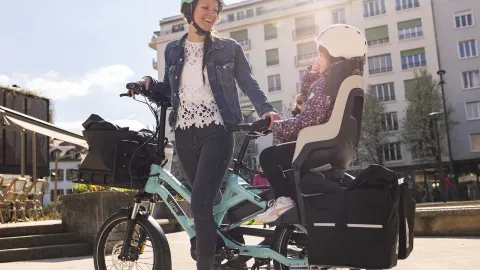
Passengers and cargo sit on an extended rear rack behind the rider through the use of different accessories like seat pads, passenger bars, and bags that turn the rear rack into a space for seating or storage.
Handling and riding experience: Which one is easier to ride?
Front-loader
Getting on a front-loader for the first time may feel slightly awkward, and requires a bit of a learning curve. That’s because the box or compartment between the rider and the front wheel creates a longer wheelbase (the distance between the front and rear wheel axles), resulting in a wider turning radius and slower steering response when approaching tight corners.
Most box bikes also use what’s known as linkage steering, where a rod connects the handlebars to the distant front wheel. This is a form of indirect steering: instead of turning the wheel directly, the rider’s input travels through an intermediate system before it reaches the front wheel. Because of this, steering feels different from a regular bike. Add the larger size and the extra weight at the front, which is clearly noticeable when starting off, and it can take some time to adjust. But once it clicks, it can be a steady ride.
Longtail
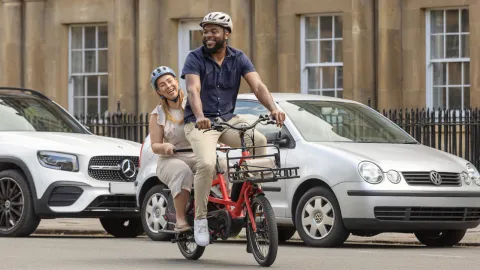
If you can ride a regular bike, then a longtail will be a similar experience. With the load placed behind you and a familiar-looking front end, even first-time cargo bike riders will likely get the hang of riding a longtail quickly. That’s because, unlike front-loaders’ linkage steering, rear-loading cargo bikes use direct steering just like a standard bike. Here, the handlebars are connected to the fork through the headtube, so when the rider turns the handlebars, the front wheel turns accordingly, resulting in a natural steering experience. And because they have a shorter wheelbase than front-loaders, rear-loaders offer quicker steering and an easier feel for tight corners.
Compact longtails, like the Tern GSD and Quick Haul Long, are close in length to a regular bike, so they’re even easier to steer and turn than longer, traditional longtails. That easy handling really pays off during daily errands or family commutes, from busy intersections to tight bike lanes.
Carrying passengers: Which one offers the most stable ride?
Front-loader
Front-loaders tend to feel very steady with passengers on board. Kids sit low in the compartment, so their weight stays close to the ground and the center of gravity also stays low. You’ll still notice the extra weight up front when steering, climbing or descending hills, and getting going from a standstill. But once you’re rolling, a loaded box bike feels stable.
On top of that, kids sit right in front of you, so you can keep an eye on them and chat as you ride, and the low compartment makes it simple for little ones to climb in and out on their own. While that’s good news, space on a box bike can quickly become limited as kids grow up. Longer legs and bigger bodies start to feel cramped in the front compartment, and most front-loaders don’t have much room for an adult passenger with long legs.
Longtail
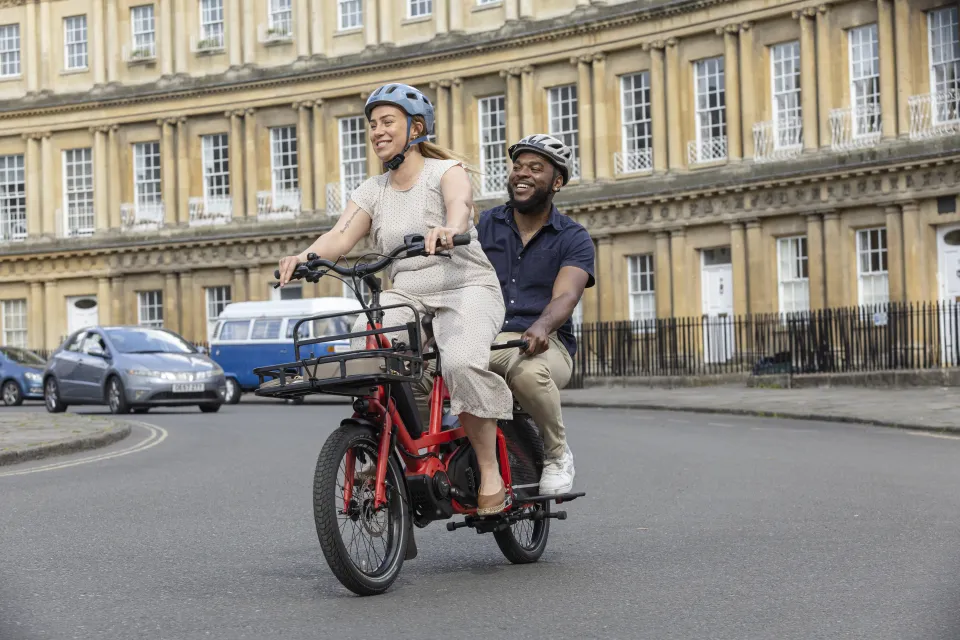
On rear-loaders, passengers sit higher up, behind the rider and over the rear wheel. This raises the center of gravity, so you may feel the bike move a little when a passenger shifts their weight, or when you’re starting off and coming to a stop. Well-designed longtails help reduce this. The Tern GSD and Quick Haul Long, for example, are built with a lower center of gravity for enhanced stability under load, and their low step-through frame makes getting on and off easier.
You can also think of a longtail as the setup that grows with you. You might start with a child seat for a toddler, then switch to seat pads and a backrest as they get older. Need more seats? Some rear-loading family bikes can carry two kids, or even a full-grown adult, with room to stretch their legs. The catch: younger kids often need a hand climbing onto a longtail’s rear seat. But the right setup closes that gap. On Tern longtails, the Clubhouse passenger bars has an arm that opens up so parents no longer need to lift their child up to get seated. Many families also pair it with a Storm Box for weather protection, creating an enclosed, box-like space with side openings so kids can climb in and out on their own. This way, you get the easy access of a front-loader, with all the advantages of a rear-loading cargo bike.
Not sure where to start? The Tern Passenger Guide walks you through which accessories you need for each passenger.
Passenger weather protection: Which works best in rain or shine?
Front-loader
When the sun comes out or when the weather turns bad, front-loaders have sun and rain covers to keep passengers dry and cozy. But since passengers on a box bike are seated in front of the rider, there’s the risk of blocking part of the view of the road, especially for shorter riders.
Longtail
Since passenger covers on rear-loading cargo bikes sit behind the rider, you’ll always maintain forward visibility rain or shine. Of course, what works on a sunny day may not be so practical when there’s rain, so choosing a longtail bike with a wide range of compatible accessories is always a good idea, as it gives you the flexibility to adapt to different weather conditions and riding needs.
Curious about Tern’s weather canopies? Check out our guide to learn about the different options and how they compare.
Carrying cargo: Which one can best transport your things?
Front-loader
Carrying huge amounts of cargo is the front-loader's specialty. The large, built-in compartment makes it easy to simply toss in groceries, camping gear, bags, or even small appliances and just go. And because everything’s contained in a designated compartment, most items don’t need to be strapped down, though it still depends on what you’re carrying. The compartment also sits low to the ground, giving front-loaders a low center of gravity, so riders don’t have to worry too much about how the cargo weight is distributed within the front compartment.
Longtail
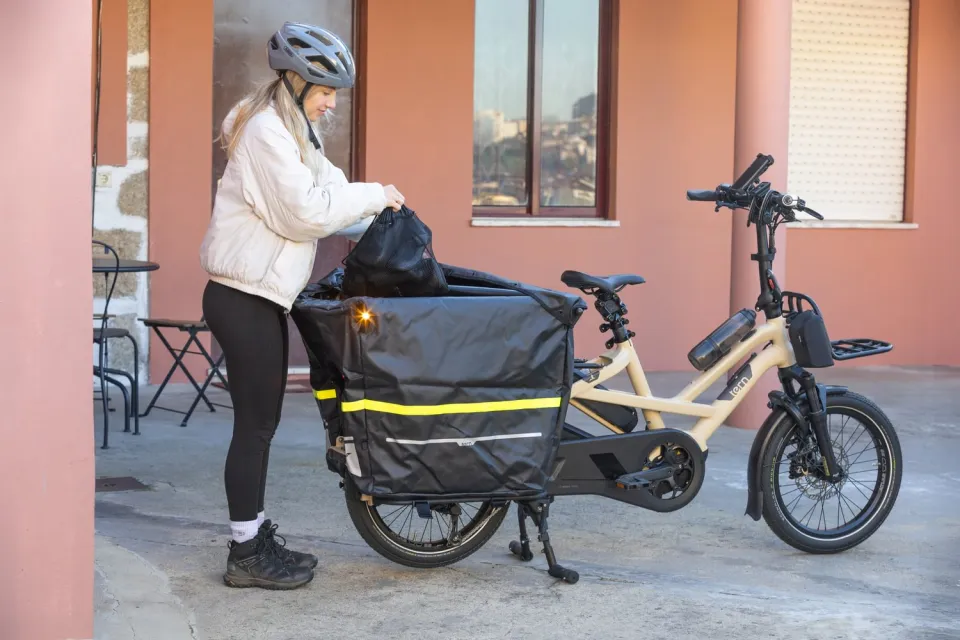
Where a longtail really stands out is customization. Instead of one fixed box, the rear rack on a rear loader works with panniers, baskets, and boxes, so you can build a setup based on what you want to carry. Tern longtails, for example, are designed to work with a wide range of cargo accessories, including the Storm Box bike bucket which holds up to 156 L of cargo and gives you the same toss-and-go convenience of a front-loader. And don’t forget, the front of the bike can also be configured to hold cargo through the use of front racks like the Transporteur Rack or Hardshell Hauler, expanding your cargo space even more.
Storage and parking: Which one is easier to store in your home?
Front-loader
Big guy coming through. Because of their longer frame and wide front compartment, front-loaders have a much larger footprint and thus require more storage space. Storing a box bike in a garage would be best. But for those living in the city or with limited indoor parking, this can be a problem, leaving owners with no other choice but to park their bike outdoors, exposed to the elements and even the threat of theft.
Longtail
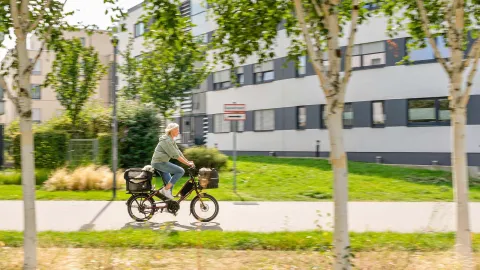
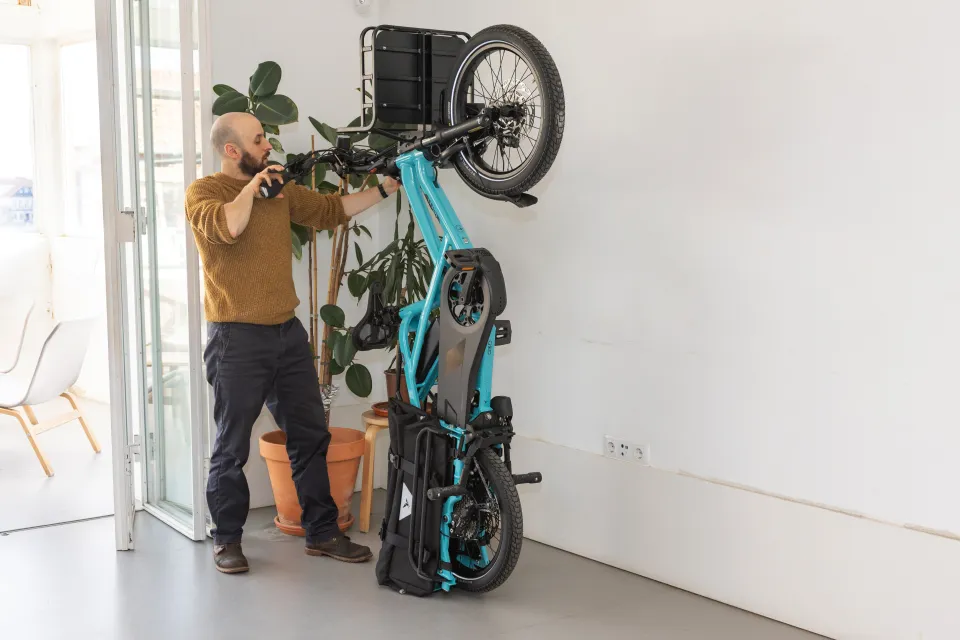
Longtails typically have a smaller footprint. Compact models, in particular, have now made it easy to own cargo bikes in cities and small apartments. The Tern GSD and Quick Haul Long, for example, are about the same length as a regular bike, and both can roll vertically into elevators or narrow corridors. Once inside your home, park them upright and they take up as much floor space as a potted plant.
Summary
When choosing between a front-loader and a longtail cargo bike, the right choice comes down to your priorities and your current lifestyle.
A front-loader may be your ideal cargo bike if:
- You have small children and want to constantly keep an eye on them during trips.
- You need a lot of cargo space that you can easily throw items into.
- You have a garage or a secure outdoor spot where you can park your bike.
- You’re comfortable handling a bigger bike with non-traditional steering.
A longtail may be your cargo bike of choice if:
- You’re looking for a cargo bike that handles the same way as a regular bike.
- You enjoy customizing your bike with different accessories.
- You plan to transport passengers of all sizes.
- You’re short on space at home or don’t have a spacious garage.
If you’re leaning towards a rear-loading cargo bike, compact longtails like the Tern GSD and Quick Haul Long are always solid choices. Explore the full Tern bike range to find the right fit.
Of course, the best way to decide is to ride. Book a test ride at your local Tern dealer to feel the difference yourself. Welcome to the cargo bike club!
(Banner image front-loader photo by Kadir Avşar on pexels.)
Related Articles