Tips for Getting Started With Mixed-Mode Commuting (and How E-Bikes Can Help)
Getting to work or school shouldn’t have to drain your time, energy, or wallet. Instead of sitting in traffic or squeezing into crowded buses, mixed-mode commuting offers a more flexible way to travel. By combining different modes of transport—such as taking the train and finishing the last stretch by bike, or pairing a bus ride with a folding bike—you gain more flexibility in how you travel. This approach helps you save time, cut costs, and reduce the stress of commuting.
Ebikes and folding ebikes can make mixed-mode commuting even easier, especially for those tricky “first and last miles.” In this article, we’ll explain what mixed-mode commuting is, look at common examples, and share how folding ebikes can make your mixed-mode commute easier and more flexible.
Contents
- What is mixed-mode commuting?
- What are some examples of mixed-mode commuting?
- How ebikes and folding ebikes make mixed-mode commuting easier
- Tips for starting your mixed-mode commute with a folding or electric bike
- Summary
What is mixed-mode commuting?
Mixed-mode commuting—also known as multimodal commuting—means combining different types of transport to get from A to B. For example, you might walk to the train station, take the train into the city, and then bike the last stretch to your office.
The transport modes you choose depend on two key factors: the available infrastructure in your city and your personal needs. Let’s say you live in the suburbs and work in the city center. Driving all the way might mean getting stuck in traffic jams and paying for expensive parking. Taking the train gets you most of the way, but you still need to cover that “last mile.” That’s when riding a folding bike could come in handy—it folds down so it fits easier on the train, and helps you cover the final stretch.
By combining different modes, you can just commute without a car altogether—avoid bottlenecks, save on vehicle maintenance costs, and reduce your carbon footprint.
What are some examples of mixed-mode commuting?
Car + subway or train
If you live farther away from the city, you might want to drive to a major transit hub, then hop on the subway or train into the city. This helps cut down on costs for things like congestion charges, fuel, and expensive city-center parking, and helps you avoid downtown traffic.
Renting a bike or scooter + walking
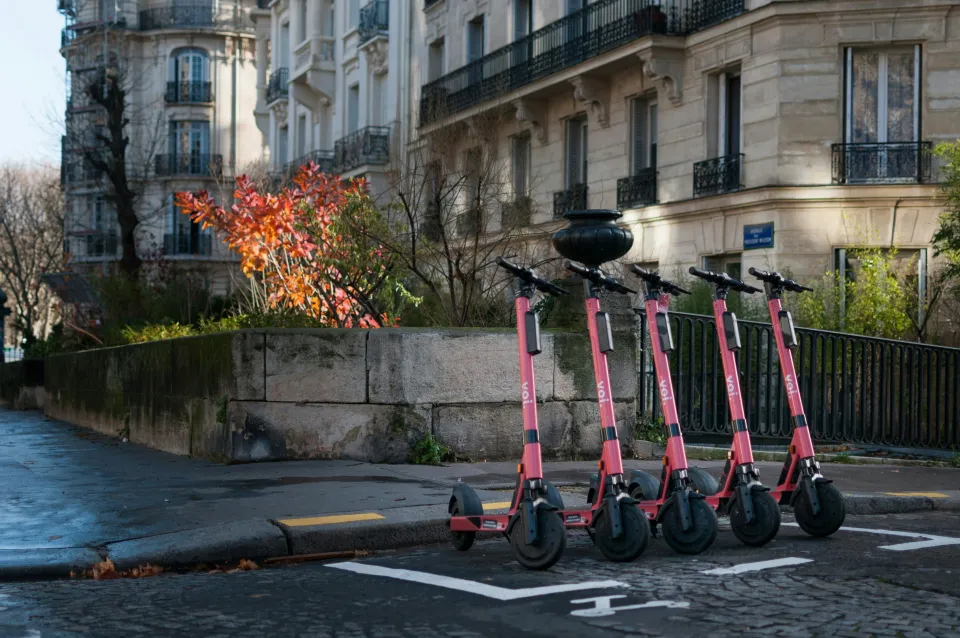
Many city commuters combine walking with bike or scooter-sharing to cover short distances efficiently. Walk to a nearby station, ride across the city, and then complete the final stretch on foot. In many cities around the world, bike and scooter-sharing systems are integrated into the broader public transportation network. These systems typically offer conventional bikes, commuter ebikes, or e-scooters at affordable rates.
Docking stations are typically located near transit hubs, commercial areas, and offices, making them convenient for daily commuting. Many charge a base fare for the first 30 minutes or so, after which the cost is calculated by minute, kilometer, or mile.
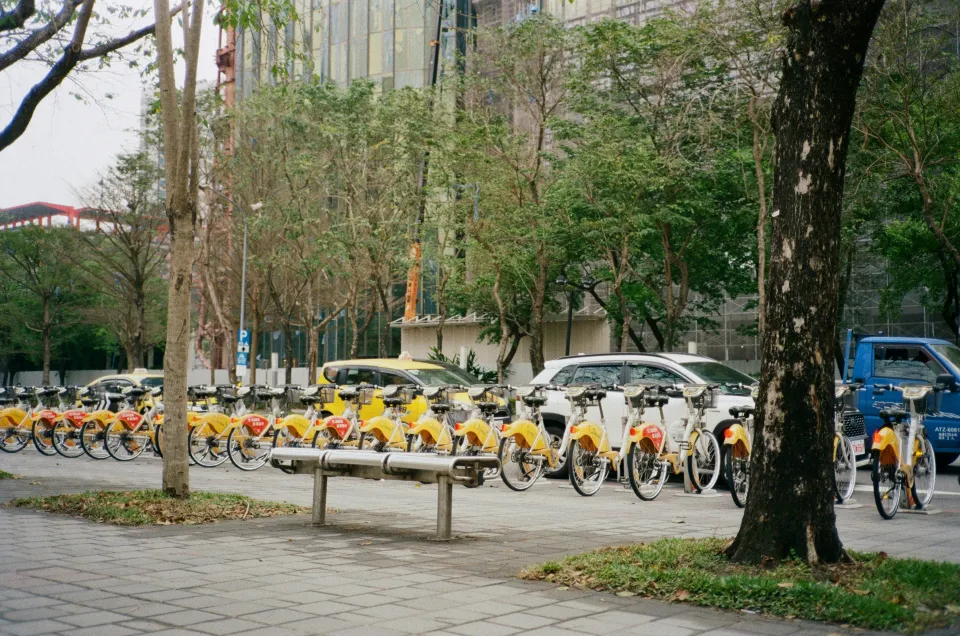
Photo by Cecelia Chang on Unsplash
Folding bike + bus, train, or subway
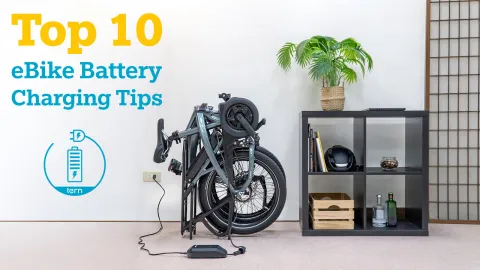
If you are a commuter who wants full flexibility, riding a folding bike might just be the best option. Ride from home to the station, hop on the train, then unfold your bike for the last leg of the journey. For example, Tern bicycles like the Vektron folding electric bike, Verge, or Link are compact, easy to bring on public transport, and can fit under your desk once you arrive.
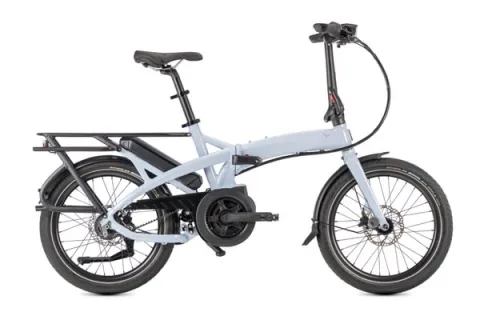

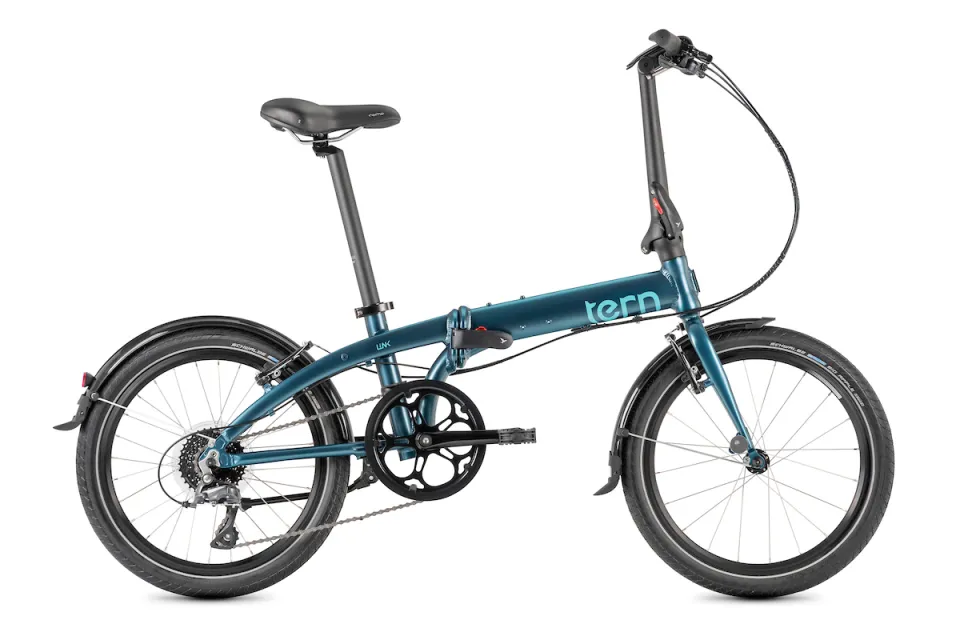
Among these options, folding e-bikes stand out for how easily they connect the gaps between transit stops—let’s look at why they work so well.
How ebikes and folding ebikes make mixed-mode commuting easier
Mixed-mode commuting is already a smart way to save time, money, and stress. Using an ebike or a folding ebike for part of the journey can make it even easier, helping you cover the gaps between transit stops and where you need to be. Here’s why they’re such a useful addition:
- Riding an ebike is less tiring: Commuting with an ebike gives you an extra boost, making it easier to ride at higher speeds and tackle hills with less effort than on a regular bike. This means you conserve energy and arrive at work refreshed and ready for your day. It’s like having an “easy mode” for the more challenging parts of your ride. If you want more exercise, you can simply lower the assist level and rely more on your own pedaling.
- Flexibility: Combining transport modes lets you adapt to changing traffic, weather, or transit schedules. Folding ebikes help you switch between riding and public transit whenever you need. For example, ride outdoors when the sun’s out, or fold your bike and bring it onto the train when the weather takes a turn.
- Efficiency: Riding an ebike for the first or last leg of your journey helps you avoid congestion, cut down walking time, and reach your destination faster.
- Cost Savings: Commuting with an ebike can significantly reduce vehicle costs, such as fuel, parking fees, and maintenance.
- Sustainability: Choosing electric transport over driving decreases your carbon footprint. Compared to cars, ebikes use little energy and support long-term car-free commuting habits.
- Health Benefits: Incorporating cycling into your commute or completely going car-free adds physical activity to your day, supporting better health and well-being.
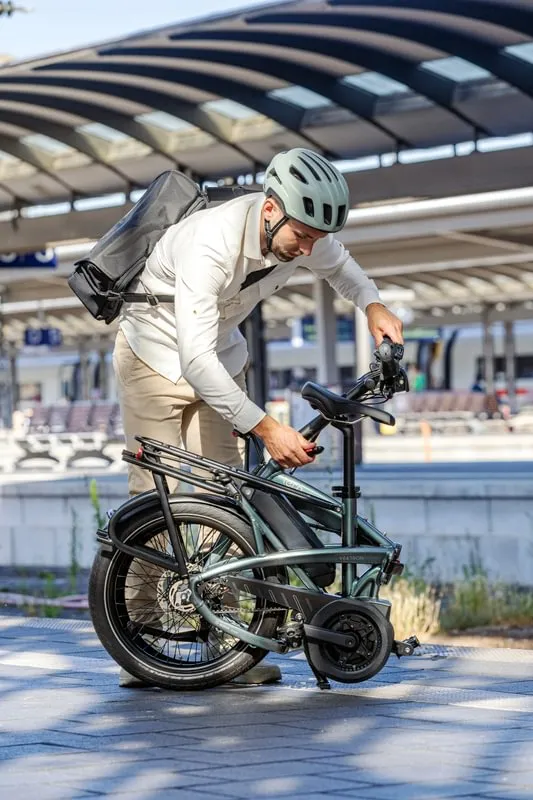
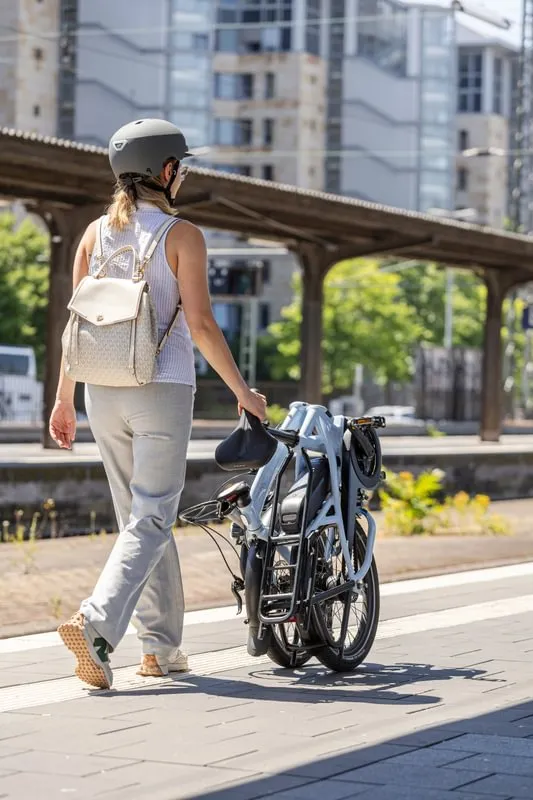
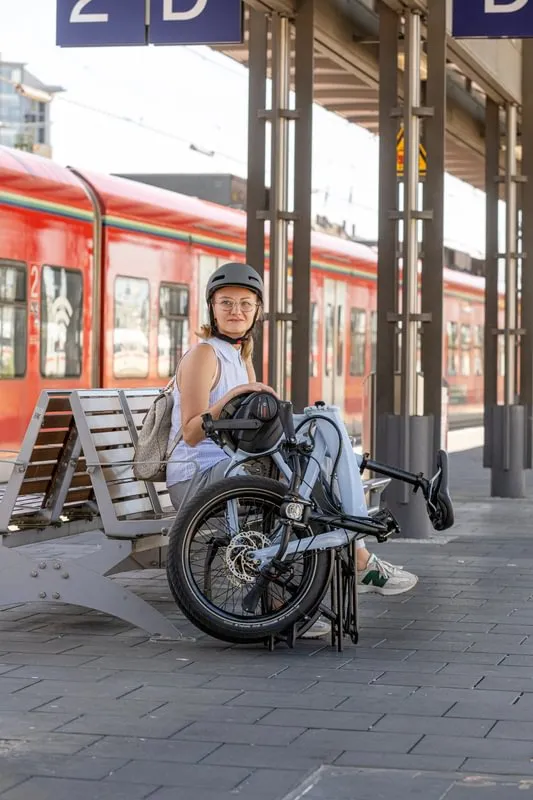
To make the most of those benefits, a folding electric bike like the Tern Vektron lets you ride part of the way, bring it on the train, and roll straight into the office—no car required.
Tips for starting your mixed-mode commute with a folding or electric bike
- Plan your route carefully. Look for the most time-efficient combination of public transit and cycling, and prioritize bike-friendly paths for the riding portions.
- Check the rules for bringing bikes. Contact your local transit provider to see if bikes or e-bikes are allowed on trains, subways, or buses, and ask about any size or time restrictions, such as rush-hour limits.
- Choose gear and accessories that support your lifestyle. For example, you could pick a folding bike with a rack to carry your work bag, weatherproof gear for rainy days, and don’t forget a sturdy lock if you can’t take your bike inside your office.
- Start small. You can try it out for one or two days per week to see what works best. Once you’ve found your ideal route, why not do it more often?
Summary
Mixed-mode commuting offers a practical, green, and flexible way to get from A to B. By combining different modes of transport, you can design a commute that fits your lifestyle, saves time, reduces costs, and lowers your environmental impact.
Instead of relying on just one way of getting around, multimodal commuting gives you the freedom to adapt to traffic, weather, or schedule changes. It can also make your daily travel more enjoyable—leading you through new parts of the city or helping you see familiar streets in a new light.
With thoughtful planning and the right gear, even small changes to your routine can lead to a faster, healthier, and less stressful commute. And if you’re looking for tools to make it even easier, a folding ebike can be a great companion on your mixed-mode journey. So, why not visit your local bike shop and see for yourself?