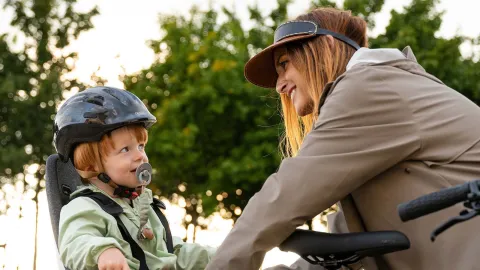
Tips for Carrying Kids on a Bike (From a Parent Who’s Been There)
Heads up!
This article mentions third-party products that are not manufactured by Tern. Please note that product designs might change, and that their manufacturers may choose to maintain the same product name even after the design has changed.
For your safety, always consult with your bike dealer, or with the product manufacturer or reseller, to make sure you have the right components to safely ride the bike.
Still on the fence about transporting kids by bike? Here are a few reasons that might convince you!
Riding a bike on your own is one thing. Adding a kid into the mix is a whole different story. Suddenly you are thinking about setups, safety, snacks, changing weather, and the very real question: “Are they going to love this, or announce mid-ride that they prefer the car?”
Tern team member and cargo bike mom Alison shares tips on how to carry kids by bike she’s picked up along the way, from getting comfortable riding with a little passenger to figuring out which essentials to bring on the road. These days, her daughter not only prefers bike rides over car trips, she also has strong opinions about speed and is usually happily cheering Mom on to go faster…but safely, of course.
1. First things first: set up your bike for a kid passenger
Before bringing your kid along for the ride, first make sure your bike is designed to support the added weight of carrying a passenger. Once that’s confirmed, take the time to set up your bike properly. A safe and comfortable passenger setup not only keeps your child feeling secure and relaxed on the bike, it also makes riding more stable and less stressful for you, especially when you’re still getting used to carrying that extra precious, occasionally dramatic co-rider.
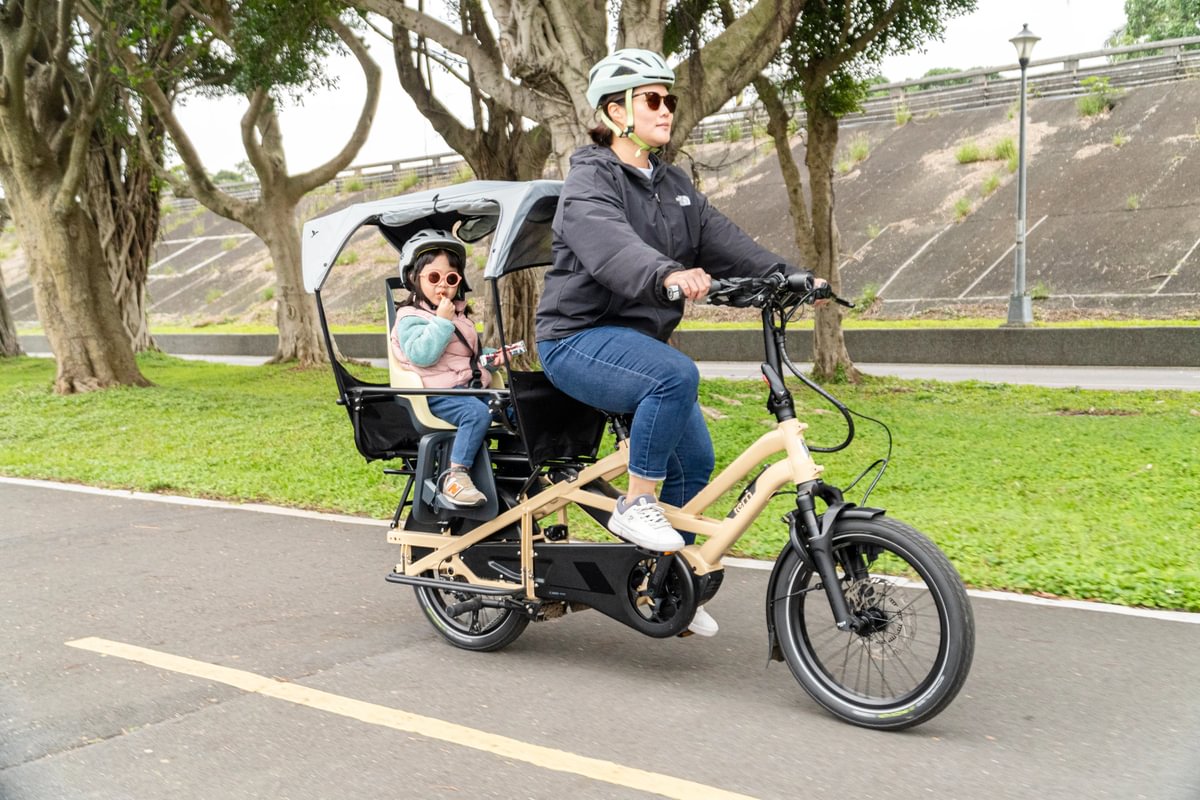
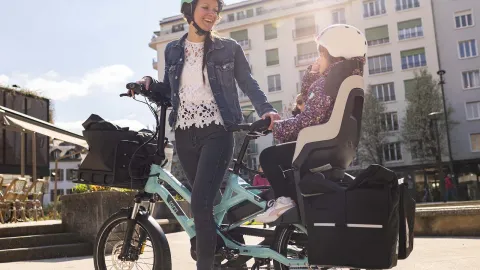
A good setup starts with the basics: a proper passenger seat that matches your child’s age and size, something sturdy for them to hold onto, and foot support like foot pegs or platforms to keep their feet secure during the ride. Foot and leg protection is also important to prevent little limbs, shoelaces, or pant legs from getting too close to the spinning wheel. And a sturdy double kickstand acts like an extra pair of helping hands, keeping the bike steady while you load and unload your kid.
Learn more: Recommended passenger setup and safety tips for Tern bikes
2. Familiarize yourself with the extra weight (aka the burden of love)
One of the biggest adjustments when riding with a child is simply getting used to the extra weight on the bike. Even if you have a cargo bike that’s built for handling heavier loads, it can still feel a bit wobbly at first, and that’s completely normal. If you’re unsure how it will handle, Alison suggests doing a few practice runs with a dummy load in a safe space before adding a passenger. A simple trick is to strap weighted bags or similar items onto the passenger setup to get a feel for how the bike behaves when it’s loaded.
When you start riding, take it slow and give yourself more time for everything, especially braking and cornering. Ride at a steady, predictable pace, and keep your hands near the brake levers. Avoid sharp turns or sudden braking. Most importantly, try to stay relaxed! It sounds obvious, but if you’re stiff as a board, it can actually make the bike harder to control. The more natural and steady your movements are, the more stable the ride will feel over time.
3. Keep the first rides short and fun. Bribe if you must.
Now that you have an idea of how the bike handles under load, the next step is getting your child settled in and ideally starting to enjoy the experience too.
The first few rides can vary quite a bit. Some kids, like Alison’s little one, are instantly curious and excited (“oooh, I get to ride in that?”), while others need a little more time and encouragement to warm up. The key is to keep things fun, short, and low pressure, with maybe a bit of strategic bribing if needed.
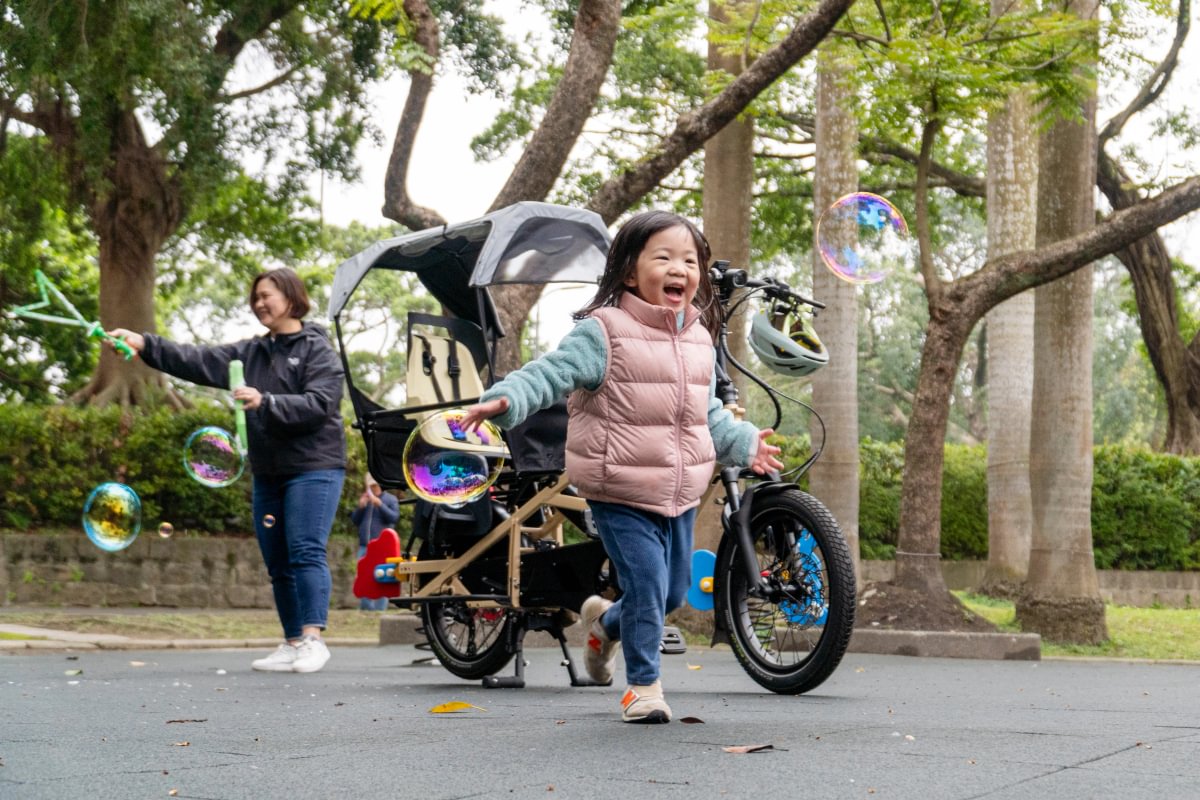
Begin with short rides around the block or a quick trip to somewhere they already like, such as a park or ice cream shop. Once they realize the bike is not a strapped-in mystery ride and that it reliably leads to good things, resistance usually fades after a few rides. It also helps to talk them through what’s happening before you set off and even during the ride, almost like running an in-flight report. If they are old enough, small jobs like activating the bubble gun or calling out red lights can make them feel more involved and in control.
And don’t underestimate the power of snacks! Sometimes all it takes to win over an undecided passenger is a favorite snack or juice box.
4. Make helmet time easier for everyone
For many parents, the next challenge after getting their kid onto the bike is convincing them to keep their helmet on. This was certainly the case for Alison. About 30 seconds into the ride, her daughter would already be grunting, tugging at the straps, and somehow winning the ongoing battle against the helmet.
Eventually, Alison realized the issue was not helmets in general, but that this one just was not a great fit for her kid. In a moment of well-meaning enthusiasm, she had bought it online without a try-on first, and the padding and weight did not quite suit her daughter’s head. Once they switched to a helmet they picked together in person, the complaints dropped almost immediately.
Shopping in person gives your child a chance to try on different helmets to find one that actually fits properly and feels comfortable, while also picking a style they are excited to wear. And even if the perfect fit comes in a less-than-exciting design, there are plenty of stickers out there to turn a plain helmet into something much more fun and personal.
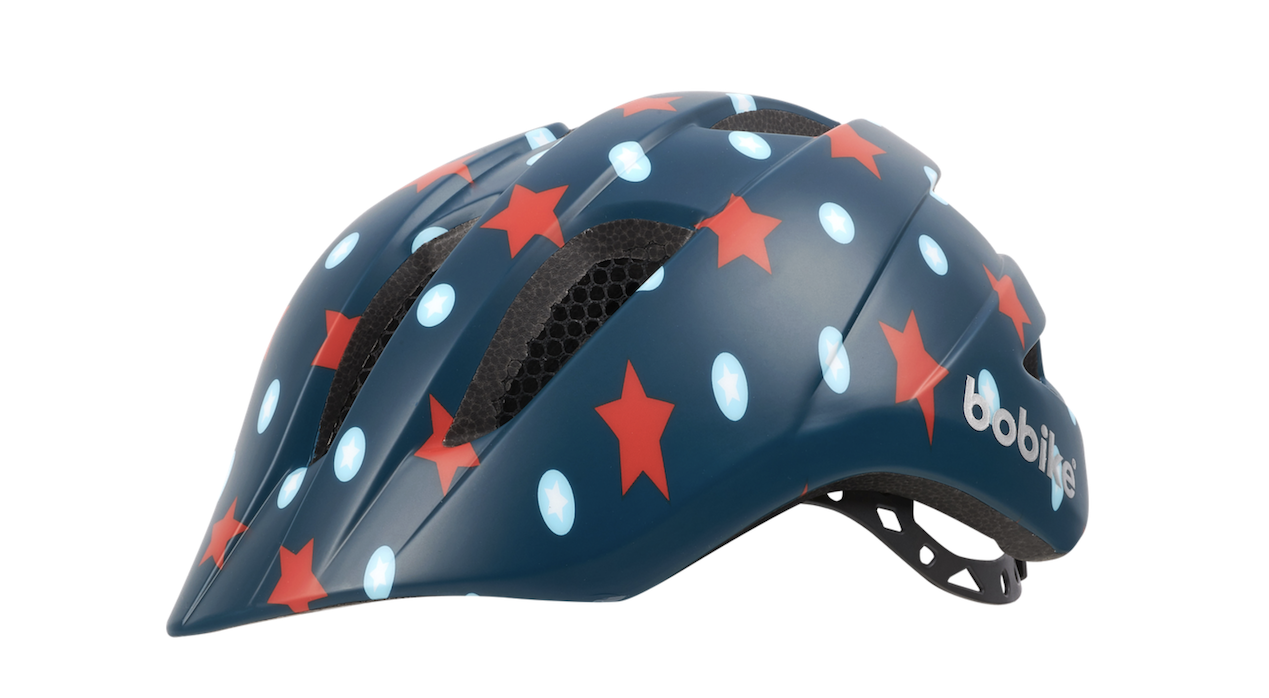
Another important thing to remember is that behavior modeling is much more powerful than just words. If you’re telling your kid to wear a helmet but skipping yours, don’t be surprised if they point it out as a reason to refuse. Make it a shared habit by wearing your own helmet every ride. You can simplify things by storing the helmets with the bike, so they’re always ready to grab and you’re not scrambling to find them at the last minute.
5. Get your kid to sit still on the bike…most of the way
Like most kids, your little bundle of energy doesn’t really care that they’re on a bike if something exciting catches their eye. Twisting, bouncing, leaning in every direction to see what’s going on—it’s all part of the experience. It’s great that they’re excited and having fun, but it can make the ride feel less stable than you’d like, especially with a bigger child on board.
A good place to start is giving them a few simple “do’s” from the very beginning. These can be as simple as “buckle up, bum on the seat, feet on the footrests,” framed in a playful way that kids tend to enjoy (Alison calls this the “take-off position”). Instead of listing everything kids shouldn’t do and losing their attention halfway through, it gives them a short, clear set of instructions they can actually remember and follow.
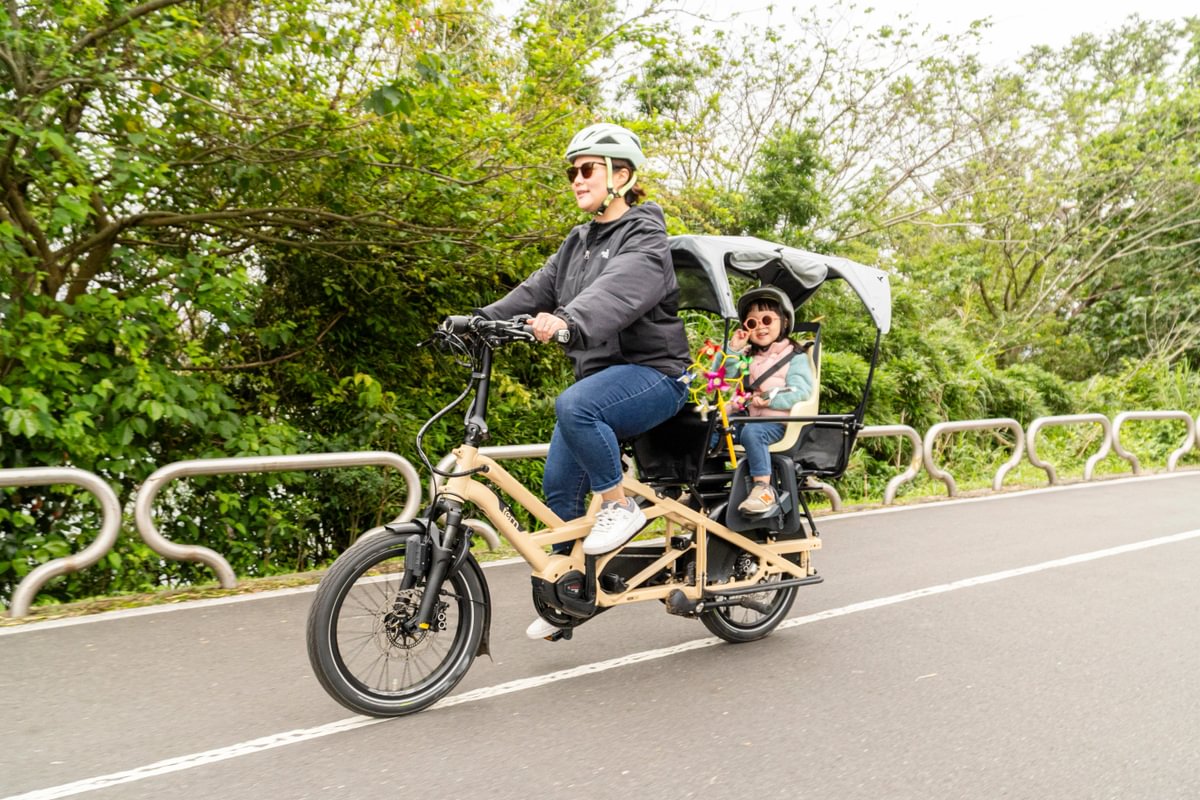
Another helpful approach is keeping their little hands occupied. A grab bar or handhold gives your kid a steady place to hold onto, while a small toy, snack, or even a stuffed animal they’re looking after can keep their hands busy and reduce a surprising amount of mid-ride wiggling in the back seat.
Finally, sometimes it’s just about burning off a bit of energy. A quick stop at the playground can work wonders. Let them go full beast mode for a while, and you’ll likely get a slightly more manageable passenger for the ride home.
6. What to pack for a ride with kids
A little preparation goes a long way. Alison’s advice is simple: don’t stress too much about overpacking, especially when your bike is designed for carrying cargo and passengers. With kids, unpredictability is just part of the deal, and it’s always better to have something you might need than to realize you don’t have it moments before a full-scale meltdown.
Here are a few things you’ll want to pack for the ride:
- Diapers and wipes for younger kids
- Snacks and extra water
- A change of clothes for spills, splashes, and messy playtime aftermath
- Sun protection like sunscreen and a hat
- A rain jacket, if the forecast is looking uncertain
- Small toys that can be clipped or strapped onto the seat or rail with a carabiner so they don’t fall off mid-ride
Nothing fancy—most of these are things you’d bring on any outing with a kid anyway, bike or not.
And while most of the packing is for your little passenger, don’t forget your own essentials too. A sturdy bike lock, water bottle, wallet, phone, and anything you need for the school run or a day at the park all help keep things running smoothly.
Common questions about how to carry kids by bike
1. Is it hard to ride a bike with kids on it?
It may feel a little different at first, especially if you’re riding a bike that handles differently from a regular city bike, such as a front-loader cargo bike. But the learning curve is usually much shorter than most parents expect, and many riders feel comfortable after just a few rides.
Learn more: How Easy Is It to Ride and Own a Cargo Bike?
2. Why does the bike feel unstable when I first push off?
A little wobble when starting is common because you’re balancing, steering, and pedaling with the extra weight of your child onboard. Once the bike starts moving, it usually feels much more stable. Tip: shift into a lower gear before stopping so pushing off requires less effort and feels smoother.
3. Can I carry more than one child on a bike?
Yes, if your bike is designed for it. For example, cargo bikes like the Tern GSD and Tern Quick Haul Long are built to carry up to two kids, while some cargo bikes can carry even more. Just make sure your passenger setup is properly configured for safety and stays within your bike’s load limits.
Explore: Tern eBikes For Carrying Kids, Cargo, and Commuting
4. When can my child ride with me on my bike?
This depends on several factors, including your child’s height, weight, and the type of passenger setup you have. In general, children should be able to sit upright steadily and comfortably support their own head before riding as a passenger. If you’re unsure whether your child is ready, it’s always a good idea to check with your pediatrician for guidance.
5. Are cargo bikes safe for toddlers/babies?
They can be, when the bike is designed with safety as priority and paired with the appropriate child seat or compatible setup designed for younger passengers. We recommend only using child seats that conform to EN 14344 standards. Always follow the child seat manufacturer’s recommendations for age, weight, and use.
More info: Child Seat Guide for Tern Cargo Bikes & E-Bikes
6. Do kids need bike helmets?
We strongly recommend helmets for everyone, as they are proven to reduce the risk of head injuries and provide an important layer of protection. In some places, helmet use is also required by law for both riders and passengers.
7. What’s a good bike setup for carrying a 6-8 year old kid?
At this age range, most kids have likely outgrown a child seat and are ready for a more open passenger setup. Passenger rails such as the Clubhouse or Clubhouse Mini help create a secure, enclosed space and give them something to hold onto for added support, while seat cushions like the Clubhouse Seat Pad and Backrest keep them comfortable in a relaxed position. Don’t forget proper footrests so their feet are safely supported, wheel guards for protection from the spinning wheel, and a double kickstand for extra stability when loading and unloading the bike.
Discover: Tern Passenger Accessories for Family Rides
Related Articles