If you’re in the market for an e-bike, you might be thinking about buying one second-hand. If your goal is to get a high-quality, built-to-last e-bike while sticking to a budget, buying a used e-bike may work for you.
But buying second-hand also carries risks. If you’re not careful, you could end up wasting your money on a broken or low-quality bike that will fail on you before too long. You could also unknowingly buy a stolen e-bike, thereby inadvertently perpetuating bike theft (and potentially causing trouble for yourself down the line).
This article is a guide to shopping for a used e-bike. It contains a checklist of questions to ask yourself and the seller to make sure you end up with a bike that works for you—and not a money pit, a pricey paperweight, or contraband (yikes).
A Short Note About Warranties
Before you start shopping for a used e-bike, keep in mind that most e-bike warranties don’t transfer to a bike’s second owner. That means second-hand buyers are usually responsible for any repairs or part replacements, even if those issues would normally be covered under warranty.
The good news is that Tern offers a Warranty Transfer Program. This allows the original owner to transfer the remaining warranty to the next owner after a check-up by an authorized Tern Dealer. It helps ensure the bike is in good condition and that the warranty remains valid for the new rider.
If you’re buying a used Tern, check whether the warranty has been transferred—this can add real value and peace of mind. And if you’re comparing different brands, remember to factor the presence (or absence) of a transferable warranty into the price.
A Not-So-Short Note About Batteries
Another thing to keep in mind is that the battery makes up a big chunk of an e-bike’s overall cost. For many used bikes, replacing the battery could cost anywhere from 20-50% of the purchase price or more (a lot depends on the seller's asking price).
Of course, lithium-ion batteries don't last forever, each charging cycle depletes the battery capacity a little bit. So when considering a used e-bike, you need to obtain several pieces of information to figure out whether it's worth the price. These include:
- How many times the battery has been charged and discharged (charging cycles), which tells you about the battery health,
- Approximately how much battery capacity remains,
- How much it will cost to replace the battery when it becomes necessary, and
- How easy or difficult it will be to acquire a new battery.
If you buy an e-bike whose motor system offers detailed diagnostics, #1 and #2 are no problem. For example, you can take a Bosch e-bike to any Bosch-certified dealer and get a diagnostic report that includes the number of charging cycles and a battery capacity estimate.
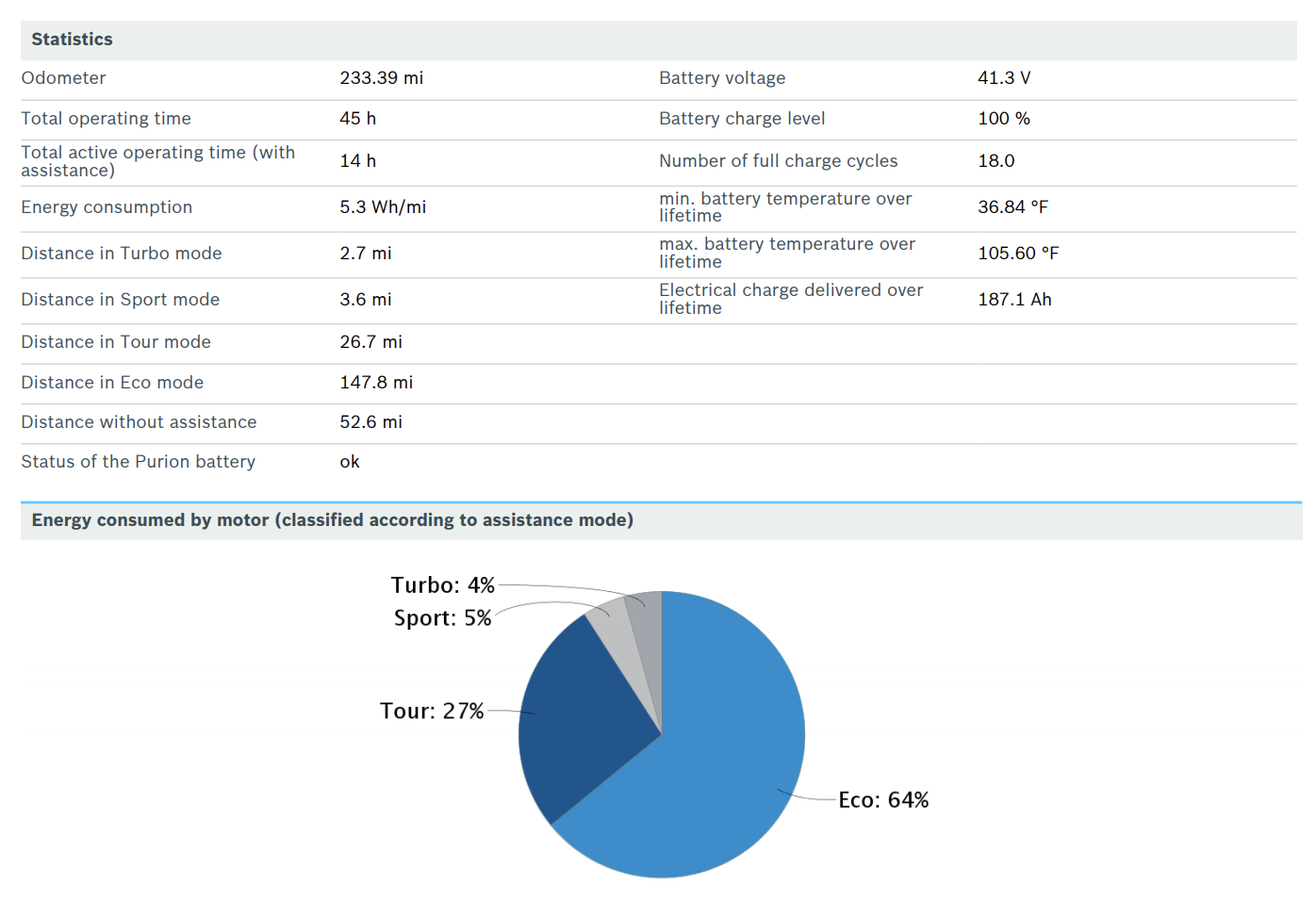
If you can't get that info from the bike's motor system, you'll need to do a little more legwork and some math. To have any idea how much battery capacity remains, you'll need good estimates for the bike's total mileage and its range per charge.
If you can get accurate and trustworthy information from the seller, you'll be able to roughly estimate how many times the seller has charged the battery by dividing the bike's total mileage by the bike's range per charge.
For example, if the bike has 3,000 miles on it and the range per charge is 30 miles, then the battery has been through about 100 charge cycles.
A quality supplier like Bosch guarantees that after 500 charge cycles, their batteries will have at least 60% capacity remaining. However, this number varies widely depending on the initial quality of the battery—and if the manufacturer hasn't publicized the number, you'll have to take a stab in the dark.
Keep in mind that if you go with the manual math method (because there's no diagnostic report available), the only way to really cover your bases is to test ride the bike far enough to get a sense of how the battery currently performs.
Item #4 from the list above also deserves some of your attention before you buy. If you do need to replace your used e-bike's battery, it's important that you're actually able to get your hands on a new one in a timely fashion! Unfortunately, that's not guaranteed.
Many lower-quality and no-name manufacturers have trouble consistently supplying replacement batteries, so you may have to wait a long time. And believe it or not, there are e-bike manufacturers out there with virtually no plans for ensuring that compatible batteries remain available for their bikes over the long term. If you buy one of these bikes and the battery dies, the bike might become permanently unrideable (and an e-bike in a landfill is just the saddest thing).
At Tern, we build our bikes to last, and we understand that a bike’s long-term value depends on being able to replace critical components like the battery. That’s why we created our 7-Year Support program, which is our pledge that service parts, including batteries, remain available for at least seven years after the bike’s original purchase. This benefits both first and second-hand owners, helping every Tern stay on the road longer.
None of this means that a used e-bike is a bad purchase. It just means that you need to factor battery costs and logistics into your buying decision, just as you would with a used smartphone or another rechargeable device.
Which Bikes Should I Consider?
Questions to Ask Yourself
As you start browsing the second-hand market in your area, you may find many options at widely varying price points. Use this checklist to narrow down your list of options to consider:
- Brand reputation. Does this e-bike brand have a solid track record and a reputation for providing responsive service and support?
- Warranty. Did the manufacturer offer a strong warranty to the original purchaser? Brands that stand behind their products offer solid warranties, and in some cases, the ability to pass the warranty coverage on to a second-hand buyer.
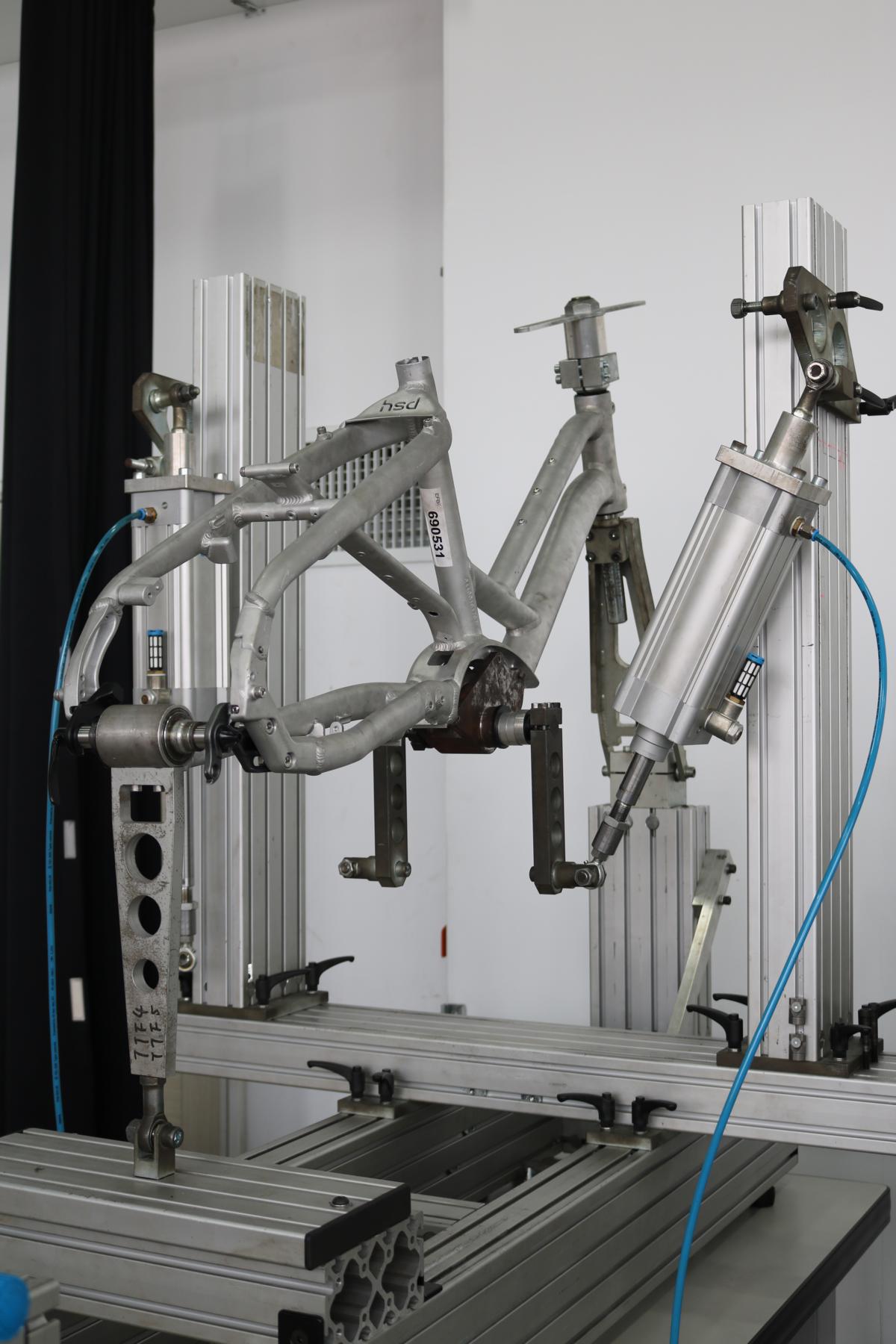
- Testing. Have the e-bikes you're considering been tested in any way? If so, what specific testing standards and methodologies were used? Anyone can say that their e-bike supports “X kg,” but if the bike and any relevant accessories haven’t been carefully tested, that claim doesn’t mean much (and you’d hate to find out the hard way that the claim was overblown).
- Parts availability. Will you be able to get your hands on spare parts when you need them? This applies to everything from the brake rotors to the battery. Choosing an e-bike with components from reputable manufacturers, and from brands that commit to long-term parts support, can make future repairs straightforward. If not, even simple repairs may be difficult or impossible to pull off.
- Battery quality & service plan. Who assembled the battery, and do they stand behind it? As mentioned above, battery quality and remaining battery life are significant contributors to the value of any e-bike. No-name battery manufacturers can go out of business (or discontinue product lines) seemingly overnight, leaving you without access to support or replacement batteries. They may also produce batteries without adequate safety oversight (there’s a lot of potential energy inside an e-bike battery, so it’s something to think about). On the other hand, quality battery manufacturers like Bosch perform safety testing, plan for longevity, and offer lengthy spare parts guarantees. FYI: When investigating battery quality, look for the name of the battery assembler (e.g., Bosch, Shimano, BMZ, Darfon) and not the company that supplied the cells (e.g., Samsung, Panasonic). It's when you put the cells together into a power pack that many safety and quality issues come into play.
Is this Bike Worth It?
Questions to Ask the Seller
Once you’ve found a bike or two that meet your criteria, you’ll want to learn more about the specific e-bikes you’re considering. To do that, you’ll need some information from the seller. Here are a few questions to ask:
- Proof of ownership. Can the seller provide the original sales receipt or other proof of purchase? If not, it’s best to walk away. A valid proof of purchase not only confirms rightful ownership but can also be useful for warranty verification or checking how long the bike remains covered under any long-term support program, such as 7-Year Support.
- Mileage. How many miles has the original owner put on this e-bike so far? This can give you a sense of how much further you’ll be able to ride the bike and what repairs or replacements may be needed soon. It's also useful for calculating the remaining battery service life (see below). Most e-bike motor systems have onboard computers that keep track of total mileage so ask to see that data.
- Bike condition. What kind of shape is the bike in right now? Check the frame for corrosion, dents, and other visible signs of damage. See how the components (such as the drivetrain, brakes, and tires) look. This will give you a sense of both possible future costs and whether the bike has been appropriately maintained so far.
- Battery life. What’s the approximate remaining battery life? We discussed this above, but here's a quick recap. For Bosch e-bikes, you can get this info from a diagnostic report, which any certified Bosch dealer can get for you. Other quality e-bike motor systems may have similar diagnostics available. Otherwise, you can roughly estimate how many times the seller has charged the battery by dividing the bike's total mileage by the bike's range per charge.
- Maintenance record. What maintenance has been done up to this point, and by whom? Hopefully, the seller has been doing preventative maintenance and necessary repairs all along. Ideally, they’ve gotten assistance from their dealer or another local bike shop, who can provide a service record.
Closing the Deal
Visit Your Local Bike Shop
So you think you’ve found an e-bike that passes muster and you’re ready to close the deal. The best place to do that is at your local bike shop. There are a few reasons why.
- Choosing a public location to make the transfer of ownership helps ensure your personal safety.
- Doing the exchange at an LBS gives you a chance to check out the bike while an expert is nearby in case you need help.
- If you’re buying a Bosch e-bike and the shop is Bosch-certified, they can run a diagnostics report full of useful information about the condition of the motor and battery.
- Meeting at a shop can help you establish a relationship with the experts there and create a maintenance plan for your new-to-you e-bike.
Red Flags to Watch Out For
We put this part last because we’d like to think that the vast majority of second-hand e-bike deals involve folks who just want to pass on their beloved bike to someone who’ll get more use out of it.

But sometimes, when things feel a little sketchy, it’s because they are. If you notice any of these red flags, it’s probably best to move on:
- The seller can’t or won’t provide an original receipt or other proof of purchase.
- The seller says they don’t have the keys or the battery charger.
- The bike looks incomplete—for example, part of an accessory is missing (erm, hacked away, perhaps?).
- The seller won’t allow a mechanic to inspect the bike or refuses to provide Bosch diagnostic reports (for Bosch e-bikes).
- The bike is listed on the Bike Index, Project 529, or another similar theft registry.
When done right, buying second-hand is a great way to keep e-bikes on the road and out of landfills while helping more folks choose cycling. We hope this guide helps you find your match—happy shopping!
This article is part of our E-Bike Buyer's Guide series, where you'll find more tips on how to buy an ebike that fits you and your lifestyle.
Related Articles