If you’re reading this article, it means you're making progress on the journey to find your ideal cargo e-bike. By now, you’ve likely read reviews, compared specs, and asked friends for recommendations. You’ve also learned why some e-bikes cost more than others, and you’ve probably started planning your budget.
Now it’s time to move from research to experience by test-riding the (electric) bikes you have an interest in. Let’s explore how to prepare for your ride, what to look for, and how to find the bike that best fits you. Remember, a little preparation goes a long way toward making your test ride both enjoyable and productive. Here’s how to set yourself up for success.
Contents
- Before the Test Ride
- Taking the Test Ride
- Questions to Ask After the Test Ride
- Conclusion: Enjoy the Ride!
Before the Test Ride
Share Your Needs to Find the Right Fit
You already have a good idea of how you’ll use your cargo e-bike, maybe for carrying kids, groceries, or even an adult passenger. Now, the test ride will show you how well those plans match reality.
Do you need a bike that can handle steep hills, unpredictable weather, or long commutes? Would a front-loader with extra cargo space work best for you, or do you need a compact long-tail that fits in an elevator and parks vertically? Share these details with your local bike shop, they can help tailor your test ride to match your lifestyle.
Bring the People Who Will Be Using the Bike
If you’re sharing the bike with a partner or friend, bring them along to see how easily it adjusts to fit you both. Some bikes adjust tool-free, making it easy to switch setups between riders of different heights or preferred riding styles.
Planning to carry passengers? Bring them too, whether it’s kids or an adult. Testing together will give you confidence in their comfort and safety while ensuring the bike handles well under their weight.
Dress for the Ride
Dress like you would on a normal day, not like you're about to race the Tour de France (unless that’s your thing). If you’ll be commuting in jeans, running errands in casual clothes, or riding the school drop-off in whatever you usually wear, stick to that for your test ride. A secure pair of shoes and a properly fitted helmet are must-haves, but beyond that, wear what makes sense for your everyday rides. The goal is to see how the bike feels in your routine, not in a cycling magazine photoshoot.
Gear Up for the Ride
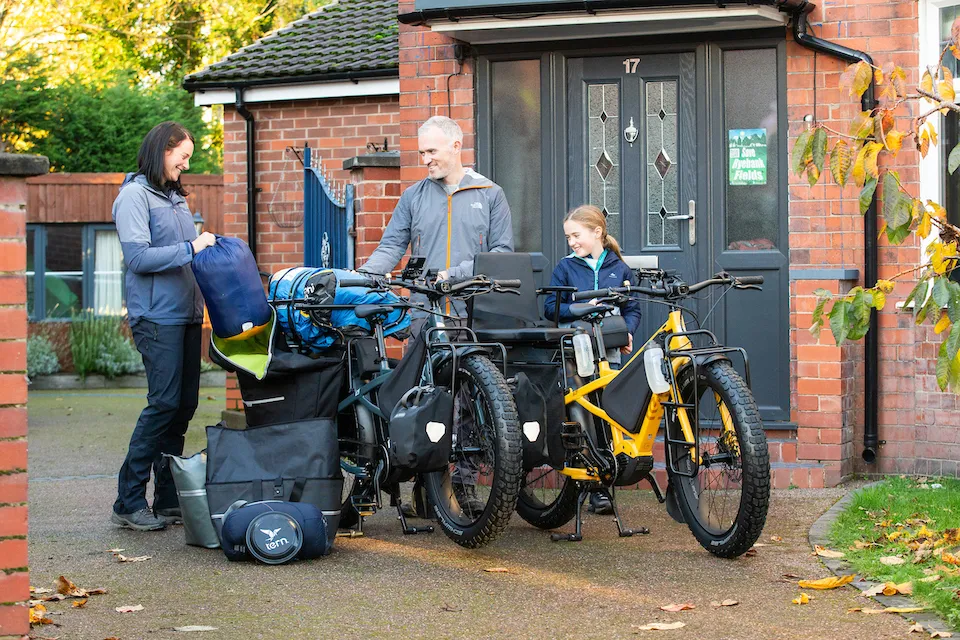
Most shops will require a valid ID for security purposes, so be sure to bring it along. If you’re interested in testing specific accessories, like panniers, racks, or a child seat, reach out to the shop ahead of time. Let them know how you plan to use the bike, whether it’s family rides, grocery runs, or commuting with cargo. While not every shop can accommodate all requests, giving them a heads-up increases the chances of setting up a test ride that closely matches your real-life needs.
Learn the Basics
By now, you probably have a good idea of what features matter most to you, but now it’s time to see how they actually feel. When you arrive at the shop, take a moment to get comfortable with the bike. The staff will walk you through the basics, shifting gears, adjusting e-assist levels, and braking, so don’t be shy about asking questions. The better you understand the bike now, the more fun you’ll have once you start riding! You could also have a look at this article for a more detailed explanation of cargo eBike basics.
A Note on Carrying Passengers
If you’re planning to carry passengers, especially kids, safety should be your top priority. Make sure the bike is equipped with a secure seat, footrests, handholds or grab bars, and wheel guards to prevent any accidents. These features ensure a safe and enjoyable ride for everyone. If the bike doesn’t have them during the test ride, ask the shop to set it up properly before you begin. Also remember that passenger safety comes first, especially when little ones are on board!
Taking the Test Ride
Now comes the fun part, the test ride! This is your chance to finally see how the bike feels. Before you jump in and start riding all over, the shop will first set you up in a safe place to practice. Most bike shops have designated areas for test rides, but it’s still a good idea to research safe, low-traffic spots nearby. If the area around the shop doesn’t feel safe for a proper test ride, you may want to consider visiting a different shop with better riding conditions.
Start slowly, in a quiet location where there is no vehicle traffic, and where you can focus on getting comfortable. Begin riding solo to get a feel for the bike, then gradually add cargo and passengers as you build confidence. Once you’re at ease, take the bike onto streets or bike lanes to see how it handles your typical riding conditions. You could also take a look at our list of essential cycling safety tips!
Getting Comfortable on the Bike
Begin by focusing on how the bike feels as you ride it solo. Pay attention to how it responds when you start pedaling, does it feel smooth and natural, or do you notice the motor pushing or pulling in an unexpected way?
Try all the assist levels to see how the bike’s power adjusts, and shift through the gears to test their responsiveness—especially if you have hills on your usual routes.
Take some time to practice starting and stopping, as this mirrors the kind of riding you’ll likely do in daily life. Make sure you’re comfortable in your riding position, with the seat height and handlebar setup feeling natural for your posture.
Getting comfortable with the bike first makes everything easier. Once you feel good about the balance, responsiveness, and overall handling, you’ll be ready to start adding cargo or passengers. Think of this as getting to know your bike before putting it to work!
Add Cargo Gradually
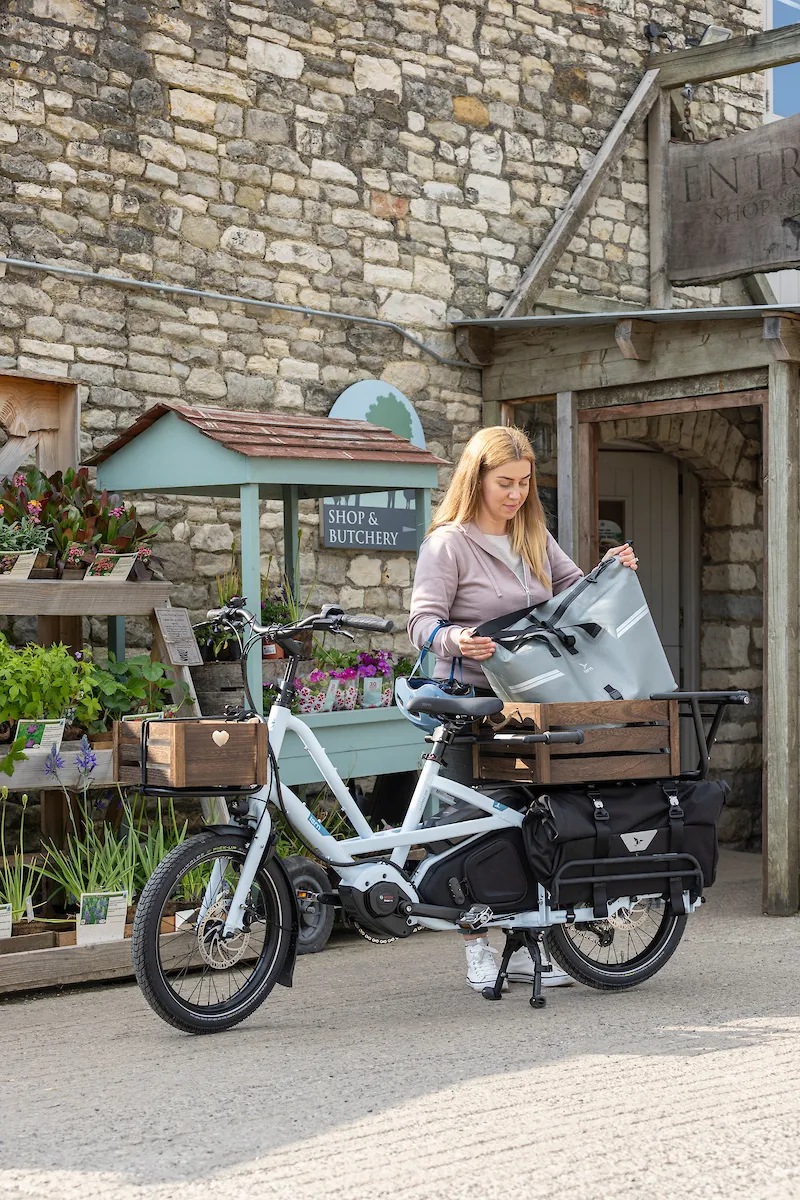
Once you’re comfortable riding solo, simulate real-world conditions by adding weight. Start small, maybe a bag or a little cargo, and increase the load incrementally. Observe how the bike handles.
Some cargo bikes handle as easily as a standard bike, while others can be challenging, even for experienced cyclists. Some corner confidently when loaded, while others wiggle like a wet noodle.
A test ride laden down with cargo will reveal if the bike fits you and your handling needs. Is the bike easy to control? Can you signal turns confidently while steering (and braking) with one hand? Are you comfortable looking back for cars? Can you maneuver the bike’s size and weight into a parking spot?
Remember, a safe cargo bike is one you can confidently control with the load you plan to carry.
Test With Passengers (If Allowed)
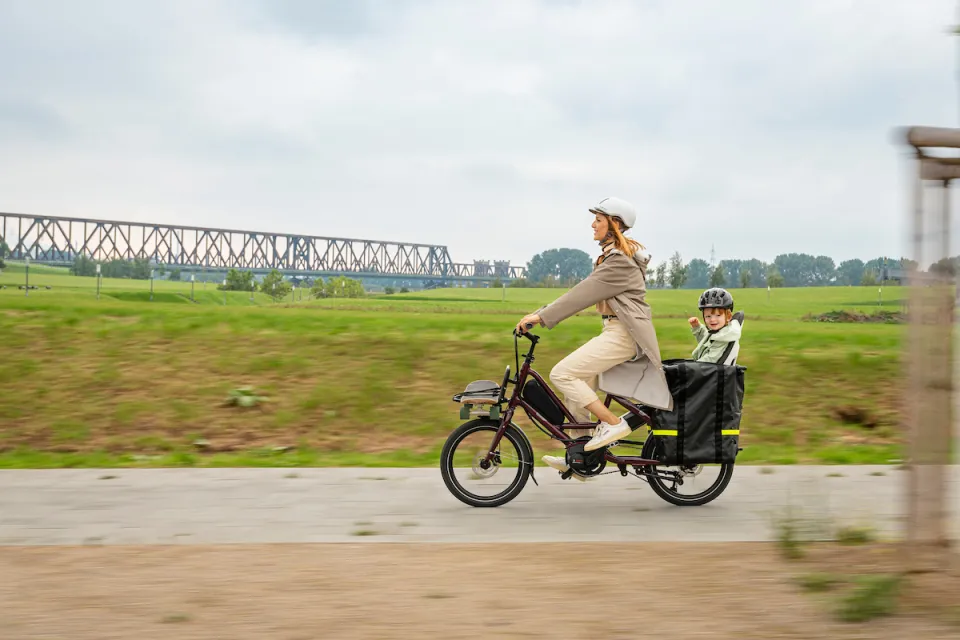
If you’re planning to carry passengers, it’s important to evaluate how the bike handles with additional weight. If the shop allows it, try riding with a child or adult passenger to see how the bike feels under load. Start with one passenger and focus on the bike’s balance and your control. If the bike is built for multiple passengers, gradually add a second, always keeping safety and comfort in mind.
And it bears repeating: always ensure the bike is properly set up before test riding with passengers.
Talk to your passengers during the ride. Are they comfortable, and do they feel secure in their seat? Riding with a passenger is often an interactive experience, so it’s important to ensure both rider and passenger feel at ease and can communicate easily with each other.
Simulate Real-World Conditions (as best as possible)
In most cases, bike shops have designated test ride areas, so it can be difficult to fully replicate your daily riding experience. You may not be able to take the bike to your usual routes, but it’s worth asking if the shop offers loaner or rental programs. Renting a bike for a few days or a week lets you test it on your actual commute, school drop-offs, or grocery runs. If you’re lucky enough to have leasing companies in your area, you may even be able to lease a bike for a short period. The more real-world riding you can do, the better you’ll know if the bike truly fits into your life.
Compare Electric Cargo Bikes Across Price Ranges and Models
Even if you have a set budget, it’s worth testing bikes across different price ranges and models. Bikes that look similar can feel completely different in how they ride, handle, and perform.
Higher-priced models often have smoother motors, better components, and enhanced handling; you may be surprised how much of a difference it makes!
Try different setups, like a belt drive versus a chain or an internal gear hub, to see what feels best. Exploring a variety of options will help you find the ideal match.
Questions to Ask After the Test Ride
After narrowing down your options, take a moment to ask about the practical details. Are the accessories you need, like panniers or racks available from the cargo bike brand you prefer? Can the bike handle all-weather riding if that’s important to you, and are there related accessories available?
Don’t forget to ask about service and maintenance, like whether your local shop can handle repairs on the motor or battery, and how often the bike needs to be serviced. These little details can make a big difference in your long-term experience!
Conclusion: Enjoy the Ride
Test riding is one of the most exciting steps in finding your ideal cargo e-bike. It’s your chance to explore features, try different setups, and imagine how the bike will transform your daily life. Why wait?! Schedule your test ride today and start experiencing the possibilities!
Happy cycling!
Related Articles