
Regardless of your experience and knowledge, cycling can be scary sometimes. The reality is that we should not take safety for granted. You’ll be carrying some of your most precious cargo – your kid, partner, or even your pet. Everybody has different experiences and uses for their bikes. While we cannot cover everything, we will offer some basic tips for you to keep in mind for your bike trip.
Contents
1. Take a deep breath
You may feel a bit overwhelmed thinking of having to share the road with other vehicles, but it’s totally normal. There are so many factors to consider, but remember to think of yourself, too. Are you aware of how you cycle? What speed and cargo weight are you comfortable with? You could start out small by taking short trips to gain confidence cycling on the road. It would be good to familiarize yourself with the route before you cover larger distances.
Once you’ve taken the time to be more mindful of your own habits and preferences, everything else will fall into place. Not everyone cycles in the same way, and it’s important to find your balance first. Build your confidence step by step. Remember that cycling should be fun!
2. Prioritize safety
Check your hardware
Before hitting the road, check if you need to inflate your tires and if the brakes are working properly. See to it that the chain runs smoothly and that your bell makes a clear sound. We recommend you read our Daily Riding Checklist and conduct the ABCQD test.
Maximize visibility
You’ll want to have maximum visibility at all times, especially when it’s bad weather or in the dark. Make sure that both your front and rear lights are working properly, and attach reflectors as well.
Find your optimal riding position
Ensure that your seatpost and handlepost are at a proportional height. Not too low, not too high, but just right.
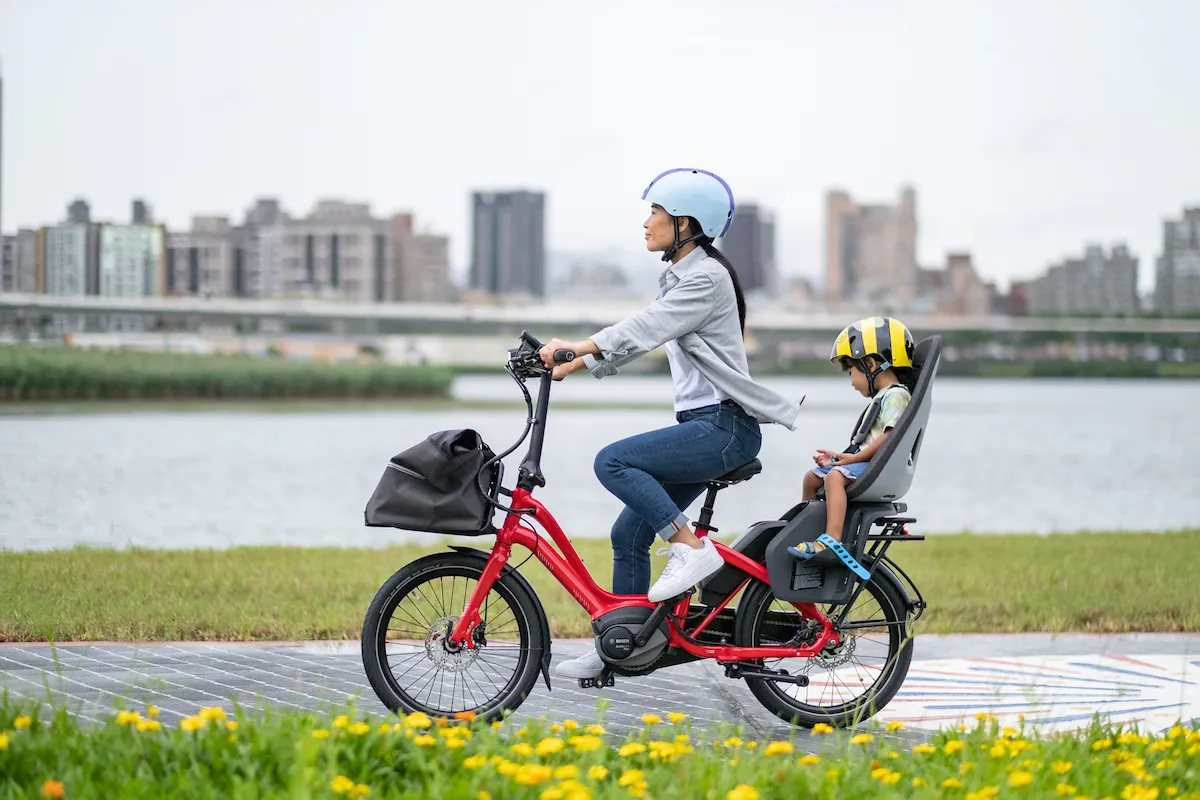
Wear a helmet
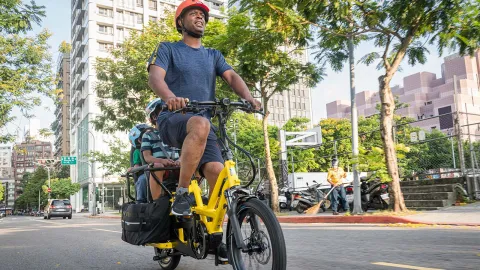
While helmets are not required in some countries, we recommend that you and your passenger(s) always wear one.
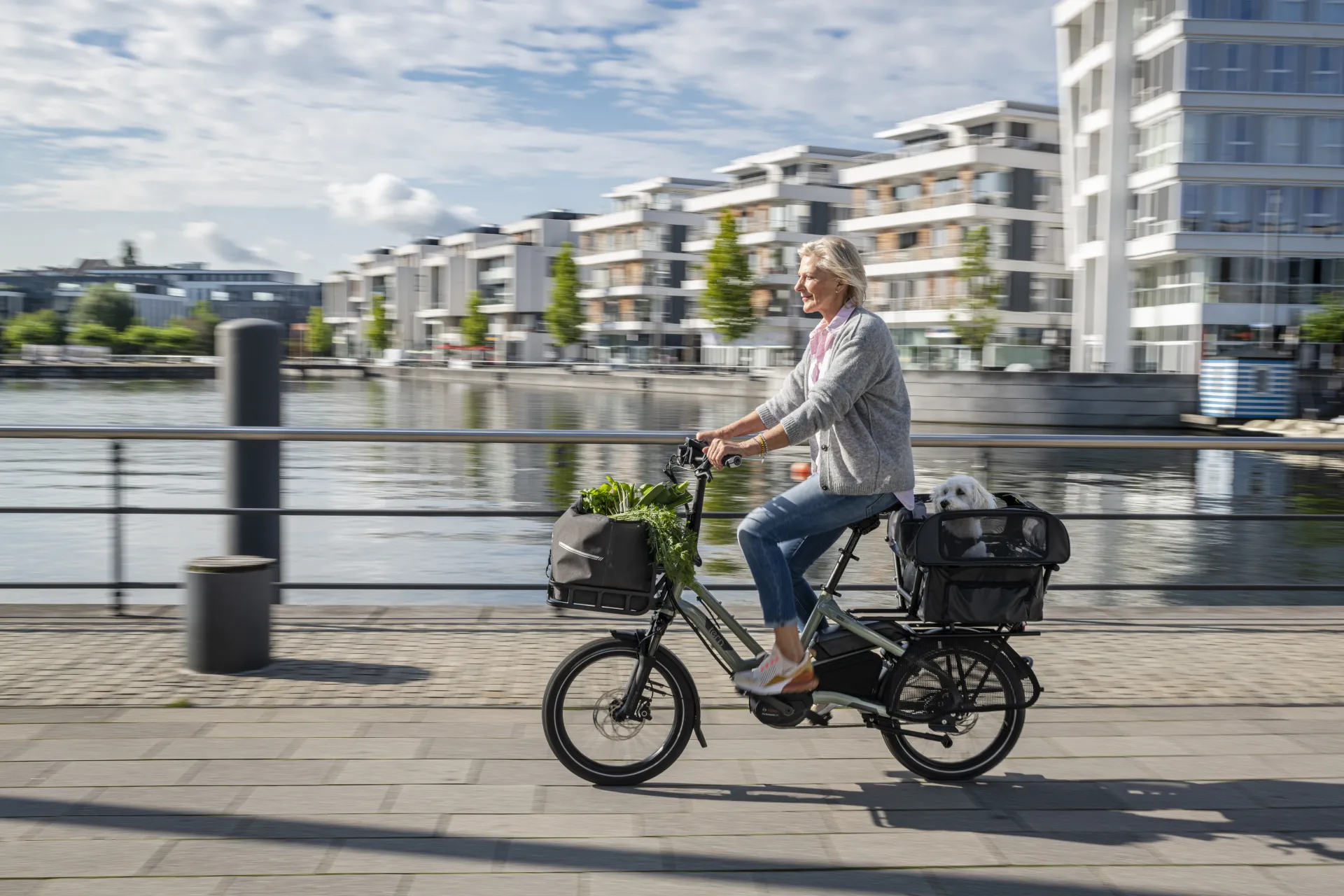
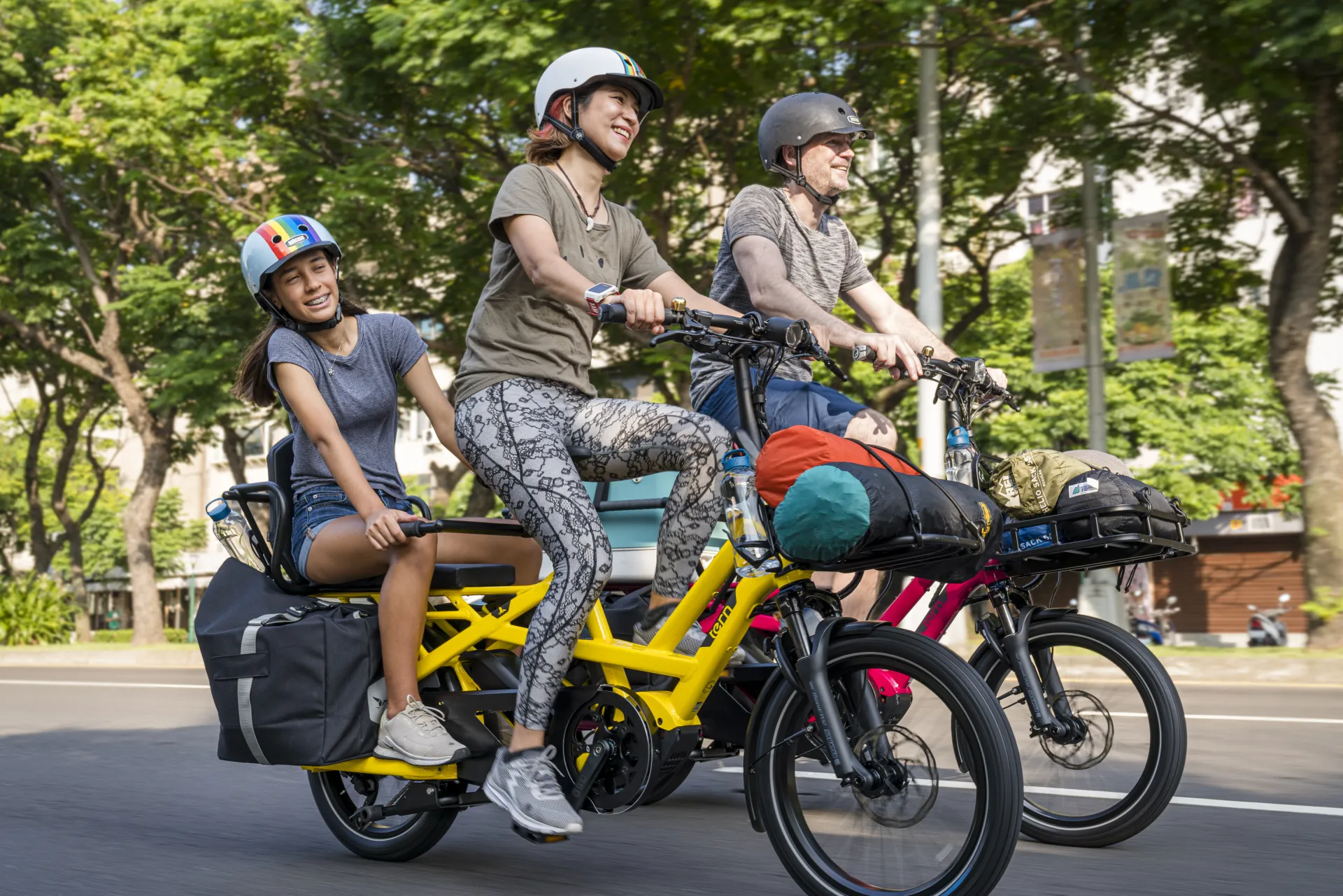
Carrying passengers and cargo
- We recommend you check your local regulations on the minimum age for e-bike usage, especially for carrying passengers.
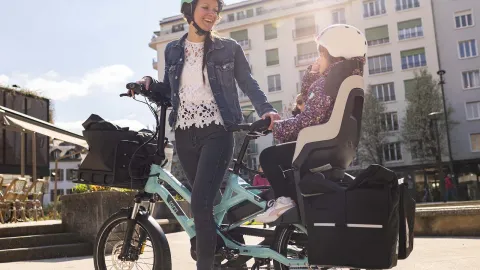
- When carrying passenger(s), you should have a setup that includes seating, a handhold, foot and leg protection, and foot support. Kids do tend to wiggle around, and you’ll want them to be safe.
- When carrying cargo, start small and gradually carry more so you can find your balance at your own pace. Start with a few grocery items and distribute them evenly if you’re using panniers. Be sure to choose the right accessories for the task, and that they are securely fastened.
3. Time to hit the road!
Now you’ve put some things into perspective, it’s time to tackle the elephant in the room (on the road): traffic regulations. In some areas, you will have to share the road with cars and buses, while in other places there may be a cycling path. And sometimes, pedestrians are also allowed to make use of cycling paths. It can be quite confusing! A good way to be mindful of your local traffic regulations is to simply follow them and be predictable:
- Ride in a straight line
- Adjust your speed accordingly: familiarize yourself with the gears and pull the brake gently to lower the speed, especially while descending a steep incline
- Anticipate what others may do next
- Indicate turns and as you are changing lanes
4. Some common roadblocks…
So, you’re finally out and about, but please keep in mind the following hazards:
- Blind spots: Wait for the traffic light at the designated spot, especially at a crossroads. This is to avoid the blind spot of larger vehicles. Make sure that you look left and right, but also behind and in front of you when crossing the road. Not everyone follows the rules or is as predictable as you are.
- Obstacles: Beware of car doors suddenly flying open, potholes, speed bumps…
- Seasonal weather: Falling leaves can be surprisingly slippery, and watch your grip when you’re cycling through patches of snow and on ice.
5. More information
If you’d like to read more safety tips, check out our Passenger Guide and Cargo Guide, where we explain how to carry passengers and cargo on each Tern bike. And if you are not sure whether your passenger setup is appropriate, check out this article on how NOT to carry passengers.
We also recommend you read the League of American Bicyclists’ Five Rules of the Road and the European Commission’s comprehensive EU Road Safety policy for cyclists (see the useful links at the bottom of the page).
Stay safe, and enjoy the ride!
Related Articles
Das Fahren mit einem E-Bike ist für Rahmen, Gabel, Bremsen und Laufräder eine große Belastung. Diese Komponenten müssen von hochwertiger Qualität sein, damit Sie auch bei hohen Geschwindigkeiten sicher und stabil fahren und das Rad jederzeit auf den Punkt abbremsen können, unabhängig von der Witterung.